TRENDING

Monday, 5 October 2026
----------------------
24 Rabi' Al-Thani 1448 AH
The US Senate has confirmed Todd Blanche, President Trump's former personal lawyer, as Attorney General, sparking concerns over the politicization of the Department of Justice. This appointment raises fundamental questions about the impartiality of America's top law enforcement office and its impact on public trust.
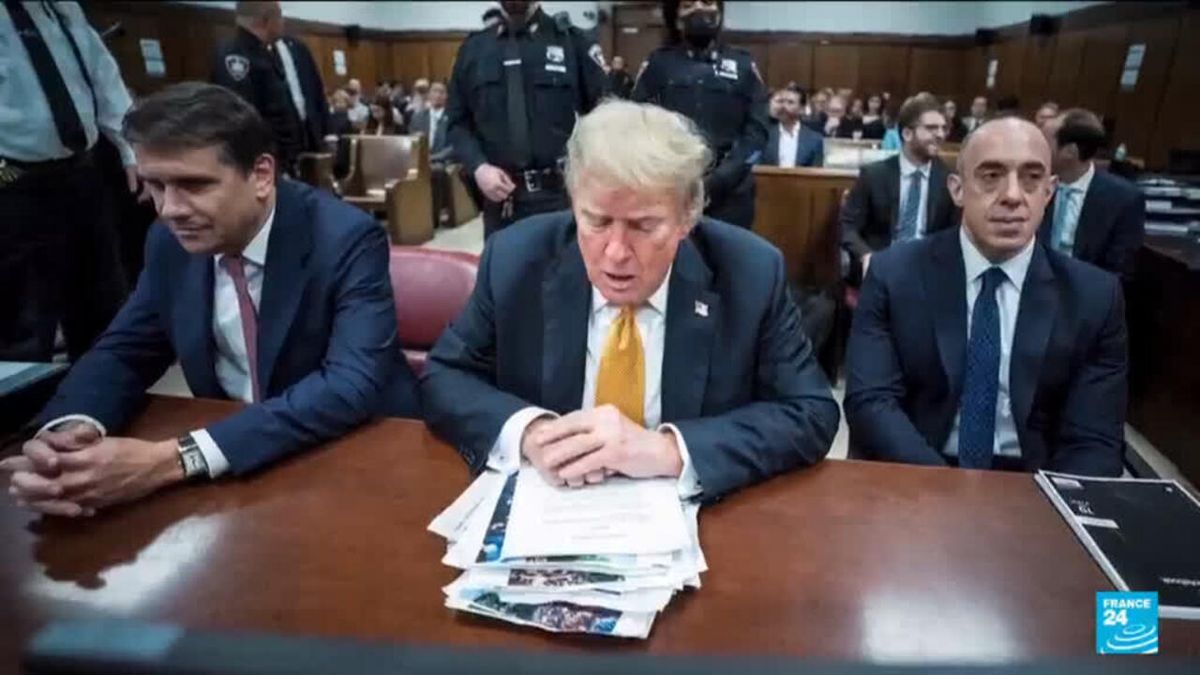
The United States Senate has confirmed Todd Blanche, who previously served as President Donald Trump's personal lawyer in several criminal trials, as the new Attorney General. This appointment, which places a former personal counsel at the helm of the nation's highest law enforcement body, proceeded despite vocal opposition from Democratic lawmakers who accused the President of politicizing the Department of Justice (DOJ). The confirmation represents a significant moment for the executive branch's influence over an institution traditionally viewed as independent.
At the heart of this confirmation lies a fundamental tension between presidential prerogative and institutional independence. The President possesses the constitutional authority to nominate cabinet members, including the Attorney General, allowing an administration to shape the executive branch in line with its agenda. For President Trump, appointing a former personal lawyer to lead the DOJ could be interpreted as a move to ensure loyalty and alignment with his administration's priorities, potentially offering a bulwark against future investigations or facilitating inquiries that serve his political interests.
The Senate's role, while constitutionally designed for "advice and consent," often functions along party lines. With the President's party controlling the Senate, or commanding sufficient votes, such confirmations frequently become displays of party unity rather than independent checks. Democrats, in their opposition, framed the appointment as an erosion of the DOJ's impartiality, highlighting the inherent conflict of interest in a former personal attorney overseeing the very department that might investigate the President or his allies. This dynamic underscores the powerful incentives at play: for the President, consolidating control; for the Senate majority, demonstrating support; and for the opposition, drawing a line against perceived executive overreach. The structural forces here are less about individual character and more about the mechanics of power and political survival within a polarized system.
The most profound cost of such an appointment is borne by the public's trust in the integrity and impartiality of the justice system. When the nation's chief law enforcement officer has a direct and recent history as the President's personal defense counsel, it inevitably creates a perception of bias, regardless of the individual's stated intentions. This erosion of public confidence undermines the foundational principle of equal justice under the law, suggesting that the application of justice might be swayed by political allegiance rather than objective fact.
For ordinary citizens, particularly those from marginalized communities who often rely most heavily on impartial institutions, this perception can be deeply unsettling. It can foster a sense that the system is rigged, that justice is not blind, and that powerful actors operate under a different set of rules. Internally, the career professionals within the Department of Justice—prosecutors, FBI agents, and civil servants—may face a crisis of morale. Their commitment to non-partisan enforcement of the law could be challenged by an environment where the leadership is perceived as politically compromised, potentially leading to a chilling effect on investigations or even a brain drain of experienced personnel. The human cost here is not just abstract; it manifests as a tangible weakening of the social contract between the state and its citizens.
Official narratives surrounding this confirmation will invariably focus on the nominee's qualifications, commitment to the rule of law, and the institutional strength of the Department of Justice. What these statements will downplay, or entirely omit, is the critical distinction between *actual* independence and the *perception* of independence. In a democracy, public faith in institutions is as vital as their operational integrity. By appointing a former personal lawyer, the administration has, perhaps inadvertently, fueled narratives of political interference, making it exponentially harder for the DOJ to credibly assert its neutrality in politically sensitive matters.
Furthermore, this move sets a significant, if informal, precedent. While legally permissible, the normalization of selecting individuals with such direct personal ties to the President for roles requiring strict impartiality chips away at the unwritten norms that have historically safeguarded the independence of key democratic institutions. The debate often centers on the legality of the appointment, sidestepping the broader question of its legitimacy in the public consciousness and the long-term implications for democratic checks and balances. The powerful actors involved are focused on the immediate political victory, not the subtle but corrosive effect on institutional norms that protect the public from unchecked power.
As Todd Blanche assumes the role of Attorney General, several key areas will bear close watching. The direction and prioritization of high-profile investigations, particularly those involving political figures, the President's allies, or his past business dealings, will be under intense scrutiny. Any perceived shifts or changes in emphasis could signal the extent of political influence within the department.
Beyond specific cases, observers should monitor any significant changes in leadership or policy within the DOJ itself. A notable turnover of career officials or the introduction of new directives could indicate a broader restructuring aimed at aligning the department more closely with the administration's agenda. Finally, the public's reaction, amplified by independent media scrutiny and congressional oversight efforts, will be crucial. Sustained public skepticism and robust journalistic inquiry will be vital in holding the new Attorney General and the administration accountable, ensuring that the principles of justice remain paramount amidst the shifting sands of political power.
Source referenced: FRANCE24
This brief was synthesized by our Editorial Engine and reviewed by The Ground Narrative team.


