TRENDING

Monday, 5 October 2026
----------------------
24 Rabi' Al-Thani 1448 AH
A delegation of prominent global leaders known as The Elders concludes that Israel's actions in the West Bank are aimed at making Palestine disappear. This assertion comes after a visit to the region, where they witnessed firsthand the deteriorating conditions for Palestinians. The situation underscores a deeper power dynamic, where the Israeli government's policies are designed to erase Palestinian presence, culture, and identity.
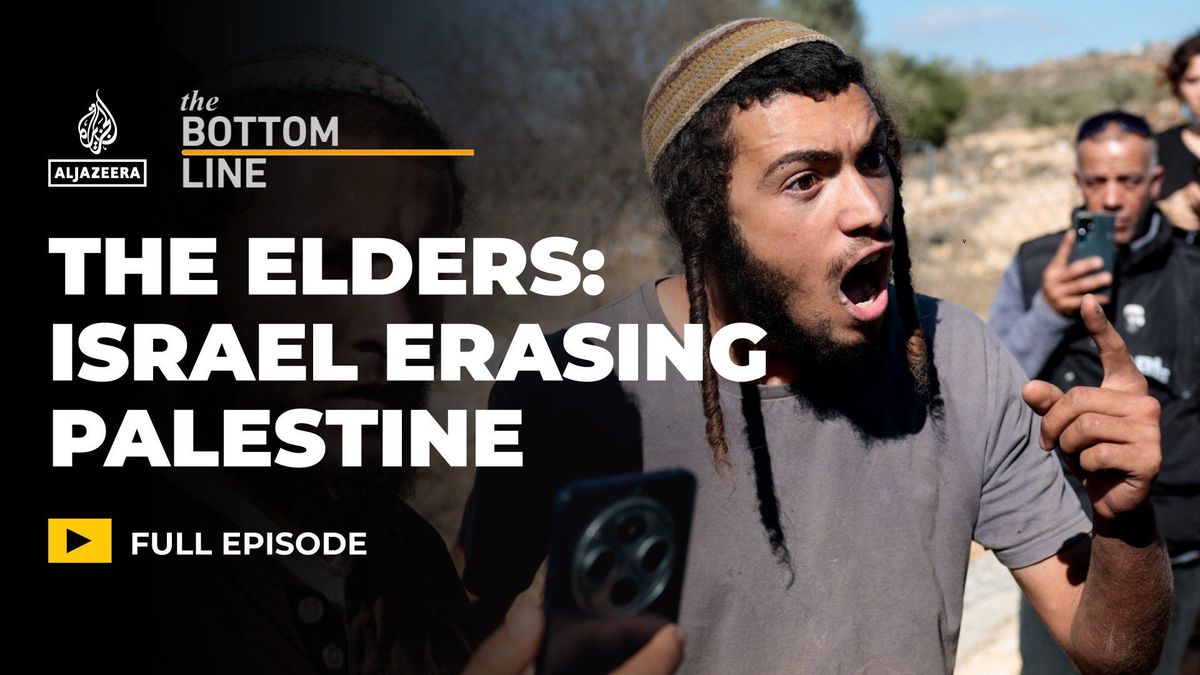
The Elders, a group of respected global leaders, have made a stark conclusion after visiting the West Bank: Israel is deliberately working to erase Palestine from the map, physically, economically, culturally, and politically. Led by former Irish President Mary Robinson, the delegation was shocked by the rapid deterioration of the situation since 2023. Their findings highlight the Israeli government's strategy of annexation, hate speech, and the granting of impunity to settlers and soldiers who seize land and disrupt Palestinian lives.
At the heart of this issue are the power mechanics that drive the Israeli government's actions. The strategy of making Palestine disappear is rooted in a desire to consolidate power and control over the territory. This is achieved through the annexation of land, the expansion of settlements, and the suppression of Palestinian identity and culture. The Israeli government's actions are also influenced by the concept of Jewish supremacy, which underpins its policies towards the Palestinian population. Furthermore, the role of international actors, including the United States, plays a significant part in enabling or constraining Israel's actions, depending on their geopolitical interests and alliances.
The human cost of Israel's actions in the West Bank is profound. Palestinians face displacement, violence, and the erosion of their rights and dignity. The expansion of settlements and the construction of the separation barrier have fragmented Palestinian communities, restricting their access to basic services, employment, and family members. The psychological impact of living under occupation, with the constant threat of violence and the loss of hope for a viable future, is devastating. The international community's inaction or complicity in these policies exacerbates the suffering, leaving Palestinians feeling abandoned and invisible.
A critical aspect of this situation that is often downplayed or omitted from official statements is the role of international law and the responsibility of other nations to uphold it. The Israeli government's actions in the West Bank, including the expansion of settlements, are widely regarded as violations of international law. However, the international community's response has been muted, with many countries failing to take decisive action to hold Israel accountable. This lack of accountability emboldens the Israeli government to continue its policies of annexation and erasure, further entrenching the occupation and diminishing the prospects for a just and lasting peace.
As the situation in the West Bank continues to deteriorate, several factors will be crucial in determining the future of Palestine. The response of the international community, particularly the United States and the European Union, will be significant. Any shift in their policies towards greater support for Palestinian rights and adherence to international law could potentially alter the dynamics on the ground. Additionally, the role of civil society, both within Israel and internationally, in mobilizing opposition to the occupation and advocating for Palestinian rights will be important. The upcoming elections in Israel and the United States may also bring about changes in policy, depending on the outcomes. Lastly, the resilience and determination of the Palestinian people to resist the erasure of their identity and to strive for statehood and self-determination will remain a pivotal factor in this ongoing struggle.
Editor's Note: The analysis is based on publicly available information and may not reflect the full complexity of the situation on the ground.
Source referenced: ALJAZEERA
This brief was synthesized by our Editorial Engine and reviewed by The Ground Narrative team.


