TRENDING

Sunday, 4 October 2026
----------------------
23 Rabi' Al-Thani 1448 AH
Israeli authorities have charged a settler with reckless manslaughter in the killing of Palestinian activist Awdah Hathaleen, marking a rare legal action amidst widespread violence in the occupied West Bank. This case highlights the deep-seated power imbalances and systemic impunity that define the daily lives of Palestinians.
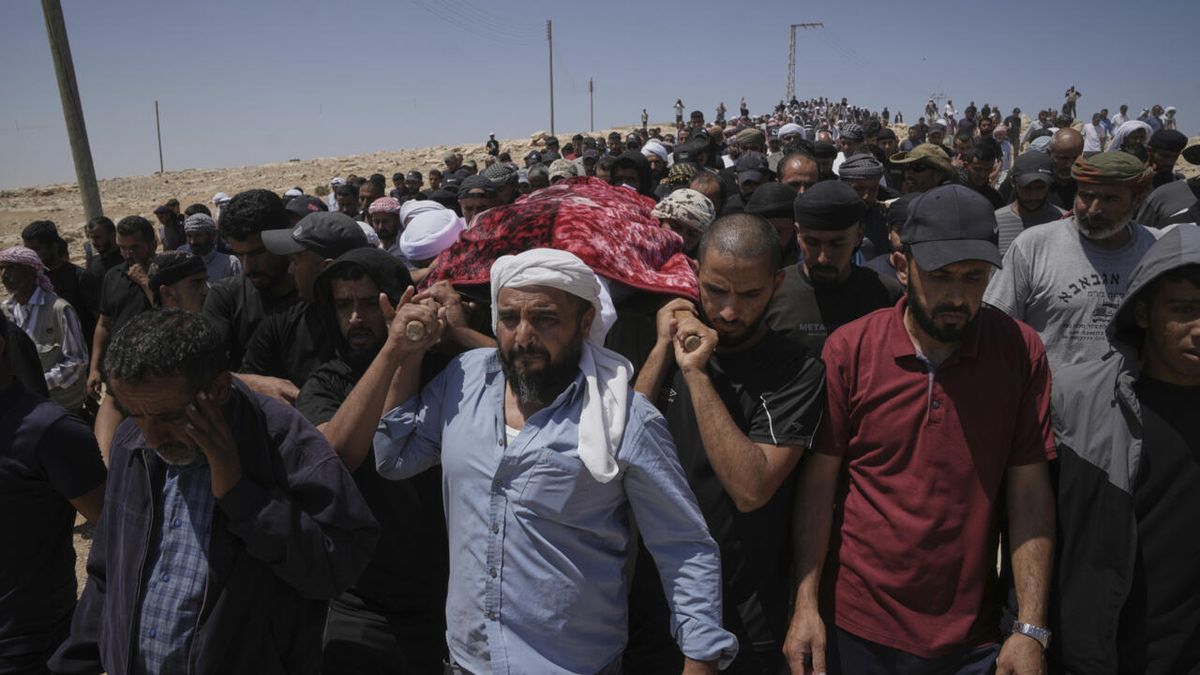
Israeli authorities have charged settler Yinon Levi with reckless manslaughter in the July 2025 killing of prominent Palestinian activist Awdah Hathaleen in the occupied West Bank. This indictment marks a rare instance of legal action against an Israeli settler for the death of a Palestinian, the first since October 7, 2023, according to Israeli human rights groups. The charges also include armed trespassing and malicious property damage.
The decision to charge Yinon Levi with "reckless manslaughter" rather than murder is a critical distinction that reveals the mechanics of power at play. Under Israeli law, reckless manslaughter carries a significantly lighter sentence, suggesting a state-sanctioned framing that acknowledges a death occurred but minimizes the perceived intent or culpability. This legal maneuvering allows the Israeli state to present an image of a functioning justice system to the international community, while simultaneously navigating the political sensitivities of its settler base. The rarity of this indictment — the first since October 7, 2023, despite over 1,100 Palestinian deaths in the West Bank attributed to settlers and soldiers by B'Tselem — underscores a broader system of impunity. This system is reinforced by the dual legal framework in the West Bank, where Israeli settlers are subject to Israeli civilian law, while Palestinians live under military law, creating an inherent imbalance that systematically disadvantages the occupied population. The indictment, therefore, is not merely a legal event but a political act, carefully calibrated to manage both domestic and international pressures.
The human cost of this systemic imbalance is borne directly by Palestinian communities. Awdah Hathaleen was not just a statistic; he was a teacher, a father of three, and a prominent voice against settler violence, featured in the Oscar-winning film "No Other Land." His death leaves a profound void in his village of Umm al Khair and among those actively resisting displacement and violence. For the broader Palestinian population in the West Bank, the constant threat of settler aggression, often perceived as operating with impunity, creates a pervasive climate of fear, insecurity, and despair. The 1,100 Palestinians killed since October 7, 2023, represent countless shattered families, dispossessed communities, and a daily struggle for survival against violence and land confiscation. The rarity of charges like Levi's, and the lesser nature of the charge itself, further erodes any remaining trust in the possibility of justice through the Israeli legal system, deepening cycles of resentment and desperation.
What official statements and legal proceedings often omit or downplay is the systemic nature of settler violence. While the indictment of Levi might be presented as an example of accountability, it distracts from the broader context where settler actions are frequently tolerated, and at times, actively facilitated by segments of the Israeli military and government. The fact that Levi himself was previously sanctioned by the United States and other Western countries for violence against Palestinians in 2024, only for those sanctions to be lifted by a subsequent US administration, highlights the fluctuating and often politically motivated nature of international pressure and its direct impact on accountability. This reversal of sanctions reveals how external political shifts can embolden actors on the ground and contribute to a climate where violence goes unpunished. The focus on a single, high-profile case, particularly with a lesser charge, allows powerful actors to avoid a deeper reckoning with the structural conditions that enable and perpetuate violence against Palestinians.
As this rare legal process unfolds, several critical factors bear watching. The outcome of Levi's trial, including whether it leads to a conviction and the severity of any potential sentence, will serve as a significant indicator of the Israeli legal system's willingness to genuinely hold settlers accountable. Observers will also be looking for whether this indictment signals a shift towards more frequent prosecutions of settler violence, or if it remains an isolated, high-profile exception driven by international scrutiny and compelling video evidence. The reactions from the international community, particularly the United States, will be crucial, especially given the prior sanctions against Levi. Domestically, the response from the settler movement and its political allies will reveal the extent of internal pressure on the Israeli government. Ultimately, the perceived justice or injustice of this case will continue to shape Palestinian resistance and the broader dynamics of the conflict in the West Bank.
Source referenced: FRANCE24
This brief was synthesized by our Editorial Engine and reviewed by The Ground Narrative team.