TRENDING

Monday, 5 October 2026
----------------------
24 Rabi' Al-Thani 1448 AH
Hong Kong has risen to 14th in the Global Innovation Index, a move driven by the HKSAR government's ambitious plan to transform the city into a global sci-tech hub. This strategic pivot, however, carries significant implications for the city's unique identity and the lives of its citizens.
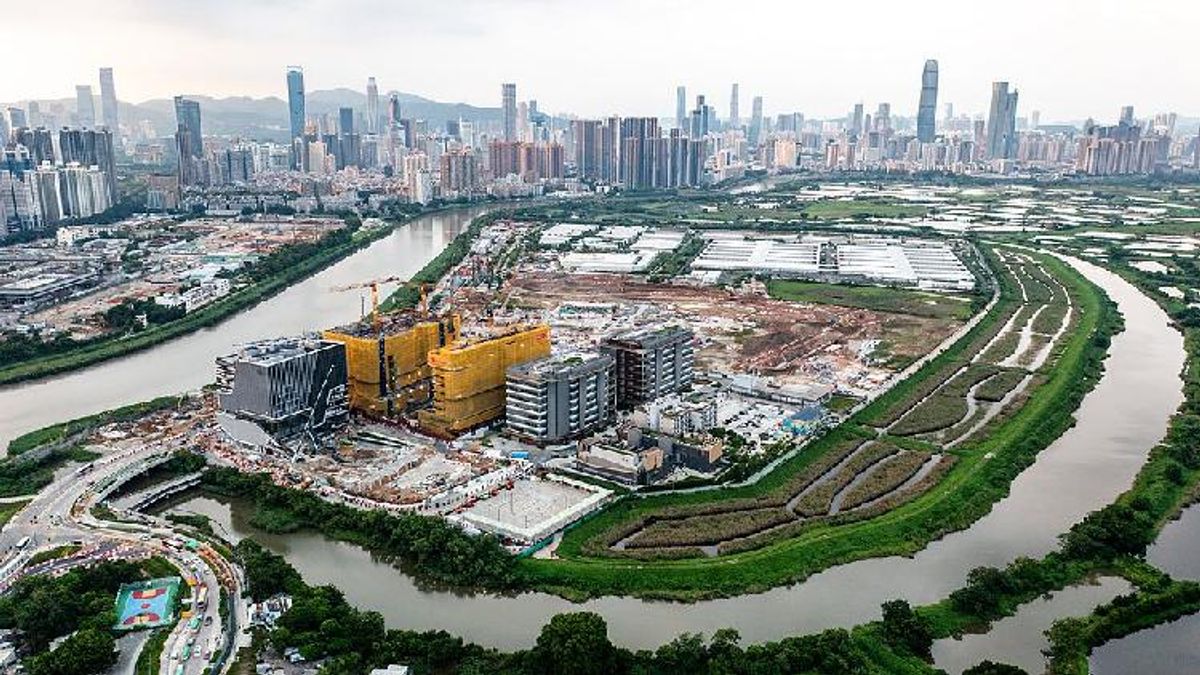
Hong Kong has advanced one position to 14th among 139 economies in the 2026 Global Innovation Index (GII), published by the World Intellectual Property Organization. The city retained its fifth-place ranking in Asia, demonstrating particular strengths in market sophistication (2nd globally), human capital and research (6th), and institutions (7th). This upward movement is attributed by the Hong Kong Special Administrative Region (HKSAR) government to a concerted effort to establish Hong Kong as a global sci-tech hub, outlined in its first five-year plan. The plan includes developing new technology parks in the Northern Metropolis, promoting new industrialization, and advancing an "AI+" initiative to strengthen computing infrastructure and accelerate AI adoption among small and medium-sized enterprises.
Hong Kong's ascent in the Global Innovation Index is not merely an organic economic development; it is a direct outcome of a deliberate, top-down strategy orchestrated by Beijing and implemented by the HKSAR government. At its core, this push reflects a calculated effort to re-anchor Hong Kong's economic future within China's broader national development agenda, particularly the ambitious Greater Bay Area (GBA) initiative. For Beijing, Hong Kong represents a critical asset: a globally recognized financial center with a legacy of common law, international connections, and a highly skilled workforce. By transforming it into a sci-tech hub, China aims to leverage these strengths to bolster its own technological ambitions, especially amidst increasing geopolitical competition and efforts by Western nations to decouple their supply chains and tech ecosystems from China.
This strategic pivot serves several key objectives. First, it seeks to diversify Hong Kong's economy, which has historically been heavily reliant on finance, trade, and real estate. By fostering innovation in technology, the HKSAR government aims to create new growth engines and reduce vulnerability to global economic fluctuations. Second, it integrates Hong Kong more deeply into the GBA, a mega-region encompassing nine cities in Guangdong province, plus Hong Kong and Macau. This integration is designed to create a synergistic innovation corridor, combining Hong Kong's research capabilities and international market access with Shenzhen's manufacturing prowess and entrepreneurial spirit. The Hetao Shenzhen-Hong Kong Science and Technology Innovation Cooperation Zone, explicitly mentioned in the official statements, is a physical manifestation of this integration strategy.
Third, the focus on innovation allows Beijing to maintain Hong Kong's utility while simultaneously asserting greater political control. By directing economic development, Beijing can shape the city's future in a way that aligns with its national interests, mitigating the perceived risks of Hong Kong's historical autonomy. The emphasis on
The Global Innovation Index (GII) is an annual ranking published by the World Intellectual Property Organization (WIPO) that assesses the innovation capabilities and outcomes of economies worldwide. It considers various indicators including institutions, human capital, research infrastructure, market sophistication, and creative outputs.
Hong Kong's push to become a sci-tech hub is a strategic move by the HKSAR government, heavily influenced by Beijing, to diversify its economy beyond traditional finance and trade. This aims to integrate Hong Kong more deeply into China's Greater Bay Area initiative and leverage its international connections for China's broader technological ambitions amidst global competition.
The human costs include a potential erosion of Hong Kong's distinct identity, changes in demographic composition due to talent shifts, economic displacement for workers in traditional sectors, and heightened concerns over data privacy and digital surveillance as the city's tech ecosystem integrates with mainland China's.
Source referenced: CGTN
This brief was synthesized by our Editorial Engine and reviewed by The Ground Narrative team.


