TRENDING

Tuesday, 10 November 2026
----------------------
30 Jumada Al-Awwal 1448 AH
An FBI inquiry into Nvidia chief Jensen Huang’s relationship with a woman tied to Chinese intelligence has ignited a fresh bout of US‑China tension. The fallout reaches boardrooms, factories, and the global AI supply chain.
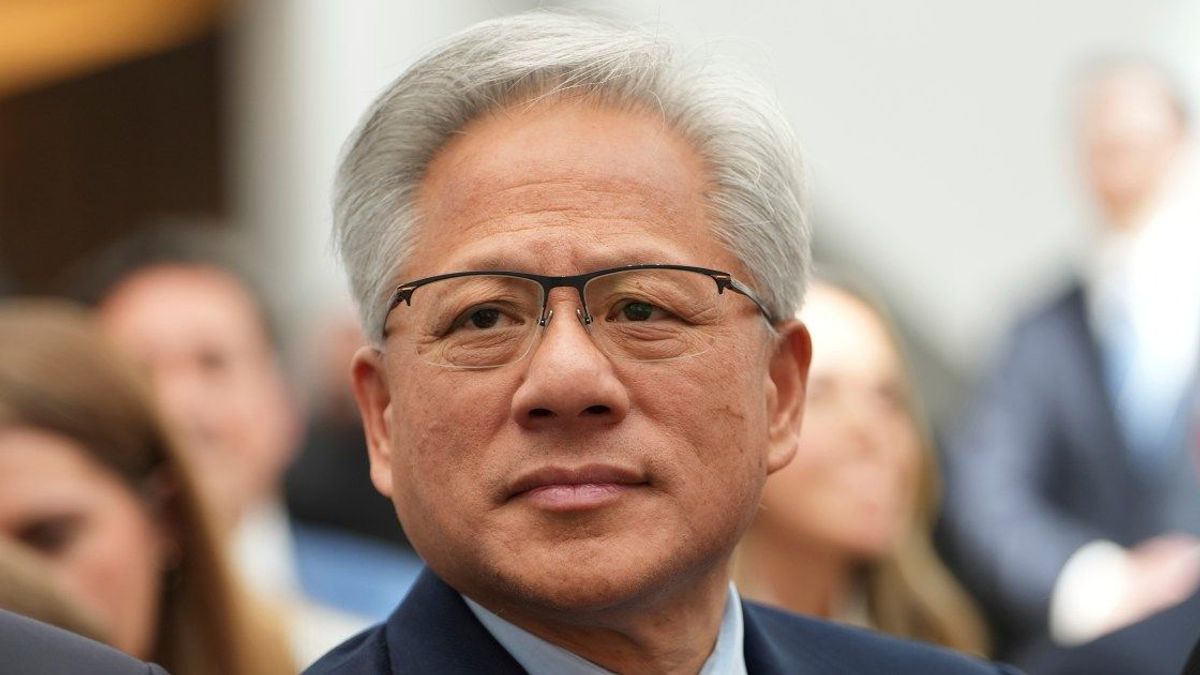
President Donald Trump announced at the White House that the FBI is probing the personal relationship of Nvidia CEO Jensen Huang with a Chinese executive identified as Alice Huang, whom U.S. intelligence alleges works for China’s Ministry of State Security. The tech giant, valued at over a trillion dollars, said it would launch an independent internal review, while its board insisted there was no evidence that trade secrets had been compromised.
The episode sits at the intersection of three powerful currents: the US‑China technology rivalry, domestic political calculus, and corporate governance under intense market scrutiny.
- US‑China tech rivalry – Over the past decade, China has pursued a state‑driven push to dominate artificial intelligence and high‑performance computing, while the United States has responded with export controls, investment bans, and a narrative that frames Chinese firms as security threats. Nvidia sits at the heart of this contest because its GPUs power the majority of AI training workloads worldwide. Any hint that its leadership may have been compromised feeds directly into Washington’s broader effort to contain Chinese tech ascendancy.
- Domestic political calculus – Former President Trump has re‑entered the political arena, using high‑profile investigations to rally his base and distract from ongoing legal battles. By spotlighting a potential espionage link, he reinforces a narrative of a hostile China and positions himself as the defender of American industry, a stance that could translate into campaign capital.
- Corporate governance and market confidence – Publicly traded firms are required to disclose material risks. An FBI probe, even if limited to personal conduct, threatens investor confidence, especially in a sector where valuations are already volatile. The board’s decision to commission an external counsel reflects a balancing act: reassure shareholders while avoiding admission of any breach that could trigger regulatory sanctions.
The incentives for each actor are clear. The FBI seeks to protect national security and demonstrate vigilance. Trump aims to dominate the media cycle and signal toughness on China. Nvidia must preserve its market cap and avoid a cascade of sell‑offs that could embolden rivals. Meanwhile, Beijing’s intelligence services benefit from any ambiguity that keeps their operatives embedded in critical supply chains.
The immediate ripple reaches Nvidia’s global workforce, especially the 12,000 employees in its Austin, Taiwan, and Shenzhen facilities. Heightened scrutiny can lead to tighter export restrictions, slowing production lines and prompting layoffs or reduced overtime for assembly technicians who already face demanding schedules.
Institutional investors, including public pension funds that hold large Nvidia positions, confront heightened risk. A prolonged investigation could depress share prices, eroding retirement savings for millions of Americans and Canadians who rely on these funds for long‑term security.
Start‑ups building products on Nvidia’s platforms—ranging from autonomous‑vehicle firms in Detroit to biotech labs in Boston—depend on uninterrupted access to cutting‑edge GPUs. Any supply shock forces them to scramble for alternative hardware, inflating costs and delaying product roll‑outs that could create jobs and drive economic growth.
The narrative of a “spy” embedded in a high‑tech firm fuels suspicion toward Chinese scholars and engineers working in the United States. Universities may tighten visa policies, and Chinese‑origin researchers could face increased background checks, chilling collaboration and stifling the very innovation ecosystem that fuels the AI boom.
While officials stress the need for a thorough investigation, they downplay the timing. The probe emerges just weeks before the upcoming mid‑term elections, offering a convenient rallying point for hawkish voters. Trump’s public endorsement of Huang—stating he believes the CEO’s innocence—serves to cast the president as a protector of American business against a shadowy foreign adversary, a narrative that can translate into electoral support.
Nvidia has spent billions on lobbying in Washington, cultivating relationships with both Democratic and Republican lawmakers. The board’s swift move to commission an independent review may be less about transparency than about pre‑empting a harsher regulatory response that could arise if Congress were to invoke national‑security powers to force a divestiture or impose heavy fines.
U.S. intelligence agencies have been quietly expanding their focus from traditional cyber‑espionage to “human‑asset” infiltration of critical technology firms. The public framing of this case as a personal affair obscures a larger, systematic effort to map and potentially disrupt supply‑chain vulnerabilities. What remains hidden is how many similar relationships may already exist, unreported, and the extent to which they have shaped technology policy decisions.
Financial analysts quickly spun the story into a “risk premium” scenario, warning of short‑term volatility but largely ignoring the deeper question: how much of Nvidia’s competitive edge is truly insulated from foreign influence? The board’s statement that there is “no reason to believe national security was compromised” is a legal safeguard, not a technical audit of code repositories, design documents, or collaborative research that may have been shared under the guise of personal trust.
- FBI findings – The next few weeks will reveal whether the probe uncovers any concrete breaches of classified information or remains limited to personal misconduct. A finding of espionage would likely trigger swift executive orders tightening export controls on AI chips.
- Legislative response – Watch for bills introduced in the House and Senate that aim to tighten corporate disclosure requirements for any foreign personal relationships of senior executives in critical tech sectors.
- Market reaction – Nvidia’s stock volatility will serve as a barometer for investor confidence. A sharp decline could prompt a wave of short‑selling and force the company to consider a spin‑off of its data‑center division to isolate risk.
- China’s diplomatic posture – Beijing may either double down on its intelligence operations or publicly distance itself to avoid escalation. Official statements from the Ministry of State Security, if any, will signal the level of state involvement.
- AI ecosystem shifts – Start‑ups and research institutions may begin diversifying hardware suppliers, accelerating the rise of alternative GPU manufacturers from Europe and Japan. Tracking procurement contracts over the next quarter will reveal whether the scandal catalyzes a broader decoupling trend.
The intersection of personal relationships, national security, and global tech competition illustrates how power can flow through the most intimate of connections. For ordinary citizens, the stakes are not abstract headlines but real jobs, retirement savings, and the pace at which AI-driven services—healthcare diagnostics, climate‑modeling tools, and autonomous transport—reach their doors.
The FBI is looking into whether Jensen Huang’s personal relationship with a woman alleged to work for Chinese intelligence compromised any classified information or trade secrets.
If the investigation uncovers security breaches, it could trigger regulatory penalties and a loss of investor confidence, potentially lowering the share price and leading to layoffs or reduced production at Nvidia’s factories.
The case adds fuel to existing US concerns about Chinese infiltration of critical AI supply chains, likely prompting tighter export controls and legislative moves to increase corporate transparency on foreign ties.
Source referenced: ALJAZEERA
This brief was synthesized by our Editorial Engine and reviewed by The Ground Narrative team.


