TRENDING

Tuesday, 10 November 2026
----------------------
30 Jumada Al-Awwal 1448 AH
Israel’s November 2026 election left the Knesset split, forcing Gadi Eisenkot to navigate a maze of parties, ideologies, and voter expectations. The outcome will shape daily life for Arab Israelis, the ultra‑Orthodox, and the broader public.
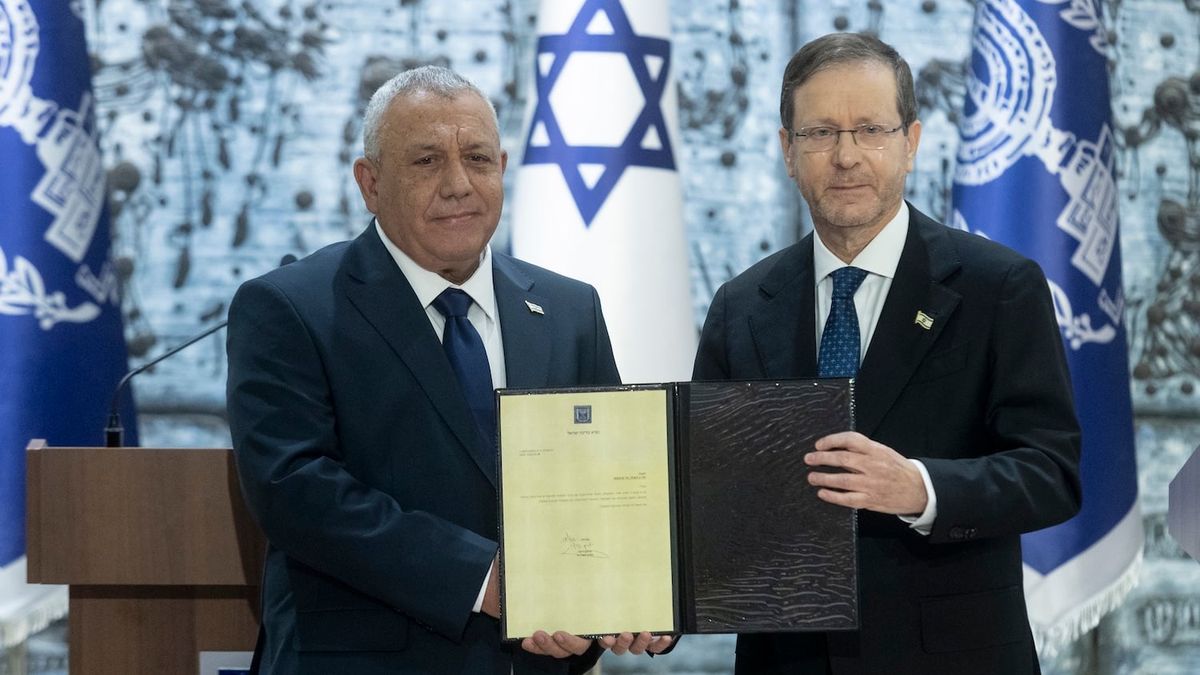
The November 2026 election left Prime Minister Benjamin Netanyahu’s bloc with 53 seats and the opposition “change bloc” led by Gadi Eisenkot with 48 seats in the 120‑seat Knesset. President Isaac Herzog tasked Eisenkot with forming a government, opening a high‑stakes negotiation round that could determine Israel’s direction for years.
Eisenkot faces four realistic routes to a governing majority. The most straightforward arithmetic adds the 19 seats held by the Arab‑led Joint List and Ra’am, pushing a change‑bloc coalition to 67 seats—enough for decisive legislation on military conscription and a Hamas inquiry. Yet historical precedent shows Arab participation destabilizes Israeli cabinets; only one such coalition ever existed, and it collapsed within a year.
Even if the numbers add up, the coalition would bind Zionist parties with groups that reject Israel’s definition as a Jewish state. Eisenkot’s four pre‑conditions—recognition of Israel as Jewish‑democratic, adherence to the Declaration of Independence, universal national service, and labeling Hamas a terrorist organization—clash directly with the Joint List’s platform and Ra’am’s recent refusal to label Hamas as terrorist. The tension mirrors the 2021 Bennett‑Ra’am experiment, where disputes over West Bank settlement measures unraveled the alliance.
President Herzog’s invitation gives Eisenkot the first chance to negotiate, but it also signals a desire to avoid a repeat of the 2022 election deadlock that forced a third election within two years. Netanyahu, while short of a majority, can still leverage his 53 seats to block any coalition that excludes him, forcing Eisenkot to consider a national‑unity arrangement. For both leaders, personal political survival hinges on delivering a stable government before voter fatigue erodes their bases.
If Arab parties are excluded, their constituencies—about 20 % of Israel’s population—face continued marginalization. Funding for education, infrastructure, and health services often hinges on coalition bargaining; exclusion would likely deepen socioeconomic gaps and fuel resentment that can translate into street protests or heightened security measures.
A coalition that leans on Haredi parties would perpetuate the exemption of ultra‑Orthodox men from mandatory military service, a point of contention for the broader public. Young secular Israelis, already burdened by higher conscription rates, would see the social contract tilt further, potentially sparking mass demonstrations and eroding trust in democratic institutions.
The average middle‑class family, caught between soaring housing costs and security concerns, bears the indirect cost of political instability. Prolonged negotiations delay budget approvals, stall public projects, and keep inflation high. Moreover, any government that fails to address the October 7 security failures risks reigniting trauma among victims’ families.
Netanyahu’s camp repeatedly frames the Arab parties as “anti‑Zionist” and a threat to national security, a narrative that downplays the pragmatic benefits of their parliamentary support. By emphasizing ideological incompatibility, he seeks to pressure Eisenkot into a unity deal that preserves his political relevance while sidelining Arab voices.
Western outlets often reduce the coalition puzzle to a binary of “racist” versus “moderate,” overlooking the deep‑seated economic interests at play. Defense contractors, for instance, profit from any government that maintains a hard‑line security posture, a factor rarely mentioned in mainstream coverage.
Large construction firms and settlement developers stand to gain if a right‑leaning coalition secures a majority, as they receive state contracts for West Bank projects. Conversely, Arab‑led parties could negotiate increased budget allocations for Arab municipalities, a concession that would shift public spending away from these lucrative sectors.
Israeli law gives Eisenkot 28 days to present a coalition agreement. Extensions are possible but signal weakness and can trigger public protests demanding a new election.
A rotating premiership between Netanyahu and Eisenkot would resolve the immediate deadlock but raises questions about enforcement. Watch for any written rotation clause and the role of the Knesset’s speaker in monitoring compliance.
If negotiations stall, a third election within two years becomes likely. Pollsters already note declining voter enthusiasm, especially among young secular Israelis, which could reshape future party landscapes.
Any coalition that includes Arab parties may affect Israel’s diplomatic calculus with neighboring states, particularly Jordan and Egypt, who monitor Arab representation as a barometer for internal stability.
Key policy battles—mandatory national service for the ultra‑Orthodox, a formal inquiry into the October 7 attacks, and settlement expansion—will serve as litmus tests for the coalition’s durability. Their progress (or lack thereof) will indicate which power centers are truly steering the ship.
Staying attuned to these dynamics will help ordinary citizens understand who holds the levers of power, who is left out of the decision‑making room, and what the next few weeks could mean for everyday life across Israel.
Eisenkot can try a change‑bloc coalition with Arab parties, form a minority government supported externally, bring Haredi parties into a broader bloc, or negotiate a national‑unity government with Netanyahu that rotates the premiership.
If Arab parties are excluded, their municipalities may lose access to increased funding and policy influence, deepening socioeconomic gaps. Inclusion could bring budget allocations for Arab towns but may also trigger backlash from nationalist factions.
Source referenced: FOREIGNPOLICY
This brief was synthesized by our Editorial Engine and reviewed by The Ground Narrative team.