TRENDING

Monday, 9 November 2026
----------------------
29 Jumada Al-Awwal 1448 AH
A protective barrier at the partially‑built T‑5 project of the Tarbela Dam gave way, sending a surge of water into Khyber Pakhtunkhwa. The incident exposes tangled power interests and a looming human toll for downstream communities.
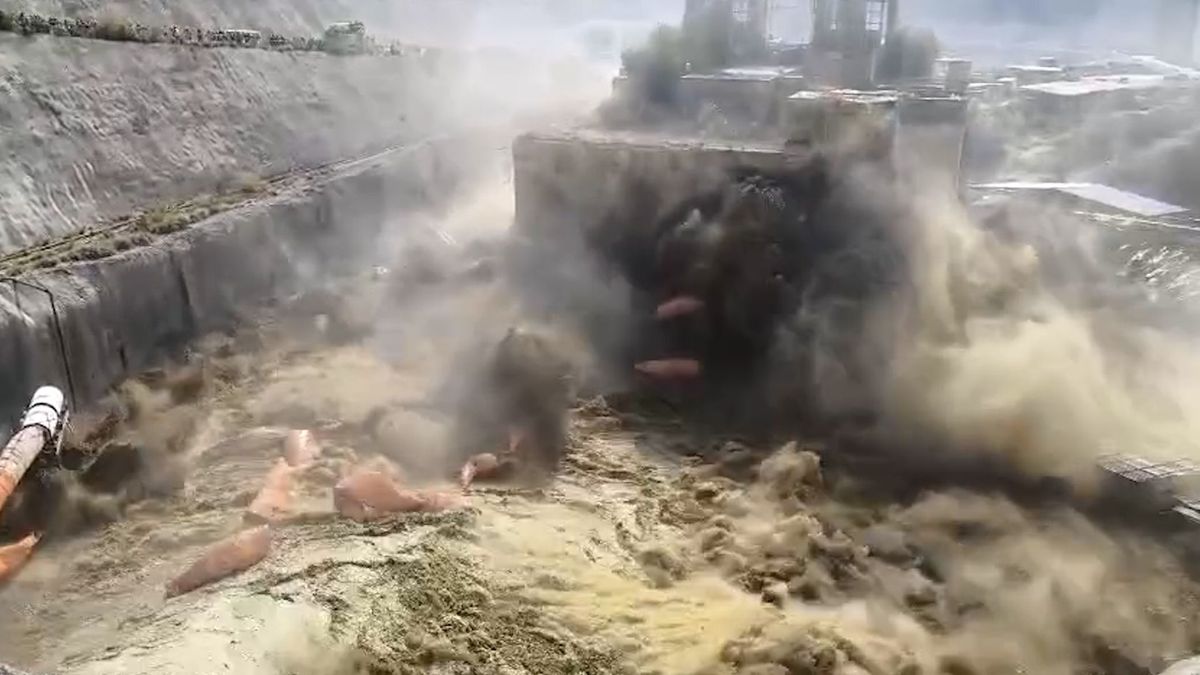
On 9 November 2026, a temporary protective barrier at the partially‑constructed T‑5 hydropower extension of the Tarbela Dam in Khyber Pakhtunkhwa, Pakistan, collapsed. The failure released a sudden surge of water that rushed downstream, sweeping away a construction worker who was later rescued. No fatalities were reported, but the flood inundated nearby agricultural fields and forced several villages to evacuate.
The Tarbela Dam, originally completed in the 1970s with World Bank financing, has become a focal point for Pakistan’s energy strategy. The new T‑5 project, slated to add 1,200 MW of renewable hydro capacity, is being built under a financing package that includes loans from Chinese state‑owned banks and technical assistance from Chinese engineering firms. This arrangement ties the country’s future electricity supply to a debt burden that already exceeds 40 % of its GDP.
- Political survival: The ruling coalition has framed the project as a hallmark of development, promising jobs and reduced reliance on imported fossil fuels. Delivering the dam on schedule bolsters the government’s narrative of progress ahead of the upcoming provincial elections.
- Economic trade‑offs: While the added capacity could lower electricity tariffs in the long run, the immediate cost is steep. Interest payments on the Chinese loans divert funds from health and education budgets, creating a fiscal squeeze that the military‑run finance ministry must manage.
- Military‑civilian nexus: The Pakistan military controls significant portions of the country’s water infrastructure. Its involvement in the dam’s security and oversight adds a layer of strategic interest, as control over water flow can be leveraged in internal power balances and in negotiations with neighboring India over trans‑border rivers.
- Alliance math: China’s Belt and Road Initiative (BRI) uses projects like Tarbela to cement influence in South Asia. A successful dam reinforces Beijing’s image as a development partner, while any failure provides a diplomatic opening for rival powers to question the sustainability of Chinese‑backed loans.
Downstream of the breach, the floodwaters entered the Indus River’s tributaries, submerging low‑lying farms that feed thousands of families. Smallholder farmers, already coping with erratic monsoons, lost a season’s worth of crops, pushing many into debt with local moneylenders.
- Displacement: Approximately 4,000 residents from three villages were temporarily relocated to relief camps. The camps lack adequate sanitation, raising the risk of water‑borne diseases during the winter months.
- Livelihood disruption: The region’s informal economy—market stalls, transport services, and seasonal labor—has stalled. Women, who often manage household water and food supplies, now face longer walks to collect safe drinking water, increasing their unpaid labor burden.
- Psychological strain: The suddenness of the surge has left many with trauma, especially children who witnessed the wall of water. Mental health services are scarce in the remote district, compounding long‑term community resilience challenges.
Official statements from the Ministry of Water Resources emphasize that “safety protocols are being reviewed” and that “no lives were lost.” What is omitted is a deeper look at the construction oversight mechanisms that allowed a temporary barrier to be erected with substandard materials.
- Corruption and procurement: Preliminary reports suggest that contracts for the barrier were awarded without competitive bidding, a practice that has historically inflated costs and lowered quality in large‑scale infrastructure projects across Pakistan.
- Climate risk masking: The dam’s design was based on hydrological data from the early 2000s, before the recent acceleration of glacial melt in the Himalayas. By not updating risk assessments, planners downplay the probability of extreme flood events, a factor that climate scientists have warned about for years.
- Debt opacity: While the government touts the project’s benefits, the exact terms of the Chinese loan—interest rates, grace periods, and collateral clauses—remain undisclosed. This lack of transparency hides the long‑term fiscal pressure that could force future austerity measures on the public.
The next weeks will reveal whether an independent inquiry is launched to audit the construction standards and procurement processes. International donors, including the World Bank, may pressure Pakistan for greater transparency, especially if the debt burden threatens macro‑economic stability.
- Energy supply implications: Delays in completing the T‑5 project could exacerbate power shortages during the upcoming winter peak, prompting the government to rely more on costly imported fuel, which would raise consumer electricity bills.
- Geopolitical reverberations: Beijing’s response to any criticism will be a litmus test for its BRI strategy in the region. A defensive stance could strain Pakistan‑China ties, while a conciliatory approach might open space for alternative financing from the Gulf or Western institutions.
- Local activism: Community groups in Khyber Pakhtunkhwa have begun organizing protests demanding safer construction practices and compensation for flood damage. Their momentum could influence provincial policy and set a precedent for civil society oversight of mega‑projects.
Stakeholders should monitor official statements, loan disclosures, and on‑the‑ground reports from NGOs to gauge whether the incident remains an isolated mishap or a symptom of deeper systemic vulnerabilities.
A temporary protective barrier at the T‑5 hydropower extension failed, likely due to substandard materials and inadequate oversight during construction.
Delays in completing the T‑5 project could worsen winter power shortages, forcing reliance on expensive imported fuel and raising electricity costs for consumers.
Editor's Note: Analysis based on publicly available reports and historical patterns of infrastructure financing in the region.
Source referenced: ALJAZEERA
This brief was synthesized by our Editorial Engine and reviewed by The Ground Narrative team.