TRENDING

Monday, 9 November 2026
----------------------
29 Jumada Al-Awwal 1448 AH
Chinese Vice Premier He Lifeng will co-chair the second China-Canada Economic and Financial Strategic Dialogue, signaling a pragmatic attempt to stabilize economic ties amidst strained political relations. This engagement highlights the ongoing tension between economic necessity and democratic values for both nations.
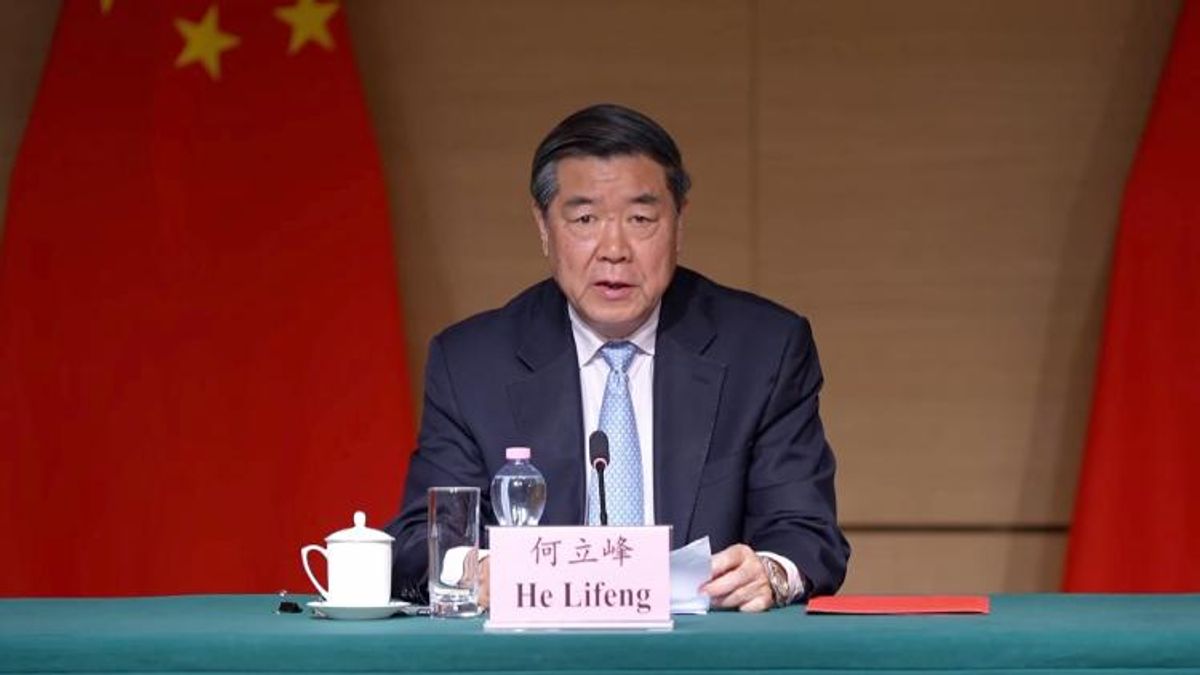
Chinese Vice Premier He Lifeng, a member of the Political Bureau of the Communist Party of China Central Committee, is set to co-chair the second China-Canada Economic and Financial Strategic Dialogue in Canada on November 9, 2026. He will meet with Canadian co-leaders, Minister of Finance and National Revenue Francois-Philippe Champagne and Minister of International Trade Maninder Sidhu. This high-level meeting marks a significant diplomatic engagement, signaling an attempt by both nations to manage and potentially improve their often-strained economic relationship.
This dialogue is less about a sudden breakthrough and more about the enduring, often uncomfortable, realities of economic interdependence in a politically fractured world. Both China and Canada operate from distinct positions of power and vulnerability, making such engagements a delicate balancing act.
Canada, a G7 nation rich in natural resources, finds itself in a precarious middle-power position. Its economy is deeply integrated with that of the United States, its closest ally and largest trading partner. Yet, China represents a massive and growing market for Canadian raw materials, agricultural products, and energy. For Ottawa, the incentive to engage with Beijing is primarily economic: securing market access, attracting investment, and diversifying trade relationships beyond its southern neighbor. However, this economic pragmatism is constantly challenged by its commitment to democratic values, human rights, and its alignment with the United States' increasingly confrontational stance towards China. The dialogue serves as a mechanism for Canada to signal its independent foreign policy capacity, even as it navigates the complex alliance math of the Five Eyes intelligence network and broader Western solidarity.
China, on the other hand, approaches this dialogue from a position of immense economic heft, but also with its own strategic imperatives. As the world's second-largest economy and a manufacturing powerhouse, China requires stable access to global markets and reliable sources of raw materials to fuel its growth and maintain domestic stability. While its primary focus is often on its relationship with the United States, engaging with nations like Canada allows Beijing to project an image of open economic diplomacy, counter narratives of isolation, and potentially drive wedges within Western alliances. Vice Premier He Lifeng's presence underscores the importance Beijing places on maintaining economic channels, even when political relations are frosty. It's a pragmatic move to secure resources and market access, especially as China faces internal economic headwinds and external pressures from de-risking efforts by various Western nations. The dialogue provides a platform for China to assert its economic influence and seek partners willing to prioritize trade over political disagreements.
For both nations, the dialogue is a tool to manage complexity, not necessarily resolve it. It allows for the separation of economic discussions from more contentious political and security issues, creating a space for practical cooperation while tacitly acknowledging deeper ideological divides. This pragmatic approach is a testament to the enduring power of economic gravity, which often compels nations to engage despite significant political friction.
While high-level dialogues like this are framed as beneficial for national economies, the real impact often trickles down to ordinary citizens, businesses, and communities, sometimes in unexpected ways.
For Canadian businesses, especially those in resource extraction, agriculture, and technology, the fluctuating relationship with China creates immense uncertainty. Farmers face unpredictable market access, mining companies grapple with investment risks, and tech firms worry about intellectual property security. When diplomatic ties sour, trade flows can be disrupted, leading to lost contracts, reduced profits, and even job losses. Conversely, a period of improved economic dialogue can open new opportunities, but the underlying instability means that these gains are often tentative. Workers in export-oriented sectors, from Alberta's energy fields to British Columbia's ports, feel the direct impact of these geopolitical shifts on their livelihoods.
On the Chinese side, ordinary citizens are also affected. Trade policies and diplomatic tensions can influence the availability and cost of imported goods, impacting consumer choices and household budgets. For the vast workforce in China's export-oriented manufacturing sector, stable trade relations with countries like Canada are crucial for job security and economic stability. Disruptions in global supply chains or reduced demand from Western markets can lead to factory closures and unemployment, directly impacting millions of families who rely on these industries.
Perhaps the most profound human cost is borne by those whose voices are often marginalized in the pursuit of economic gain. Human rights advocates, both within Canada and internationally, frequently express concern that economic dialogues can overshadow critical discussions about human rights abuses in China, such as the treatment of Uyghurs in Xinjiang, the crackdown on democracy in Hong Kong, or the detention of political dissidents. For Canadian communities with ties to China, including the large Chinese diaspora, these dialogues can be deeply unsettling, creating a sense of moral compromise or even betrayal if economic interests are perceived to take precedence over fundamental values. The legacy of the
Source referenced: CGTN
This brief was synthesized by our Editorial Engine and reviewed by The Ground Narrative team.


