TRENDING

Monday, 9 November 2026
----------------------
29 Jumada Al-Awwal 1448 AH
Chinese President Xi Jinping met with Gabonese President Brice Clotaire Oligui Nguema, elevating bilateral relations to a 'community with a shared future for the new era.' This significant diplomatic move offers crucial legitimacy to Gabon's military junta, which seized power in 2023, while securing China's access to vital resources and expanding its influence in Africa.
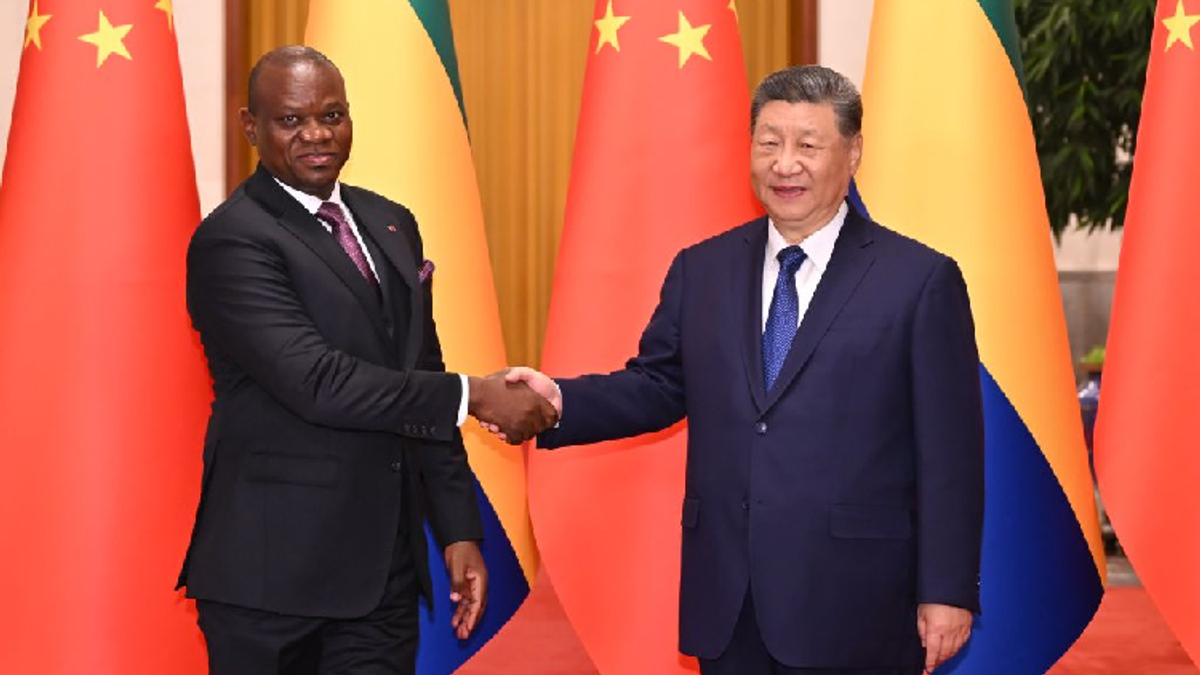
Chinese President Xi Jinping hosted Gabonese President Brice Clotaire Oligui Nguema in Beijing, culminating in the elevation of bilateral relations to a China-Gabon community with a shared future for the new era. The leaders announced this enhanced partnership following discussions that focused on strengthening economic cooperation, governance experience exchange, and diplomatic alignment. This high-profile meeting marks a crucial moment for Gabon's leader, who assumed power in August 2023 after a military coup that ousted the long-ruling Bongo family.
This diplomatic elevation between China and Gabon is a textbook example of power dynamics at play, driven by distinct, yet complementary, interests from both sides. For Beijing, the engagement with Oligui Nguema's regime is a strategic maneuver designed to bolster its long-term resource security, expand its diplomatic footprint, and solidify its narrative as a leader of the Global South. For Gabon's military junta, the visit to Beijing offers an invaluable prize: international legitimacy and a crucial economic lifeline, precisely what a new, unelected government needs to stabilize its rule and appease a populace eager for development.
China's interest in Gabon is deeply rooted in its economic and strategic needs. Gabon is rich in natural resources, particularly oil, manganese, and timber. As the world's largest consumer of raw materials, China continuously seeks stable and diversified supply chains. Gabon's strategic location on the Atlantic coast of Central Africa also offers potential logistical advantages. By extending a hand of friendship and cooperation, Beijing secures access to these vital commodities, ensuring the uninterrupted flow of resources essential for its industrial engine and economic growth. The **
China seeks access to Gabon's rich natural resources like oil and timber, and aims to expand its diplomatic influence in Africa. Its non-interference policy allows engagement with regimes that Western powers might avoid, offering legitimacy to the current military junta.
For Gabon, it signifies a commitment to Chinese investment, infrastructure, and market access, potentially aiding industrialization. However, it also implies aligning with China's global vision and governance models, which could impact its democratic trajectory.
Gabonese citizens face potential risks including environmental degradation from resource extraction, increased national debt, and the sidelining of democratic aspirations as the military junta gains international legitimacy through Chinese support.
Source referenced: CGTN
This brief was synthesized by our Editorial Engine and reviewed by The Ground Narrative team.