TRENDING

Monday, 9 November 2026
----------------------
29 Jumada Al-Awwal 1448 AH
An international forum on 'mutual learning among civilizations' is set to open in Macao, bringing together global representatives to discuss cultural exchange and a 'shared future.' This event serves as a key platform for China to advance its vision for global governance and soft power.
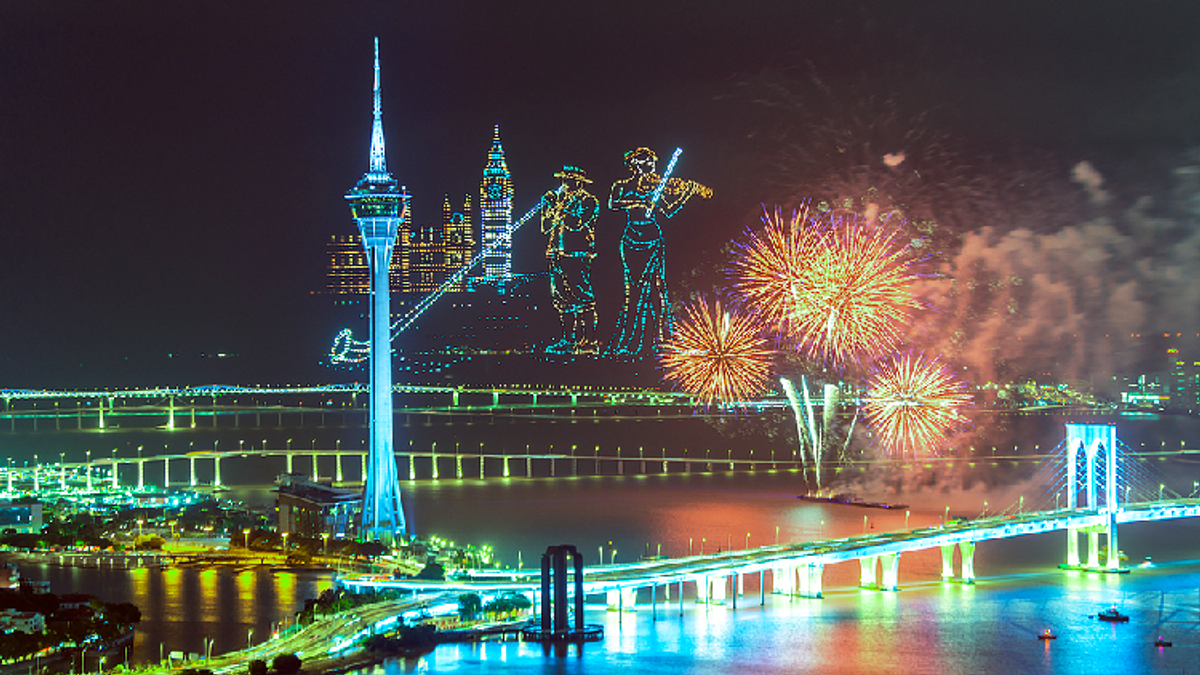
An International Forum on Mutual Learning among Civilizations 2026 is scheduled to convene in China's Macao Special Administrative Region (SAR) from November 9. The two-day event will host nearly 300 representatives from over 20 countries, focusing on cultural heritage, cross-civilizational exchanges, and the challenges of the digital age. Organized by the Macao SAR government with academic backing from the Chinese Academy of History, the forum aims to foster dialogue and mutual understanding, while underscoring Macao's historical role as a cultural bridge.
The forum’s theme, "Mutual Learning among Civilizations, Inheritance and Development," encompasses a broad agenda. Discussions are slated to cover the historical ties between the ancient Silk Road and the contemporary Belt and Road Initiative (BRI), the role of East-West exchanges in building a "community with a shared future for humanity," cultural links between China and Portuguese-speaking countries, and the critical topic of global AI governance and its impact on human values. These topics are framed within a narrative of promoting harmonious interaction and collective progress across diverse cultures.
This forum in Macao is not merely an academic gathering; it is a meticulously orchestrated exercise in soft power, designed to advance China's vision for a new global order. At its core, the event leverages cultural diplomacy to project an image of China as a benevolent, inclusive leader in international relations, capable of fostering harmony among diverse peoples.
The concept of "mutual learning among civilizations" directly challenges the prevailing Western-centric narratives of global development and governance. By emphasizing a plurality of civilizations, each with its own unique contributions, Beijing seeks to dismantle the notion of a single, universal model for societal progress, often associated with liberal democracy. This forum provides a platform to articulate an alternative framework, one that prioritizes dialogue and shared development over ideological confrontation. It’s a subtle but potent way for China to assert its own civilizational strength and offer a non-Western paradigm for international cooperation.
A central pillar of Chinese foreign policy under President Xi Jinping is the concept of a "community with a shared future for humanity." This phrase, frequently invoked in official statements, represents Beijing's aspiration for a global order characterized by cooperation, multilateralism, and mutual respect, rather than great power competition or ideological supremacy. The Macao forum serves as an ideal venue to popularize and legitimize this vision, framing it as a natural outcome of "mutual learning" and cultural exchange. It suggests that collective global challenges, from climate change to AI governance, can best be addressed through a shared understanding that transcends national interests, while implicitly positioning China as the architect of this shared future.
The explicit inclusion of the Belt and Road Initiative (BRI) in the forum's agenda is highly significant. While often perceived as an infrastructure and economic development project, the BRI is equally a cultural and ideological undertaking. By linking it to the ancient Silk Road and framing it as a vehicle for "mutual learning," China seeks to imbue the BRI with historical legitimacy and cultural depth. This reframing helps counter criticisms of the BRI as a debt trap or a tool for geopolitical influence, instead presenting it as a contemporary manifestation of historical connectivity and shared prosperity. The forum helps solidify the narrative that the BRI is a pathway not just for goods, but for ideas and cultural understanding.
Macao's selection as the host city is no accident. As a Special Administrative Region, it operates under the "One Country, Two Systems" framework, granting it a degree of autonomy and an international character. Its historical ties to Portugal and its legacy as a crossroads of East-West trade and culture make it a symbolically potent location. By hosting an international forum of this nature in Macao, Beijing projects an image of openness and international engagement, while simultaneously demonstrating its firm administrative control over the territory. It allows China to engage with a global audience from a location that retains a veneer of international neutrality and historical significance, even as its political autonomy has been progressively curtailed.
The discussion on global AI governance is particularly forward-looking. As artificial intelligence reshapes societies, economies, and even human values, the power to set ethical norms and regulatory frameworks becomes paramount. By linking AI governance to "cultural exchanges and human values," China signals its intent to be a leading voice in this crucial domain, not just from a technological standpoint, but from a philosophical and ethical one. This approach allows Beijing to advocate for AI governance models that might differ from Western frameworks, potentially emphasizing state control, social stability, and collective good over individual liberties, all under the umbrella of diverse cultural perspectives.
While the forum promotes noble ideals of mutual learning and shared future, the practical implications for ordinary people can be complex and often overlooked. The grand narratives of civilizational dialogue can sometimes obscure the specific human experiences and power imbalances inherent in such exchanges.
In a forum emphasizing "mutual learning," the question of whose voices are truly heard and whose narratives are prioritized becomes critical. With China as the primary organizer and agenda-setter, there is an inherent risk that the discourse will be subtly steered to align with Beijing's strategic objectives. This can lead to the marginalization or omission of perspectives from smaller nations, indigenous communities, or cultural groups whose experiences do not neatly fit into the dominant narrative of harmonious exchange. The "nearly 300 representatives from over 20 countries" may not fully represent the vast diversity of global civilizations, potentially leading to a curated dialogue rather than a truly open one.
While the forum celebrates the historical links of the Silk Road and the promise of the BRI, the human costs associated with BRI projects in various countries are often left unaddressed. Local communities in recipient nations have, in some instances, faced land displacement, environmental degradation, and the influx of foreign labor, leading to social tensions. The economic implications, such as increased debt burdens for developing countries, can have long-term impacts on public services and economic sovereignty, directly affecting the livelihoods of millions. These tangible human costs are unlikely to be a central topic of discussion in a forum focused on cultural harmony.
The discussions on global AI governance and its impact on human values, while vital, risk overlooking the profound disparities in access to technology and digital literacy worldwide. For vast populations in developing nations, the immediate challenges are not philosophical debates on AI ethics, but basic access to reliable internet, affordable devices, and digital education. Furthermore, the rapid advancement of AI could exacerbate existing economic inequalities, displacing workers in sectors vulnerable to automation without adequate social safety nets or retraining opportunities. The human cost here is borne by those left behind in the digital transformation, whose voices may not be at the table when global AI norms are being shaped.
The pursuit of a "shared future" and "mutual learning" can, paradoxically, lead to a subtle pressure towards cultural homogenization, particularly when a powerful state is guiding the narrative. While celebrating diversity, there is a risk that the unique specificities and independent expressions of smaller cultures might be overshadowed or subtly reframed to fit a broader, more palatable narrative of global unity. True mutual learning requires genuine respect for difference, even disagreement, and a willingness to engage with challenging perspectives, which may be difficult in a forum designed to promote a specific vision of global harmony.
Behind the stated goals of cultural exchange and mutual understanding, there are deeper political and ideological currents that the forum's organizers and participants are likely to downplay or omit. This event is not just about culture; it is about power, influence, and the global battle of ideas.
The most significant untold story is that this forum is a sophisticated ideological offensive. By promoting "mutual learning among civilizations" and a "community with a shared future," China is actively constructing a counter-narrative to the liberal international order championed by Western powers. This counter-narrative emphasizes state sovereignty, non-interference in internal affairs, and a multipolar world where diverse political systems and cultural values are equally legitimate. It subtly rejects the idea of universal human rights as defined by the West, instead promoting a more state-centric view of global governance. The forum's cultural veneer allows Beijing to advance these geopolitical objectives without appearing confrontational, making its ideological push more palatable to a broader international audience.
The official statements highlight the diversity of representatives from "over 20 countries." However, the crucial untold detail lies in the selection process of these nearly 300 individuals. Are they independent academics, government officials, or cultural figures known for their alignment with China's foreign policy objectives? The composition of attendees significantly shapes the nature and outcome of the discussions. A carefully curated guest list ensures that the dialogue remains within parameters favorable to Beijing's narrative, effectively controlling the intellectual and cultural output of the forum. This control extends to the agenda, where topics are framed to reinforce China's preferred narratives while sensitive issues are likely excluded.
While the forum champions "mutual learning" and cultural exchange on the international stage, it stands in stark contrast to China's internal policies concerning cultural and religious minorities. The treatment of Uyghurs in Xinjiang, the suppression of cultural and religious freedoms in Tibet, and the broader tightening of control over civil society and intellectual discourse within China are realities that are consistently met with international criticism. These internal policies, which contradict the spirit of "mutual learning" and cultural respect, will undoubtedly be absent from the forum's discussions. The forum thus creates a carefully managed external image that diverges sharply from internal practices.
Macao's role as a host for such an international event projects an image of an open, autonomous international city. The untold story, however, is the erosion of Macao's autonomy, mirroring developments in Hong Kong. While the "One Country, Two Systems" framework technically remains, Beijing's influence and control over the SARs have grown significantly. Hosting a forum with a strong ideological bent in Macao serves to normalize Beijing's authority over the region, presenting it as a willing and capable platform for China's global outreach, rather than an independent entity. This subtly reinforces the narrative of Macao as an integral part of China's geopolitical strategy.
As the Macao forum concludes, observers should look beyond the official communiqués and focus on the practical outcomes and sustained efforts that will reveal the true impact and intent of this initiative.
- Post-Forum Declarations and Future Initiatives: Pay close attention to any joint statements, declarations, or resolutions issued after the forum. These documents will likely contain carefully crafted language that reinforces China's "community with a shared future" narrative and its role as a global cultural leader. Also, watch for announcements of follow-up forums, permanent institutions, or collaborative projects that signal a long-term commitment to this cultural diplomacy strategy. The establishment of new platforms or networks would indicate a deeper institutionalization of China's soft power efforts.
- Engagement with Belt and Road Partner Countries: Observe how the cultural and "mutual learning" narratives from the forum are subsequently integrated into BRI projects and diplomatic engagements. Look for increased emphasis on cultural exchanges, educational programs, and people-to-people ties alongside infrastructure development. This will indicate the extent to which China is successfully weaving its cultural diplomacy into its broader economic and geopolitical initiatives, particularly with nations crucial to the BRI's expansion.
- International Reactions and Counter-Narratives: Monitor the responses from Western governments, think tanks, and media. Do they engage with the forum's themes, offer alternative perspectives, or dismiss it as propaganda? The nature of these reactions will reveal how effectively China's soft power message is resonating and whether it prompts a re-evaluation of global engagement strategies from other major powers. A lack of significant counter-narrative could signal a successful ideological penetration.
- Developments in Global AI Governance: Track China's continued participation and proposals in international bodies and discussions concerning AI ethics and regulation. The forum's emphasis on "cultural values" in AI governance suggests Beijing will advocate for frameworks that align with its own societal and political priorities. Watch for how these culturally-inflected proposals are received and whether they gain traction in shaping global AI norms, potentially challenging Western-led ethical guidelines.
- Macao's Evolving Role in China's Global Strategy: Observe if Macao continues to be utilized as a primary platform for China's international outreach and cultural diplomacy. Its historical context and perceived international character make it a valuable asset. Increased use of Macao for similar high-profile events would underscore its strategic importance in Beijing's efforts to project a specific image to the world, while simultaneously consolidating its control over the SAR.
Source referenced: CGTN
This brief was synthesized by our Editorial Engine and reviewed by The Ground Narrative team.