TRENDING

Monday, 9 November 2026
----------------------
29 Jumada Al-Awwal 1448 AH
Authorities raided former President Santiago Peña's mansion and uncovered a concealed vault, intensifying a banking scandal that has rattled Paraguay's political elite. The investigation exposes how power, money, and ordinary lives intersect in the country’s fragile democracy.
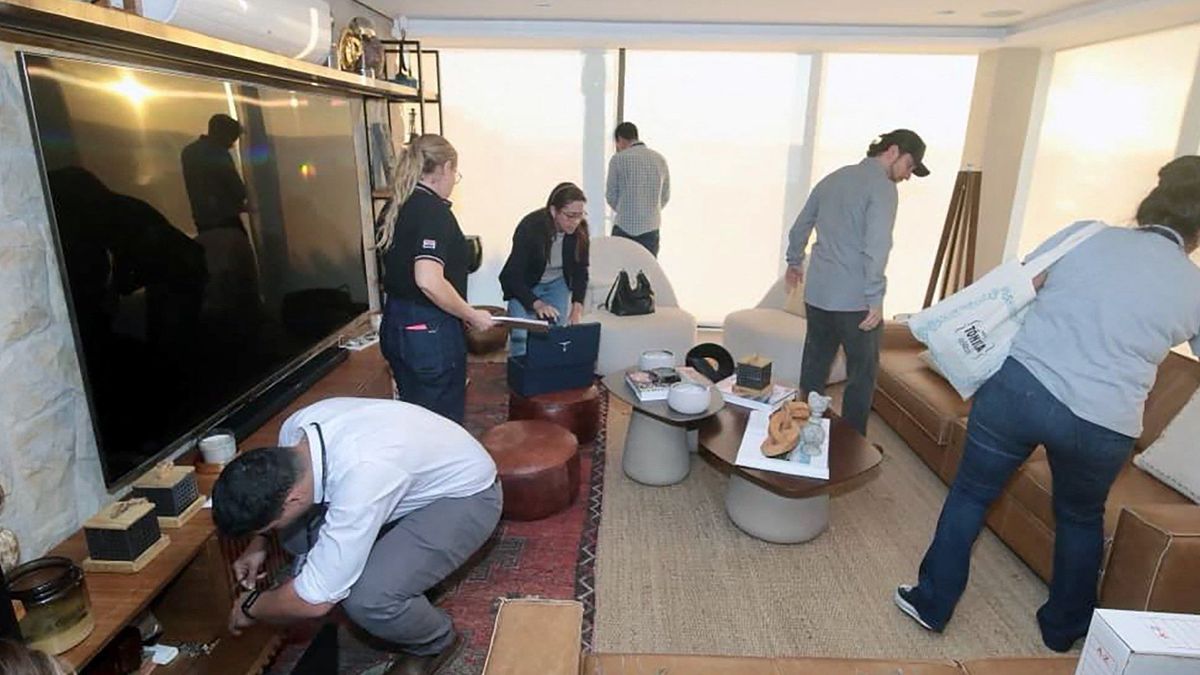
The National Police of Paraguay executed a raid on the former presidential residence of Santiago Peña on 8 November 2026. Investigators reported finding a steel‑clad vault hidden behind a false wall in the mansion’s basement, a discovery that deepens an ongoing probe into a multi‑billion‑dollar banking scandal that implicated high‑level officials and private financiers. The operation, broadcast on state‑run channels, was framed as a decisive step toward accountability, yet the broader context suggests a far more tangled power struggle.
- Political survival and patronage: Peña, who served from 2023 to 2026, built his political base on a coalition of traditional Colorado Party elites and emerging business interests. The banking scandal, centered on the collapse of Banco del Sol, threatened to erode that coalition, prompting rivals within the party to push for a high‑profile raid that would signal a break from the past.
- Financial sector entanglements: Paraguay’s banking system remains heavily dependent on foreign capital, especially from Argentine and Brazilian investors. The hidden vault reportedly contained cash and documents linking Peña to offshore accounts used to launder proceeds from dubious loan guarantees granted to politically connected firms. This arrangement illustrates how state‑backed credit lines can become tools for personal enrichment when oversight is weak.
- International pressure: The International Monetary Fund (IMF) has warned Paraguay that continued governance lapses could jeopardize a $1.2 billion loan program. By allowing the raid to proceed, the government signals compliance with IMF expectations, hoping to preserve much‑needed financing for infrastructure projects.
- Alliance math: Within the broader South American context, Brazil’s Lula administration and Argentina’s Massa government have both expressed concern over regional financial stability. Their tacit support for a transparent investigation serves to distance their own regimes from the corruption narrative while preserving trade ties.
The collapse of Banco del Sol left thousands of rural borrowers unable to service agricultural loans, pushing many into debt spirals. Crop cycles were disrupted, and families faced food insecurity as credit lines evaporated.
In Asunción, public sector employees saw delayed salary payments after the government diverted funds to cover the banking shortfall. Pensioners, already living on modest state benefits, reported increased hardship as inflation surged following the scandal’s exposure.
Indigenous groups, who rely on communal land financing, were excluded from emergency relief packages because the scandal exposed systemic biases in loan approval processes. Their marginalization underscores how elite corruption disproportionately harms the most vulnerable.
- Government framing: Official statements emphasize the raid as a triumph of law enforcement, downplaying the possibility that the operation was timed to weaken Peña’s allies ahead of the 2027 presidential primaries. By portraying the investigation as apolitical, the administration seeks to maintain a veneer of impartiality.
- Corporate silence: Major construction firms that benefited from the dubious loan guarantees have remained largely silent, avoiding public scrutiny while quietly lobbying legislators to amend banking regulations in their favor.
- Media self‑censorship: While independent outlets have reported on the vault’s contents, mainstream newspapers have limited coverage, citing “ongoing legal processes.” This restraint limits public understanding of the scale of financial misappropriation.
- Foreign intelligence: Leaked diplomatic cables suggest that the United States, through its State Department, encouraged a swift raid to reassure investors and preserve regional stability, a motive rarely disclosed in public briefings.
- Judicial proceedings: The upcoming trial of Santiago Peña will test Paraguay’s judicial independence. Watch for any indications of political interference, especially as the Colorado Party prepares its next candidate.
- Legislative reforms: Parliament is expected to debate stricter banking oversight laws. The speed and scope of these reforms will signal whether the scandal triggers systemic change or merely a cosmetic reset.
- IMF negotiations: The next tranche of IMF funding hinges on demonstrable anti‑corruption measures. Delays or concessions could reshape Paraguay’s fiscal trajectory.
- Election dynamics: Opinion polls show a surge in support for anti‑establishment candidates. The scandal’s fallout may reshape voter alignments, especially in rural provinces where the human cost is most acute.
- Regional ripple effects: Neighboring countries will monitor Paraguay’s response, as similar banking vulnerabilities exist across the Southern Cone. Any precedent set here could influence broader South American financial governance.
The scandal centered on the collapse of Banco del Sol, where loan guarantees were allegedly funneled to firms linked to former President Santiago Peña. Investigators allege the use of offshore accounts and a hidden vault to launder the proceeds.
The raid undermines Peña's political allies within the Colorado Party, potentially reshaping candidate selection and boosting anti‑establishment challengers. Voter sentiment, especially in rural areas hit by the banking fallout, could shift dramatically.
Editor's Note: Analysis based on publicly available reports and expert commentary; ongoing investigations may reveal additional details.
Source referenced: ALJAZEERA
This brief was synthesized by our Editorial Engine and reviewed by The Ground Narrative team.


