TRENDING

Monday, 9 November 2026
----------------------
29 Jumada Al-Awwal 1448 AH
At least 21 migrants and refugees died attempting to reach the Greek island of Crete, highlighting the deadly risks of irregular migration routes to Europe. This tragedy underscores the escalating human cost of border enforcement policies.
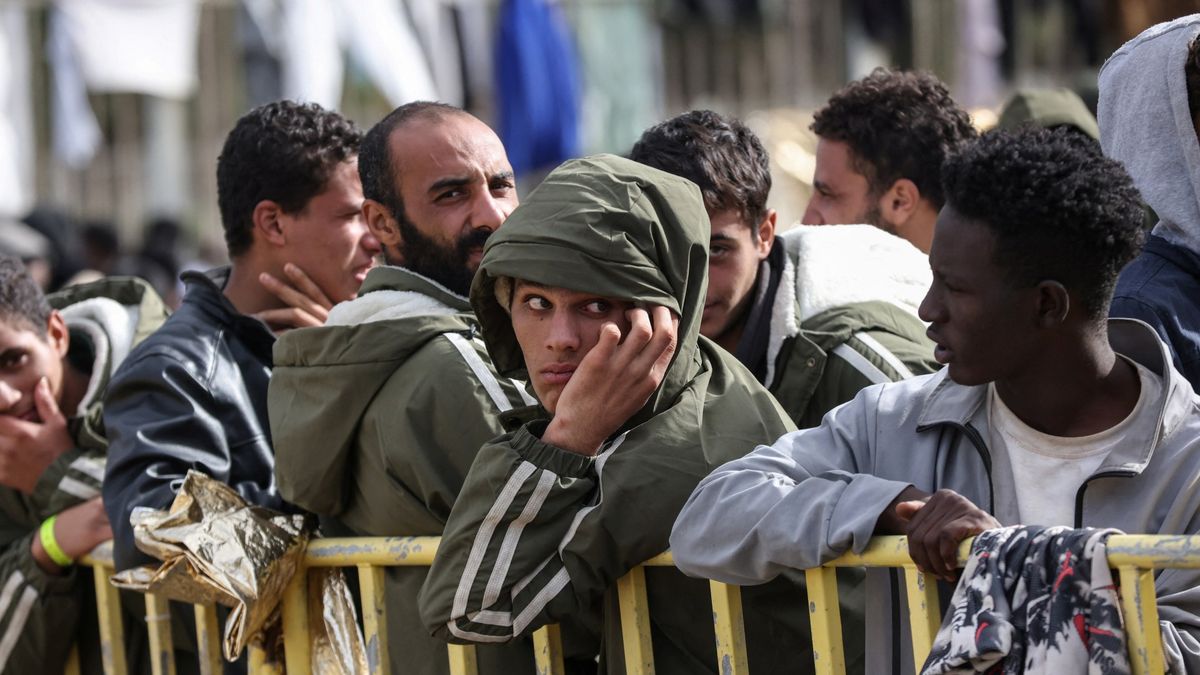
At least 21 migrants and refugees died in separate incidents while attempting to reach the Greek island of Crete. The Greek coastguard recovered 12 bodies and rescued 18 people from one vessel, initially spotted by a Morocco-flagged container ship south of the island. One survivor later succumbed to their injuries. In a separate event, eight bodies were recovered and 28 individuals rescued from another boat off southern Crete, with two people still unaccounted for. These incidents occurred as other vessels carrying dozens more migrants were located in the same vicinity, with the European Union's border agency Frontex assisting in their detection and rescue using aircraft and drones.
The recurring tragedies off Greece's shores are not isolated maritime accidents but direct consequences of a complex interplay of power dynamics, economic disparities, and hardened border policies. At the heart of this dynamic is the European Union's evolving approach to irregular migration, often characterized as a 'Fortress Europe' strategy. This approach prioritizes deterrence and externalization of borders, aiming to reduce arrivals on European soil by making the journey increasingly difficult and perilous.
The shift of migration routes towards destinations like Crete is a telling indicator of this strategy's impact. Historically, the Aegean Sea routes from Turkey to the Greek islands, or the Central Mediterranean route from Libya to Italy and Malta, were primary entry points. However, intensified patrols, surveillance, and cooperation agreements with transit countries have made these paths harder to traverse. This pressure pushes desperate individuals and the smuggling networks that exploit them to seek longer, more dangerous, and less patrolled routes, such as the extended sea journey to Crete from points further south or east. This longer journey across open sea increases exposure to harsh weather, engine failure, and lack of supplies, directly contributing to higher fatality rates.
Greece, as a frontline state, finds itself caught between its humanitarian obligations under international law and the immense pressure from the EU to control its external borders. The country receives significant financial and operational support from the EU, including the deployment of Frontex assets, but also faces criticism from human rights organizations for its border enforcement practices. The Greek coastguard, while undertaking rescue operations, is also tasked with interdiction, creating a complex operational environment where saving lives and preventing entry can sometimes be in tension.
Frontex, the EU's border and coast guard agency, plays a pivotal role. Equipped with advanced surveillance technology like drones and aircraft, it enhances the EU's ability to detect and intercept vessels. While Frontex reports a decrease in overall irregular border crossings into the bloc—a figure often highlighted in official statements—this statistic, while numerically accurate, can mask the increased lethality of the routes still being attempted. The agency's mandate is primarily border control, which, by design, contributes to the 'hardening' of borders, pushing migrants into more dangerous situations rather than addressing the root causes of their displacement or creating safe pathways.
Finally, the power asymmetry between the affluent European Union and the conflict-ridden, poverty-stricken nations of the Middle East, Africa, and Asia is the fundamental driver. Economic desperation, political instability, and ongoing conflicts in these regions compel individuals to undertake these perilous journeys, viewing the slim chance of survival and a better life in Europe as a preferable alternative to their current circumstances. The power lies with those who control the borders, dictating the terms of entry, while the desperate are left with few options but to risk everything.
The immediate and most devastating human cost of these policies is borne by the individuals who lose their lives at sea. The 21 migrants and refugees who perished off Crete represent not just a statistic, but stories cut short—families shattered, hopes extinguished. Their deaths are a stark reminder of the extreme risks undertaken, often out of sheer desperation, to escape unbearable conditions in their home countries.
For those rescued, the ordeal does not end with landfall. Survivors often carry profound physical and psychological trauma from the journey, witnessing death and enduring extreme hardship. Upon arrival, they face an uncertain future, navigating complex asylum procedures, potential detention, and the constant fear of deportation. They are often housed in temporary, overcrowded facilities, lacking adequate support services. The psychological toll of displacement, loss, and the harrowing journey can manifest in long-term mental health challenges, making integration into a new society incredibly difficult.
The human cost extends far beyond those on the boats. Families in countries of origin, often pooling meager resources to fund a loved one's journey, face agonizing waits for news. The deaths of migrants represent not only personal tragedies but also the loss of potential income and support for entire families and communities. These individuals often represent the most resilient and entrepreneurial members of their societies, whose departure or death further depletes their home countries of vital human capital and hope for future development.
Local communities in Greece, particularly on islands like Crete, also bear a significant human cost. While many residents demonstrate compassion, the continuous arrival of migrants can strain local resources, including housing, healthcare, and social services. This can lead to increased social tensions, particularly when national governments or the EU fail to provide adequate support and infrastructure for managing arrivals and processing asylum claims efficiently. The burden often falls disproportionately on these frontline communities, who are left to manage a crisis largely driven by international and geopolitical forces.
What often goes unsaid or is deliberately downplayed by powerful actors—governments, international agencies, and political leaders—is the direct link between European Union policy choices and the increased lethality of migration routes. While official statements often lament the loss of life, they rarely acknowledge the extent to which the 'Fortress Europe' approach actively funnels desperate people into more dangerous pathways.
Frontex's reports of decreasing irregular border crossings, while factually correct in terms of numbers, serve a powerful political narrative. They allow EU member states to claim success in controlling borders and managing migration flows. However, this narrative carefully omits the critical detail that fewer crossings do not necessarily mean less desperation or fewer attempts; rather, it often means more dangerous attempts. The 'success' of deterrence is measured in reduced arrivals, not in lives saved or the provision of safe passage. The human cost of this 'success' is paid in the waters off Crete and across the Mediterranean, far from the political capitals where these policies are crafted.
A critical omission in public discourse is the near-total lack of safe and legal pathways for asylum seekers and migrants to reach Europe. International law mandates the right to seek asylum, yet the practical means to exercise this right are severely restricted. Without viable legal avenues, individuals fleeing conflict, persecution, or extreme poverty are left with no choice but to rely on dangerous, illicit smuggling networks. This creates a lucrative business for criminal organizations, who profit directly from the EU's restrictive policies, effectively outsourcing border control to the sea and the smugglers.
Furthermore, powerful nations often downplay their own historical and contemporary roles in creating the conditions that force people to flee. Western foreign policy, military interventions, economic exploitation, and climate change contributions have destabilized regions in the Middle East, Africa, and Asia, directly fueling the displacement crises. While Europe focuses on managing the symptoms at its borders, the deeper geopolitical roots of migration—often linked to the actions of the very powers now seeking to prevent entry—remain largely unaddressed or conveniently externalized.
Finally, the official death tolls, such as the 21 off Crete, represent only the detected tragedies. The vastness of the Mediterranean Sea means that many boats sink without a trace, their occupants never accounted for. The true number of lives lost is undoubtedly far higher than any official statistic, making the Mediterranean a silent graveyard, its depths holding countless untold stories of desperation and death. Governments and agencies are quick to report rescues and recovered bodies, but rarely emphasize the unseen scale of the catastrophe.
Readers should closely monitor several key developments that will shape the future of migration across the Mediterranean and the human cost associated with it.
First, observe the continued evolution of EU migration policies. With upcoming European Parliament elections and shifting political landscapes in member states, there may be renewed calls for either stricter border controls or, conversely, more humane and comprehensive approaches. Any significant shift in policy, particularly regarding the creation of safe and legal pathways, would have a profound impact on the routes migrants attempt and the risks they face.
Second, pay attention to the operational scope and budget of Frontex. As the agency continues to expand its technological capabilities and presence, its role in both surveillance and interdiction will grow. Scrutiny over Frontex's human rights record and accountability mechanisms will be crucial, as its actions directly influence the safety and rights of migrants at sea.
Third, watch for shifts in migration routes. As certain areas become more heavily patrolled, smuggling networks and desperate individuals will adapt, seeking new, potentially even more dangerous, routes. The emergence of Crete as a significant entry point is a clear example of this adaptation. Future shifts could involve longer journeys across the Atlantic to the Canary Islands, or new routes through the Black Sea.
Finally, keep an eye on the geopolitical stability of key origin and transit countries in Africa, the Middle East, and Asia. Continued conflict, economic collapse, or the worsening impacts of climate change in these regions will inevitably lead to further displacement, maintaining the pressure on Europe's borders and perpetuating the cycle of desperate journeys and human tragedies at sea. The underlying drivers of migration, rather than just the symptoms at the border, will ultimately determine the scale of the human cost.
Source referenced: ALJAZEERA
This brief was synthesized by our Editorial Engine and reviewed by The Ground Narrative team.


