TRENDING

Tuesday, 10 November 2026
----------------------
30 Jumada Al-Awwal 1448 AH
A high‑profile meeting at the White House failed to move the Iran conflict toward peace. The analysis shows who holds the levers, who suffers, and what to monitor next.
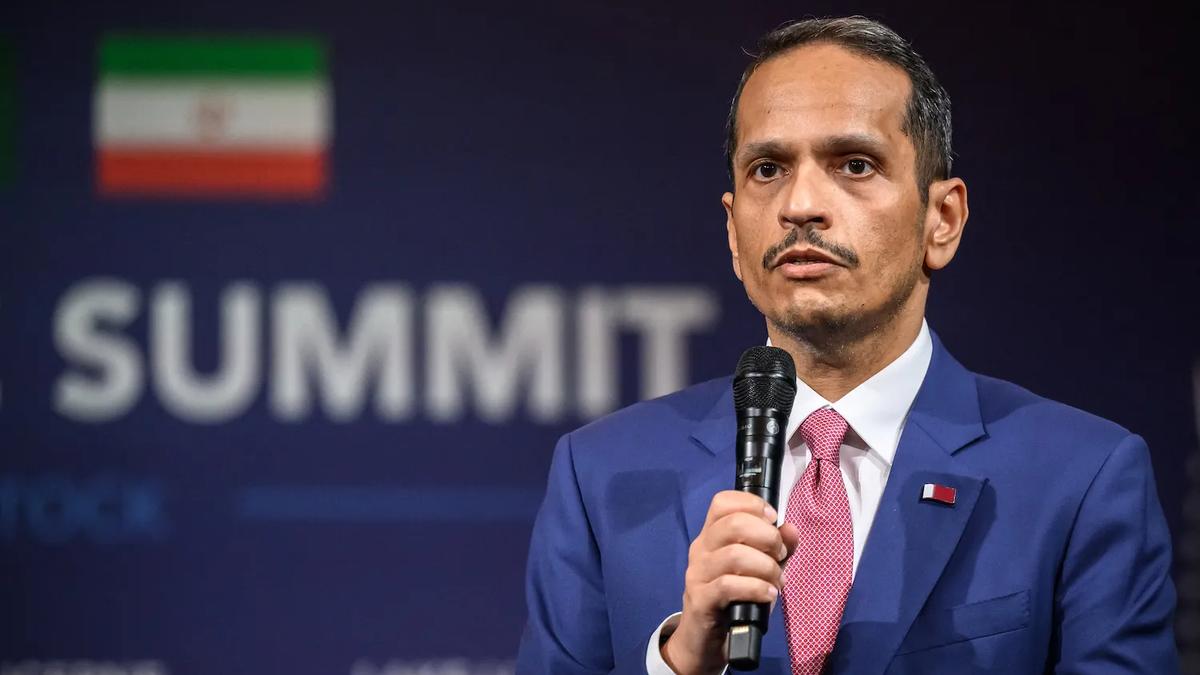
President Donald Trump welcomed Qatari Prime Minister Sheikh Mohammed bin Abdulrahman al‑Thani at the White House on November 9, 2026. The two discussed Tehran’s two‑day proposal that would lift the U.S. naval blockade, release frozen Iranian assets, and reopen the Strait of Hormuz in exchange for IAEA inspections and a pause in hostilities. Senior U.S. officials, including Secretary of State Marco Rubio, expressed deep skepticism, calling Iran’s conditions “outrageous” and saying a breakthrough was far off.
The meeting sits at the intersection of three overlapping incentive structures. First, the United States seeks to avoid a costly escalation that could draw in regional allies and strain an already stretched military budget. Trump’s administration also faces domestic pressure from a war‑weary electorate and a Congress wary of new authorizations for force. Second, Qatar leverages its reputation as a neutral broker to cement its role as a regional power‑player, attracting foreign investment and diplomatic goodwill that offset its limited military capabilities. By positioning itself between Washington and Tehran, Doha extracts concessions, such as security guarantees and economic aid, that reinforce its sovereign wealth fund and tourism sector.
Third, Iran balances internal legitimacy against external isolation. The war has eroded public confidence after years of economic hardship under sanctions, yet the regime cannot appear to capitulate without risking a blow‑back from hard‑liners and the Revolutionary Guard. Tehran’s two‑day plan is a calibrated gamble: it offers limited concessions that preserve its nuclear bargaining chip while testing whether the United States will bend on sanctions and oil waivers. The broader alliance math includes Pakistan, which watches the Strait of Hormuz for its own energy imports, and Russia, which quietly supplies Tehran with drones, hoping a prolonged conflict will keep U.S. attention divided.
The diplomatic choreography also reflects a classic “track‑two” dynamic. Qatar’s mediation allows both sides to save face publicly while exchanging red‑lines behind closed doors. However, the lack of a clear enforcement mechanism—no third‑party guarantor, no timeline—means any agreement would rely on mutual restraint, a fragile foundation when both parties retain significant military assets in the region.
The blockade has choked off imports of food, medicine, and spare parts, driving inflation above 70% and forcing families to queue for basic supplies. Hospitals in Tehran and the oil‑rich south report shortages of essential drugs, while unemployment in the informal sector has surged as ports remain partially closed.
The Strait of Hormuz handles roughly a fifth of global oil shipments. Even a partial closure spikes freight rates, inflating fuel costs for truckers, airline crews, and coastal fishermen who depend on stable prices. Small‑scale operators in the United Arab Emirates and Oman see profit margins erode as insurance premiums for vessels skyrocket.
American troops stationed in the Persian Gulf face heightened alert levels, extending deployments and increasing the risk of accidental engagements. Families back home contend with longer separations and the psychological toll of an ambiguous conflict that offers no clear end‑state.
Official statements frame the talks as a humanitarian effort, but several layers remain hidden. First, the U.S. administration downplays the domestic political calculus: Trump’s personal rapport with tech magnate Jensen Huang and the looming 2028 election incentivize a narrative of “peace without sacrifice” to sidestep criticism over military spending. Second, Qatar’s financial ties to European energy firms are omitted; a successful de‑escalation would preserve lucrative LNG contracts that Qatar secured during the 2022‑2024 energy crunch.
Third, Iran’s internal dissent is largely invisible in diplomatic rhetoric. Protestors in Tehran have taken to the streets demanding the release of political prisoners and an end to the war, but state media suppresses coverage, and foreign journalists face expulsion. Finally, the broader China factor is brushed aside. Beijing’s denial of espionage allegations against a senior AI executive masks its strategic interest in a weakened U.S. presence in the Gulf, which would open pathways for Chinese infrastructure projects under the Belt and Road Initiative.
Watch for any shift in the U.S. sanctions regime. A partial rollback—such as reinstating oil waivers—could signal a de‑escalation, while a new round of sanctions would likely reignite hostilities. Monitor Qatar’s public statements for hints of a “security guarantee” to Tehran, which would indicate a deeper quid‑pro‑quo beyond the two‑day proposal. Finally, keep an eye on naval movements in the Strait of Hormuz; a sudden increase in U.S. carrier deployments or Iranian missile drills would be a tangible barometer of the conflict’s trajectory.
In the coming weeks, the balance between diplomatic posturing and on‑the‑ground realities will determine whether the war drags on, flares up, or finally finds a fragile pause. The stakes are not abstract geopolitical chess pieces—they are the daily lives of dockworkers, doctors, soldiers, and families caught in the crossfire.
Qatar leverages its neutral reputation and economic ties to both sides to boost its regional influence, attract investment, and secure security guarantees that protect its own interests.
Easing sanctions could ease Iran’s economic pressure, encouraging Tehran to accept a ceasefire, but it also risks emboldening hard‑liners who may view concessions as a sign of weakness.
Source referenced: FOREIGNPOLICY
This brief was synthesized by our Editorial Engine and reviewed by The Ground Narrative team.