TRENDING

Monday, 5 October 2026
----------------------
24 Rabi' Al-Thani 1448 AH
North Korea's recent ballistic missile tests are a deliberate response to upcoming US-South Korea military drills, signaling the country's opposition to what it views as a rehearsal for invasion. As tensions escalate, the international community must consider the human cost and the power dynamics at play.
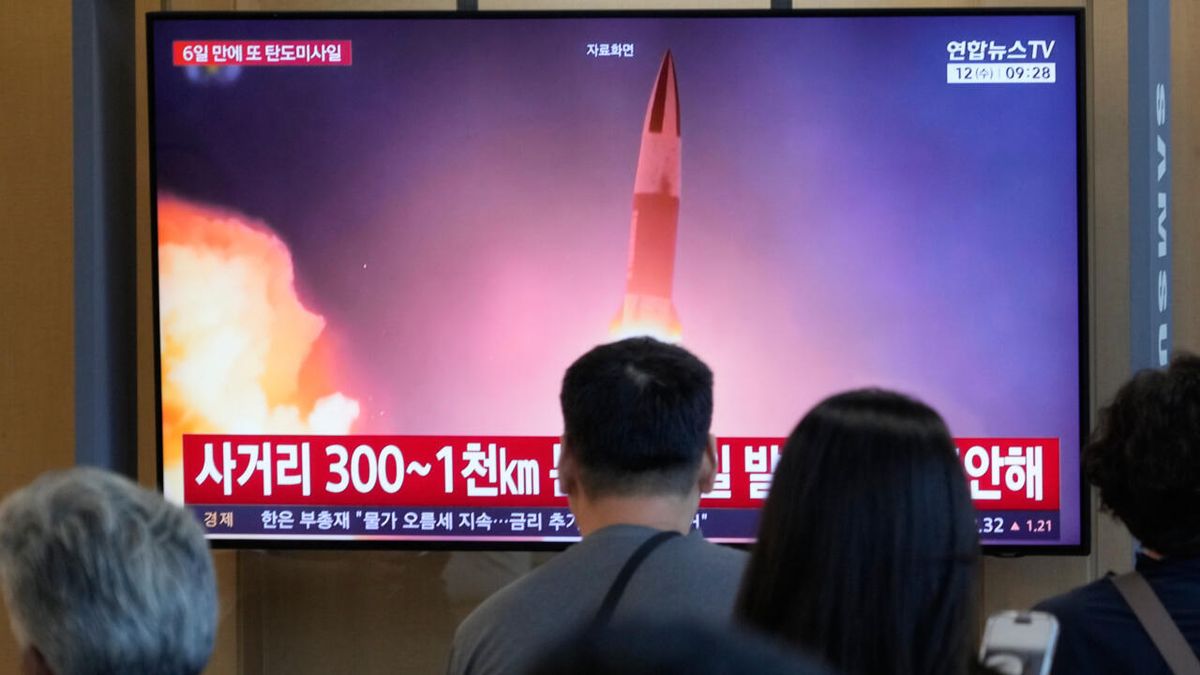
North Korea conducted its second ballistic missile test in less than a week, with the launch detected by South Korea and Japan. The test is seen as a protest against the upcoming annual military drills between South Korea and the US, which North Korea views as a rehearsal for an invasion.
The launches are part of North Korea's extended run of weapons tests, which have been ongoing for years. Experts believe that North Korea often uses its rivals' military training as a pretext to boost its own testing activities. The country has refused to return to talks with the US and South Korea, and instead, has been expanding its nuclear and missile arsenals. This is likely an attempt by Kim Jong Un to wrest concessions from the US, such as relaxing international economic sanctions.
The people of Japan and South Korea are directly affected by North Korea's missile tests, with the Japanese Defence Ministry detecting the launch and the South Korean Joint Chiefs of Staff reporting that the missile flew over 700 kilometers. The tests also have a broader impact on regional stability and global security. The international community must consider the human cost of these actions, including the potential for miscalculation or accident that could lead to devastating consequences.
What is being downplayed by powerful actors is the role of China and Russia in supporting North Korea's actions. Kim Jong Un has been strengthening cooperation with Russia, supplying troops and ammunition to support its war against Ukraine, and has also taken steps to bolster ties with China. The visit of Chinese President Xi Jinping to Pyongyang in June highlights the growing diplomatic footprint of North Korea. The US and its allies must acknowledge the complex web of relationships and interests that are driving North Korea's behavior.
Readers should watch for the response of the US and South Korea to North Korea's missile tests, particularly in the context of the upcoming military drills. The international community should also monitor the growing cooperation between North Korea, China, and Russia, and consider the implications for regional and global security. As tensions escalate, the potential for miscalculation or accident increases, making it essential to prioritize diplomacy and dialogue to reduce the risk of conflict.
Editor's Note: The analysis is based on publicly available information and may not reflect the full complexity of the situation.
Source referenced: FRANCE24
This brief was synthesized by our Editorial Engine and reviewed by The Ground Narrative team.


