TRENDING

Monday, 19 October 2026
----------------------
8 Jumada Al-Awwal 1448 AH
Nigeria has issued a flood alert for 14 states, warning residents and local governments to prepare for possible flooding as heavy rains intensify. The warning highlights the consequences of climate change and rapid urbanization on the country's infrastructure and communities.
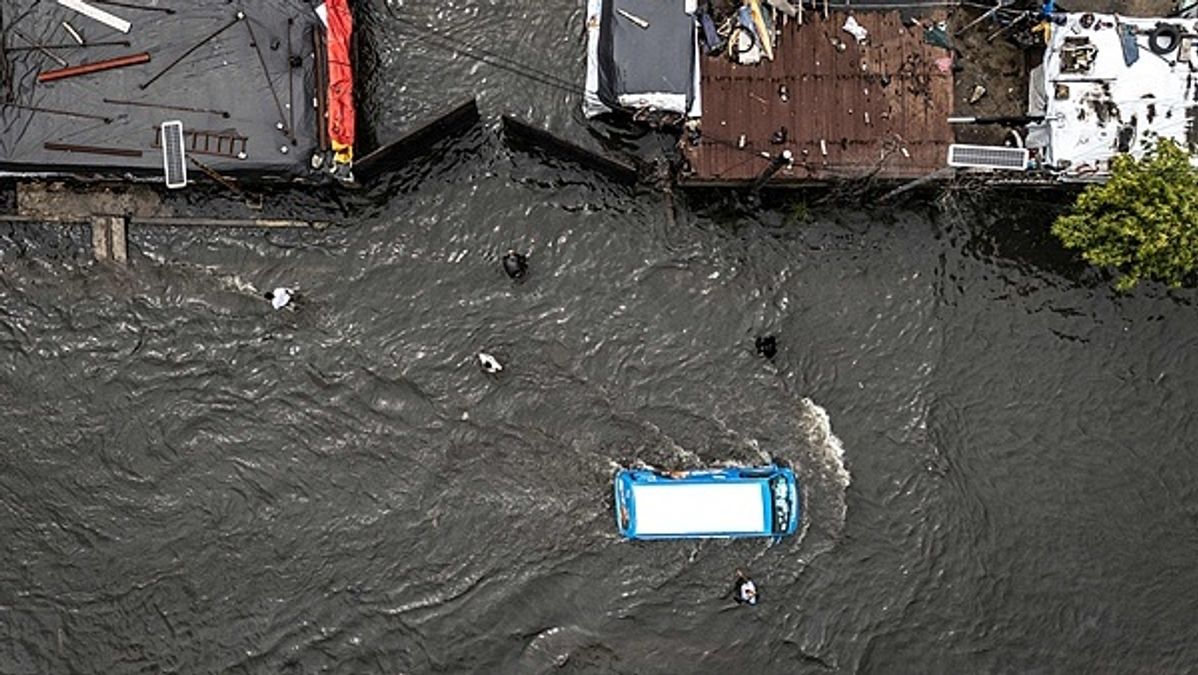
Nigeria has issued a flood alert for 14 states, warning residents and local governments to prepare for possible flooding as heavy rains intensify. The warning highlights the consequences of climate change and rapid urbanization on the country's infrastructure and communities.
The Nigeria Hydrological Services Agency (NIHSA) has issued an advisory warning that 14 states face a medium flood risk between July 16 and July 22. The affected states are Adamawa, Akwa Ibom, Anambra, Bauchi, Benue, Borno, Cross River, Edo, Enugu, Imo, Kaduna, Lagos, Niger, and Plateau. NIHSA has identified 16 hydrological monitoring stations as high-risk locations, and several communities, local government areas, and critical public facilities, including schools, healthcare centers, and markets, could be affected if preventive measures are not taken.
The flood alert is a warning of the consequences of climate change and rapid urbanization on Nigeria's infrastructure and communities. The country experiences widespread flooding almost every rainy season, with the rains typically beginning in March before intensifying from mid-May through much of the country. Floods regularly destroy homes, damage farmland and infrastructure, displace thousands of people, and disrupt economic activity.
In recent years, authorities have attributed the growing frequency and severity of flooding to a combination of climate change, rapid urbanization, poor drainage systems, and settlements built along floodplains. More intense rainfall has increasingly overwhelmed existing infrastructure, leaving many communities vulnerable to flash floods and river overflows.
The flood alert has significant regional implications, as Nigeria is a key player in West Africa. The country's economic and social stability is crucial to the region's overall development. The consequences of climate change and rapid urbanization in Nigeria could have far-reaching effects on the region's infrastructure, economy, and communities.
The flood alert highlights the need for Nigeria to take proactive measures to mitigate the effects of climate change and rapid urbanization. This includes investing in infrastructure, improving drainage systems, and promoting sustainable urban planning. Failure to do so could lead to more frequent and severe flooding, with devastating consequences for the country's communities and economy.
The flood alert affects 14 states in Nigeria, with several communities, local government areas, and critical public facilities at risk. The affected areas include Saminaka along the Karam River, the Waya Dam site on the Waya River, and Amber on the Amber River.
The flood alert is in effect from July 16 to July 22, with the affected states including Adamawa, Akwa Ibom, Anambra, Bauchi, Benue, Borno, Cross River, Edo, Enugu, Imo, Kaduna, Lagos, Niger, and Plateau.
The flood alert is a result of climate change and rapid urbanization, which have led to more intense rainfall and overwhelmed existing infrastructure. The country's poor drainage systems and settlements built along floodplains have also contributed to the growing frequency and severity of flooding.
The flood alert highlights the need for Nigeria to take proactive measures to mitigate the effects of climate change and rapid urbanization. This includes investing in infrastructure, improving drainage systems, and promoting sustainable urban planning. By taking these measures, Nigeria can reduce the risk of flooding and protect its communities and economy.
The flood alert in Nigeria is a warning of the consequences of climate change and rapid urbanization on the country's infrastructure and communities. The warning highlights the need for Nigeria to take proactive measures to mitigate the effects of climate change and rapid urbanization. By doing so, Nigeria can reduce the risk of flooding and protect its communities and economy.
Editor's Note: The analysis is based on available data and information, but the consequences of climate change and rapid urbanization on Nigeria's infrastructure and communities are uncertain and may vary depending on various factors.
Source referenced: CGTN
This brief was synthesized by our Editorial Engine and reviewed by The Ground Narrative team.