TRENDING

Sunday, 18 October 2026
----------------------
7 Jumada Al-Awwal 1448 AH
A sophisticated drug trade using drones and balloons is surging across the Jordan-Israel border, raising alarms in Amman. This shift follows the collapse of the Assad regime in Syria, redirecting illicit flows and exposing deep vulnerabilities.
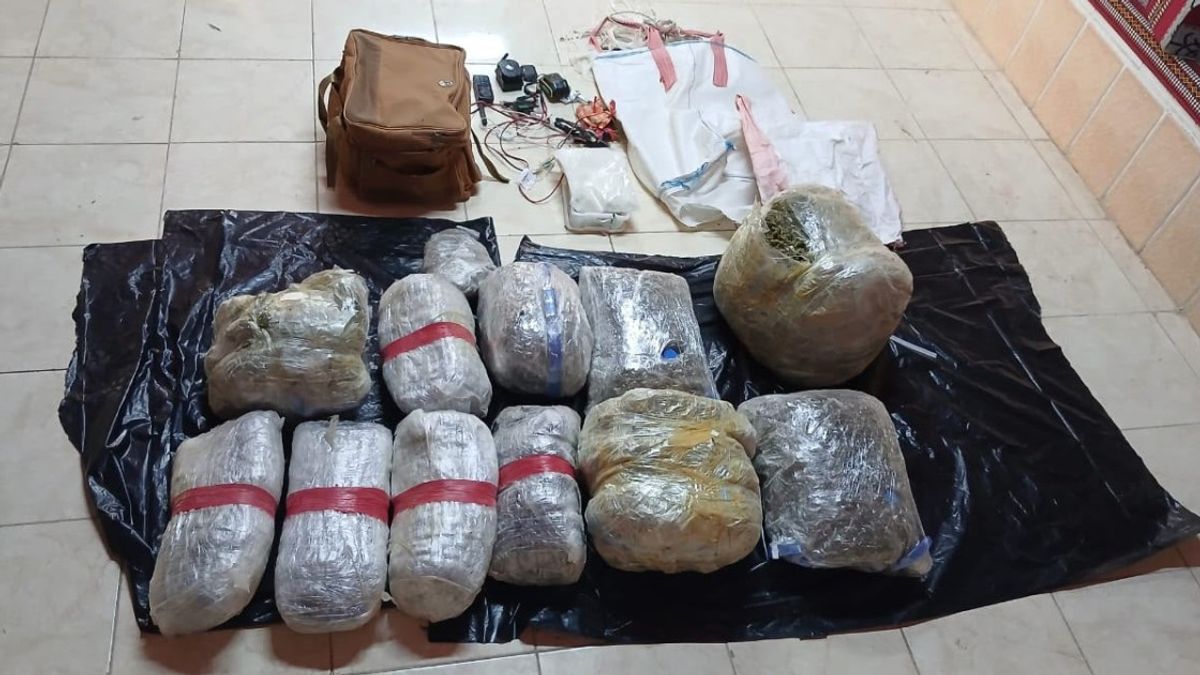
A new and sophisticated drug trade has rapidly escalated along the Jordan-Israel border, transforming it into a major conduit for illicit narcotics. Organized networks, primarily operating from Israel's Negev Desert, are employing high-tech methods, including quadcopter drones and helium-filled balloons equipped with GPS, to smuggle substantial quantities of hashish, crystal meth, and amphetamines into Jordan. This surge represents a significant shift in regional drug dynamics, particularly following the collapse of the Bashar al-Assad regime in Syria in late 2024, which had previously been a hub for Captagon production and distribution. Jordanian authorities report a dramatic increase in interception operations, underscoring the growing concern in Amman over the security and societal implications of this evolving threat.
The emergence of the Jordan-Israel border as a drug hotspot is a direct consequence of shifting power dynamics and economic incentives in the broader Middle East. The fall of the Assad regime in Syria disrupted established Captagon supply chains, compelling criminal networks to seek new routes and markets. This created a vacuum that the Negev Desert gangs, with their sophisticated operational capabilities, were quick to exploit.
The primary driver for this trade is the staggering profit margin. Reports indicate that the price of hashish in Jordan can be as much as 15 times higher than in Israel, making the risk-reward calculation highly favorable for smugglers. This economic incentive fuels a continuous investment in advanced technology, allowing networks to outpace traditional border security measures. The use of drones capable of carrying up to 50kg of narcotics signifies a level of organization and financial backing that challenges conventional law enforcement.
A critical power dynamic at play is the asymmetric focus of Israel's border security. While the Jordan-Israel border is one of the most heavily surveilled in the world, Israel's security apparatus is overwhelmingly geared towards preventing threats and illicit goods from *entering* its territory. The construction of a new security barrier and the deployment of the 96th Division in the Jordan Valley in 2025 are primarily defensive measures against infiltration *into* Israel. This leaves a significant blind spot concerning illicit goods *leaving* Israel for Jordan, creating a permissive environment for outward-bound smuggling operations. The Israeli army's preoccupation with ongoing conflicts in Gaza, Lebanon, and the occupied Golan Heights further diverts resources and attention from its eastern flank, inadvertently providing smugglers with increased room to maneuver.
On the Jordanian side, the kingdom finds itself increasingly vulnerable. While Jordan has historically been a transit point for drugs, it is now becoming a significant market, exacerbating internal security challenges. The Royal Jordanian Air Force's past strikes on drug manufacturing sites in Syria demonstrated Amman's resolve, but the current threat emanates from a technically allied neighbor, complicating response strategies. The accusations from Jordanian security forces that the Israeli army is not taking the issue seriously highlight a growing friction point in their bilateral relationship. This situation underscores Jordan's precarious position, caught between regional instability and the internal pressures of a growing drug problem.
The burgeoning drug trade across the Jordan-Israel border exacts a severe human toll, impacting communities on both sides and threatening the social fabric of the region. This is not merely a security issue; it is a public health crisis and a destabilizing force for vulnerable populations.
For Jordan, the human cost is most directly felt in its burgeoning domestic drug problem. With 72 percent of seized drug cases in the first half of 2026 related to usage rather than trafficking, the data paints a stark picture of a society increasingly grappling with addiction. This influx of narcotics, particularly crystal meth and black hashish, is eroding public health, straining social services, and potentially leading to a rise in associated crime. Young people, often facing economic hardship and limited opportunities, become particularly susceptible, perpetuating cycles of poverty and addiction. The kingdom's resources, already stretched by regional crises and a large refugee population, are further burdened by the need for increased law enforcement, rehabilitation services, and public awareness campaigns.
Within Israel, the human cost is borne by marginalized communities, particularly among Palestinian citizens of Israel. Reports indicate a link between widespread disenfranchisement, poverty, and involvement in the drug trade within these communities. This entanglement in illicit activities not only perpetuates a cycle of crime and incarceration but also deepens existing societal inequalities. Accusations that Israel has allowed crime to fester in Palestinian towns to create divisions and prevent calls for greater rights, if true, represent a profound human cost – the deliberate undermining of social cohesion and the exploitation of vulnerability for political ends. This narrative suggests that the drug trade is not merely an unfortunate consequence of economic disparity but potentially a tool of social control, with devastating long-term impacts on the affected populations.
Beyond individual communities, the drug trade erodes trust between Jordan and Israel, two countries with a fragile peace treaty. The accusations of Israeli inaction or even implicit complicity by Jordanian officials strain diplomatic relations and undermine cooperation on broader security issues. This breakdown of trust has a human cost in terms of regional stability, making it harder to address shared challenges and potentially fueling further cycles of conflict and insecurity. The presence of sophisticated criminal networks operating with apparent impunity also destabilizes border regions, increasing insecurity for residents and legitimate cross-border commerce.
Beneath the surface of official statements and security reports lies a more complex and troubling narrative, one that powerful actors are actively downplaying or omitting. The Jordan-Israel border drug trade is not merely a consequence of criminal enterprise; it is intertwined with geopolitical realities, internal societal vulnerabilities, and a selective application of state power.
The most significant untold story revolves around the persistent questions regarding Israel's level of awareness, and even implicit complicity, in the drug flow. Jordanian officials openly accuse the Israeli army of not taking the issue seriously. The sheer volume and sophistication of the smuggling operations—drones carrying 50kg of narcotics across a supposedly
Source referenced: ALJAZEERA
This brief was synthesized by our Editorial Engine and reviewed by The Ground Narrative team.