TRENDING

Monday, 19 October 2026
----------------------
8 Jumada Al-Awwal 1448 AH
Student-led protests in France have rapidly expanded into a wave of unrest across Europe, driven by grievances over the high cost of living and cuts to social services. Young people are challenging governments, demanding a more secure and equitable future.
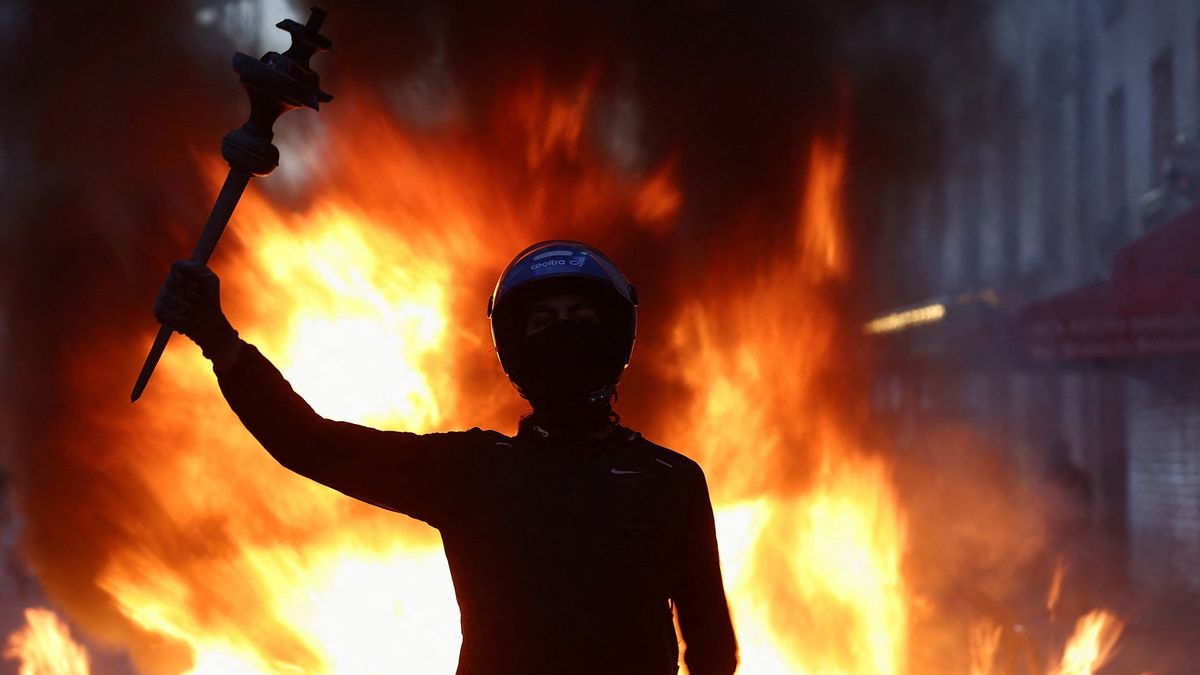
Weeks of student-initiated protests in France, initially focused on education reforms, have rapidly escalated into widespread social unrest now sweeping across other parts of Europe. These demonstrations have broadened significantly, evolving into a powerful expression of frustration against the soaring cost of living and proposed cuts to vital social services. Young people across the continent are taking to the streets, directly challenging political leaders whom they accuse of failing to address their fundamental needs and secure their future.
The current wave of youth-led protests across Europe is not an isolated phenomenon but a direct consequence of decades of converging political and economic forces. At its core, this unrest highlights a fundamental tension between the perceived needs of the state and the lived realities of its citizens, particularly the younger generation.
Governments across Europe operate under a complex web of incentives. Fiscal stability, often dictated by adherence to European Union economic guidelines like the Stability and Growth Pact, frequently prioritizes austerity measures. This means reducing public spending, which often translates into cuts in education, healthcare, and other social safety nets. For political leaders, the immediate incentive is to maintain a favorable credit rating, attract investment, and appease a broader, often older, voting demographic that may be more risk-averse or benefit from existing pension structures. The political survival of incumbent parties often hinges on projecting an image of responsible fiscal management, even if it comes at the expense of social welfare.
Simultaneously, the rise of populist and far-right parties across the continent introduces another layer of power dynamics. These groups are acutely aware of public discontent and are incentivized to capitalize on it, often by channeling frustration towards established institutions or specific minority groups. Their strategy is to present themselves as the only viable alternative to a failing political establishment, thereby gaining electoral ground by exploiting the very grievances that fuel these protests.
Economically, Europe has been navigating a period of persistent inflation, energy crises, and supply chain disruptions, exacerbated by global events. These macro-economic pressures translate directly into higher prices for essentials like food, housing, and energy, squeezing household budgets. For young people, this means a significantly higher barrier to entry into the housing market, increased student loan burdens, and a job market characterized by precarity and stagnant wages. The traditional social contract, where hard work guarantees upward mobility and a secure future, appears to be fundamentally broken for many.
Furthermore, the demographic shift in Europe, with an aging population and declining birth rates, creates an intergenerational tension. Fewer young workers are expected to support a growing number of retirees, placing immense strain on social security and pension systems. Governments face the unenviable task of balancing the demands of an aging electorate, which often holds more political power due to higher voter turnout, with the urgent needs of a younger generation facing unprecedented economic insecurity. This imbalance in political representation further marginalizes the concerns of the youth, making street protests one of the few avenues left for their voices to be heard.
The abstract notions of economic policy and political maneuvering translate into tangible hardship for millions of ordinary citizens, with Europe's youth bearing a disproportionate share of the burden. The current wave of protests is a visible manifestation of a generation struggling to secure a foothold in an increasingly precarious world.
For many young Europeans, the promise of higher education has become a pathway to significant debt rather than guaranteed opportunity. Tuition fees, even in countries where they were historically low or non-existent, have been rising, alongside the general cost of living. This means that graduates enter the workforce already burdened, often into jobs that are temporary, part-time, or pay insufficient wages to cover their expenses. The dream of homeownership, once a standard aspiration, has become an unattainable fantasy for many, pushing them into long-term rental markets where prices are spiraling upwards. This precarity extends beyond finances, impacting mental health, delaying family formation, and fostering a deep sense of disillusionment with the future.
The planned cuts to social services, a key driver of the protests, represent a direct assault on the welfare state model that has long defined much of Europe. These cuts impact everything from public healthcare access and quality to unemployment benefits and support for vulnerable populations. For the youth, this means a reduced safety net at a time when they need it most. Access to affordable mental health services, crucial given the stress of economic uncertainty, is often among the first to be curtailed. The erosion of these services signals a retreat from the collective responsibility to ensure a basic quality of life for all citizens, leaving individuals to fend for themselves in an increasingly competitive and unforgiving economic landscape.
The cumulative effect of these pressures is a generation facing a future that feels perpetually deferred. The traditional markers of adulthood – stable employment, independent housing, starting a family – are pushed further out of reach. This creates not only economic hardship but also a profound psychological toll, manifesting as anxiety, depression, and a pervasive sense of hopelessness. The human cost is not just measured in euros but in lost potential, diminished well-being, and a growing chasm of trust between the governed and their governors. These young people are not merely asking for reforms; they are demanding a fundamental re-evaluation of the societal contract that has historically underpinned European prosperity and stability.
While governments and official statements often frame the current youth protests as isolated incidents of discontent or specific demands for policy adjustments, the deeper, more systemic issues driving this unrest are frequently downplayed or omitted. The narrative often shifts to managing public order rather than addressing the root causes, obscuring the true mechanics of power at play.
One common tactic is to portray the protests as the actions of a radical fringe or simply misguided youth. This framing delegitimizes the movement by dismissing its broad base of support and the genuine grievances it represents. By focusing on instances of vandalism or clashes with police, authorities can deflect attention from the systemic failures that fuel the anger. This narrative serves to divide public opinion and justify more forceful responses, rather than engaging in meaningful dialogue about the structural economic and social inequalities that are pushing young people onto the streets.
What is often left unsaid is the profound influence of financial markets and corporate interests on government policy. Decisions regarding austerity, privatization, and deregulation are frequently driven by the demands of investors, international financial institutions, and powerful corporate lobbies. These actors exert immense pressure on governments to prioritize fiscal targets and market liberalization, often at the expense of social spending and public services. The benefits of such policies disproportionately accrue to capital holders and large corporations, while the costs are externalized onto the general public, particularly the young and vulnerable. This dynamic, where economic policy is shaped by a powerful few behind closed doors, remains largely invisible in public discourse, yet it is a core driver of the conditions that spark these protests.
Governments often highlight the resilience of the European Union and its member states, emphasizing economic growth figures or recovery plans. However, they rarely acknowledge the erosion of what was once considered the
The protests began over education reforms but quickly expanded to address the high cost of living, including housing and daily expenses, and planned cuts to essential social services. Young people feel their future prospects are diminishing due to economic insecurity.
Right-wing parties are actively seeking to capitalize on the widespread discontent, aiming to channel public frustration into political gains. They often present themselves as alternatives to the established political order, potentially leading to shifts in electoral outcomes.
The protests highlight a growing intergenerational divide and a potential erosion of the traditional European social contract. Their long-term impact could include significant policy changes, shifts in political power, or increased democratic disillusionment if grievances remain unaddressed.
Editor's Note: Analysis extrapolates from the provided raw intelligence, applying common knowledge of European socio-economic trends and youth movements within the specified 2026 timeframe.
Source referenced: ALJAZEERA
This brief was synthesized by our Editorial Engine and reviewed by The Ground Narrative team.