TRENDING

Thursday, 8 October 2026
----------------------
27 Rabi' Al-Thani 1448 AH
Israeli Prime Minister Benjamin Netanyahu's vocal opposition to a potential U.S. F-35 sale to Turkey highlights complex regional dynamics, blending genuine security concerns with domestic political maneuvering ahead of an impending election. This analysis explores the strategic implications for the Middle East, U.S. alliances, and Israel's international standing.
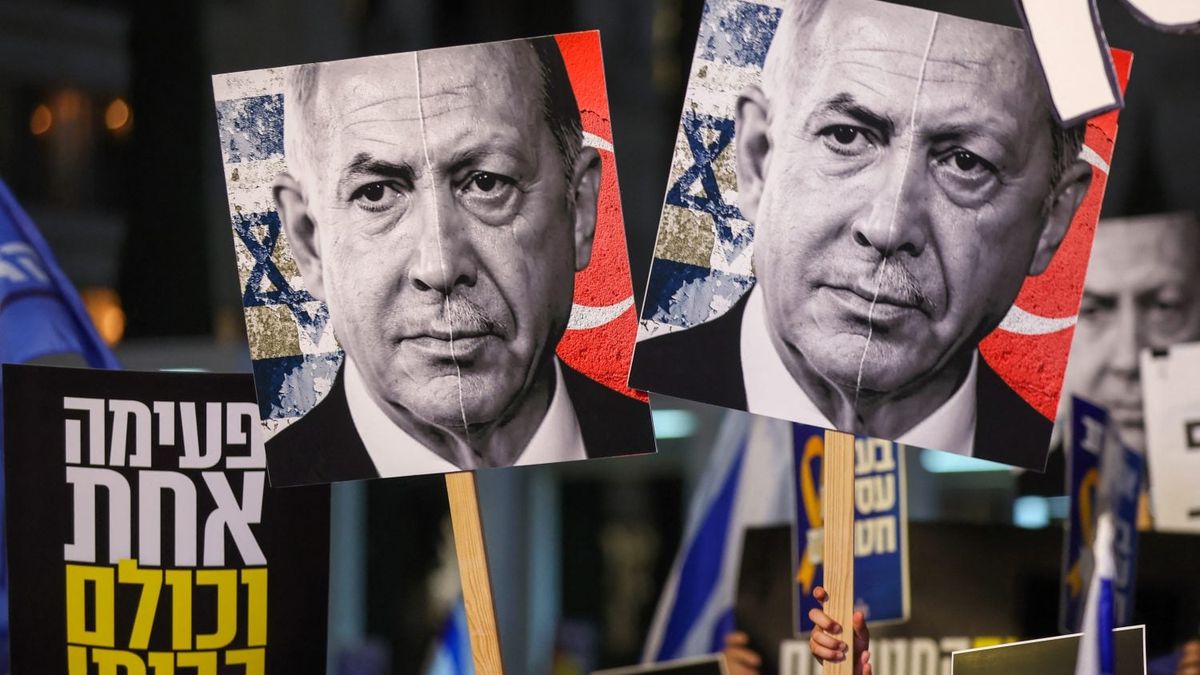
In recent days, Israeli Prime Minister Benjamin Netanyahu has vociferously expressed alarm over the potential sale of advanced F-35 fighter jets by the United States to Turkey. This concern emerges amidst escalating U.S.-Iran tensions, yet it is Turkey, a NATO ally, that has become a primary focus of Israel's diplomatic efforts. Netanyahu's public statements, including an interview with CNN, underscore his deep apprehension that such a transfer would significantly erode Israel's qualitative military edge in the Middle East, thereby upsetting the delicate regional power balance. He has characterized Turkey under President Recep Tayyip Erdogan as a "regime that's infected with the Muslim Brotherhood, which hates the United States," explicitly conveying these concerns to U.S. President Donald Trump.
While Netanyahu's motivations are subject to scrutiny, the underlying security concerns regarding Turkey's regional posture hold genuine merit. Relations between Israel and Turkey have deteriorated significantly, particularly following the October 7, 2023, events and Israel's subsequent military actions in Gaza. Turkish Foreign Minister Hakan Fidan's exceptionally harsh rhetoric, asserting that Israelis "have become a burden that humanity can no longer bear," reflects the depth of this diplomatic chasm. Beyond Israel, Ankara's increasingly bellicose maritime claims in the Aegean and Eastern Mediterranean directly threaten Greece, a fellow NATO member. Turkey's past actions, such as its acquisition of the Russian S-400 missile defense system and its protracted veto of Sweden's NATO membership, have already strained alliance cohesion and raised questions about its strategic alignment. Domestically, Erdogan's government has become increasingly repressive, jailing political opponents and journalists, a trajectory that historically often precedes more aggressive foreign policy stances.
Crucially, the geopolitical validity of Netanyahu's warnings is significantly intertwined with his domestic political struggles. Ahead of an impending Israeli election, the Prime Minister has a clear incentive to amplify external threats, fostering an "us-against-them" narrative that resonates with his hard-line base. This strategy aims to solidify his coalition and distract from perceived vulnerabilities, including his handling of the recent conflict with Iran. The timing of Israel's formal recognition of the Armenian genocide, a move cynically withheld for decades to protect its strategic alliance with Ankara, just days before Trump's Ankara announcement, further suggests a calculated political maneuver. Netanyahu's rhetoric, particularly his claims of personally authorizing operations in Iran to prevent a nuclear weapon, appears designed to bolster his image as Israel's indispensable protector, even if such claims lack verifiable evidence and could, ironically, highlight failures if Iran were indeed close to obtaining nuclear capabilities under his watch.
Netanyahu's current hawkishness toward Turkey also exposes a glaring double standard in Israel's broader regional strategy. Historically, Israel has vigorously opposed the sale of advanced military hardware to potential adversaries, as exemplified by Prime Minister Menachem Begin's lobbying against AWACS and F-15 sales to Saudi Arabia in 1981. Yet, in recent years, Netanyahu's opposition to the Trump administration's plans to sell F-35s to Saudi Arabia was conspicuously muted. This shift was largely attributed to his pursuit of expanding the Abraham Accords and normalizing ties with Riyadh, even overlooking human rights concerns like the murder of Jamal Khashoggi. Similarly, while he castigates Erdogan for jailing opponents, Netanyahu has maintained a "special friendship" with Russian President Vladimir Putin, despite Putin's far more notorious record of repressing dissent. These inconsistencies suggest that Israel's foreign policy under Netanyahu is increasingly shaped by political expediency rather than a consistent strategic doctrine.
Both Netanyahu and Erdogan employ rhetoric that hints at broader regional ambitions. Netanyahu's vows to "change the face of the Middle East" and "redraw the map," coupled with his far-right coalition partners' calls for annexing the West Bank and establishing settlements in Lebanon, mirror Erdogan's alleged aspirations to "restore the Ottoman Empire." Such maximalist rhetoric from key regional actors contributes to an environment of heightened tension and instability, making diplomatic resolutions more challenging.
U.S. President Trump's dismissive stance towards Netanyahu's concerns, claiming personal persuasion of Erdogan to avoid joining Iran's fight, underscores a potential strain in the U.S.-Israel alliance. Should the F-35 sale proceed, it would not only challenge Israel's military superiority but also signal a U.S. willingness to prioritize its relationship with Turkey, a problematic NATO ally, over the explicit security concerns of its closest Middle Eastern partner. This dynamic, coupled with Netanyahu's perceived "crying wolf" on threats for domestic gain, risks eroding his credibility on the international stage. As illustrated by the cautionary tale of Matilda, a leader who continually fabricates or exaggerates emergencies may find genuine warnings ignored when real threats emerge, potentially leaving Israel in a precarious position regarding its long-term security and international support.
Source referenced: FOREIGNPOLICY
This brief was synthesized by our Editorial Engine and reviewed by The Ground Narrative team.


