TRENDING

Thursday, 8 October 2026
----------------------
27 Rabi' Al-Thani 1448 AH
A senior WHO official warns that four out of five new Ebola cases in parts of the Democratic Republic of Congo have no known link to existing patients, suggesting the true scale of the outbreak could be two to four times larger than official figures. This undetected spread, exacerbated by the Bundibugyo strain's milder symptoms and ongoing regional instability, presents a significant challenge to containment efforts and global health security.
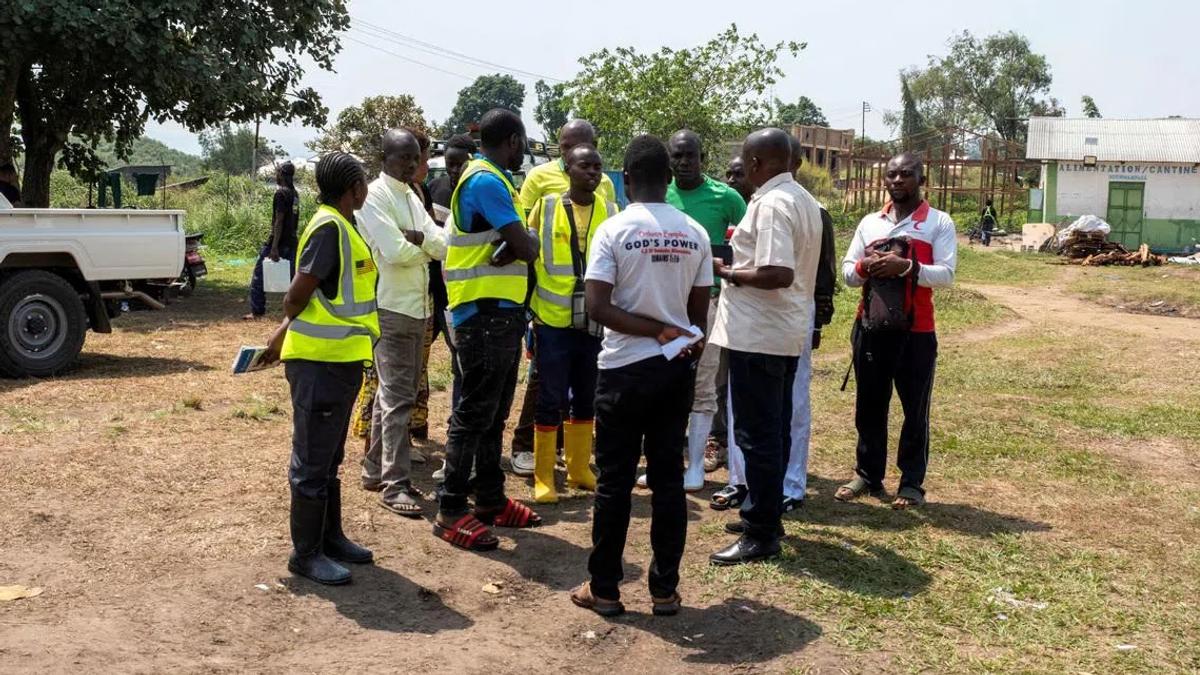
The Democratic Republic of Congo (DRC) is grappling with a severe Ebola outbreak that a senior World Health Organization (WHO) official warns is largely spreading undetected, posing a critical threat to regional stability and global health security. As of July 10, 2026, the outbreak, declared in mid-May, has officially infected 1,792 people and claimed 625 lives. However, the WHO estimates the true scale of the epidemic could be two to four times larger than reported figures, highlighting profound challenges in surveillance and containment.
The core of the concern stems from the high proportion of new cases with no identifiable epidemiological link to existing patients. In Bunia, the capital of Ituri province and a city of one million, approximately 80 percent of new confirmed Ebola patients are emerging from outside known contact lists. This indicates intense, ongoing community transmission, with roughly one in two patients tested for Ebola in Bunia turning out positive. While areas with fewer cases, such as North Kivu province, show better contact tracing, the situation in the epicenters remains dire.
This alarming rate of undetected spread is partly attributed to the specific strain of the virus involved: the Bundibugyo strain. Preliminary evidence suggests this strain may cause milder symptoms compared to other Ebola types. While this might improve survival rates for those who reach treatment centers, it critically reduces risk perception among affected communities. Consequently, infected individuals may remain in the community longer, caring for sick relatives at home before seeking medical attention, thereby prolonging the period of infectivity and increasing transmission opportunities. A stark indicator of this challenge is that an analysis of the first 400 Ebola deaths revealed approximately 70 percent occurred outside treatment centers, underscoring the failure to identify and isolate cases early.
Where this outbreak is unfolding is crucial to understanding its geopolitical significance. The majority of reported cases (90%) are concentrated in Ituri province, particularly in the health zones of Bunia, Rwampara, Mongbwalu, and Nyakunde. However, the virus has also spread to North Kivu, South Kivu, and more recently, Tshopo province. These regions in eastern DRC are characterized by chronic instability, armed conflict, and the presence of numerous non-state armed groups. This volatile environment severely impedes humanitarian access, complicates public health interventions, and displaces populations, further facilitating disease transmission.
Why this matters extends beyond the immediate health crisis. The DRC's weak governance, fragile health infrastructure, and persistent insecurity create a fertile ground for epidemics to flourish and become entrenched. An uncontrolled Ebola outbreak exacerbates existing humanitarian crises, strains already limited resources, and can further destabilize a region critical for its mineral wealth and strategic location in Central Africa. The potential for cross-border transmission to neighboring countries like Uganda, Rwanda, and South Sudan is a significant concern, threatening to transform a national health emergency into a broader regional crisis.
How the international community responds is critical. The WHO's warning highlights the urgent need for strengthened surveillance, robust contact tracing, and effective community engagement. Authorities have initiated training for 21,000 community health workers to conduct house-to-house visits and encourage symptomatic individuals to seek care. However, the success of these efforts hinges on overcoming deep-seated mistrust in communities, ensuring the safety of health workers in conflict zones, and securing sustained international funding and logistical support. The challenges are compounded by the historical context of recurring Ebola outbreaks in the DRC, often linked to ecological factors and human encroachment into forested areas, but consistently amplified by socio-political instability.
The undetected spread of Ebola in the DRC represents a significant threat to global health security. The longer the virus circulates uncontained, the higher the risk of mutations, wider geographical spread, and the potential for a more severe international health emergency. This situation underscores the interconnectedness of global health with geopolitical stability, economic development, and effective governance. A robust, coordinated international response, integrating public health measures with efforts to address underlying drivers of instability, is essential to prevent a catastrophic escalation of this silent epidemic. Failure to contain the outbreak effectively could lead to prolonged humanitarian suffering, increased regional instability, and a substantial drain on global health resources, demonstrating the critical importance of proactive engagement in fragile states. The current trajectory demands immediate and sustained attention to prevent a localized crisis from becoming a global catastrophe.
Source referenced: STRAITSTIMES
This brief was synthesized by our Editorial Engine and reviewed by The Ground Narrative team.