TRENDING

Thursday, 8 October 2026
----------------------
27 Rabi' Al-Thani 1448 AH
The 2026 FIFA World Cup, expanded to 48 teams and jointly hosted by three North American nations, represents a significant evolution in global sports, reflecting broader geopolitical and economic trends. With record prize money and increased continental representation, the tournament underscores the growing commercialization and soft power potential of international football.
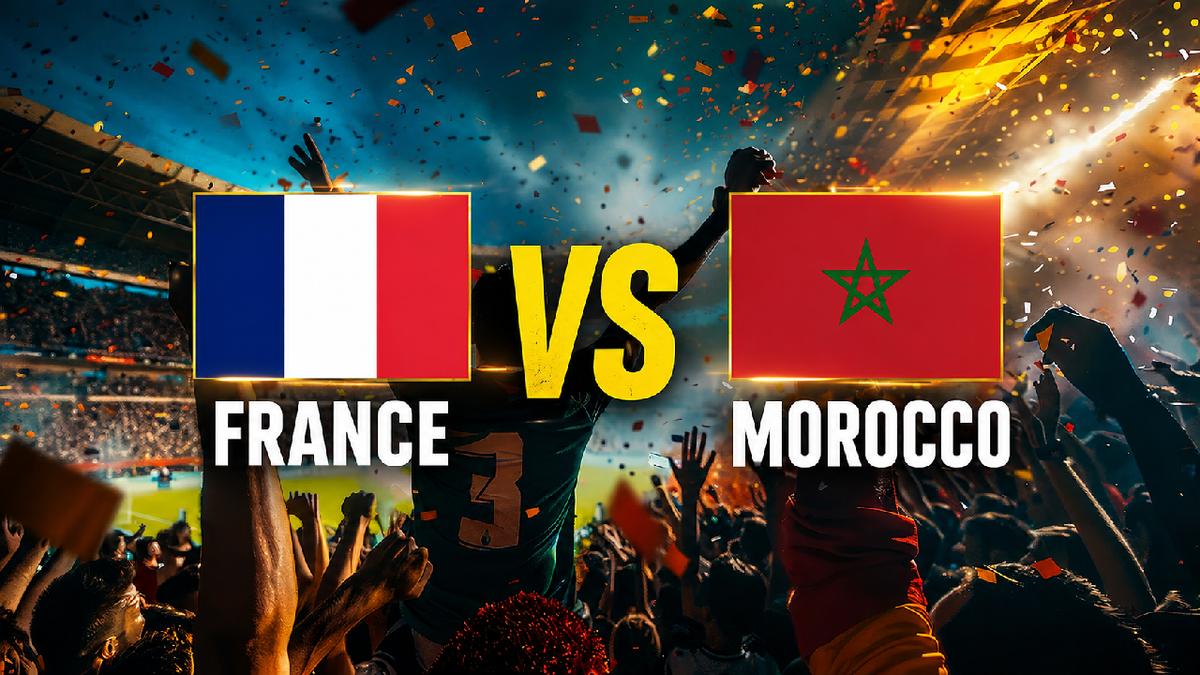
The 2026 FIFA World Cup marks a pivotal moment in the history of international sports, transcending its traditional role as a mere athletic competition to become a significant geopolitical and economic event. For the first time, the tournament has expanded from 32 to 48 teams, dramatically increasing the number of matches to 104 and introducing a new Round of 32 knockout stage. This expansion, a strategic decision by FIFA, aims to foster greater global inclusivity and participation, offering more nations the opportunity to compete on the world's biggest football stage. The tournament is also unprecedented in its hosting arrangement, being jointly organized by three countries: the United States, Canada, and Mexico, with matches distributed across 16 cities.
The decision to expand the World Cup to 48 teams carries considerable geopolitical weight. By increasing the number of slots, FIFA has broadened continental representation, particularly for regions historically underrepresented, such as Africa, Asia, and Oceania. This move can be interpreted as a form of soft power projection, designed to cultivate goodwill and engagement across a wider array of nations, thereby enhancing FIFA's global influence and legitimacy. Africa, for instance, saw a record 10 nations qualify for the 2026 tournament, a testament to this expanded format. While only Morocco remained as the sole African representative in the quarter-finals, their presence against two-time world champions France at Boston Stadium in Foxborough, Massachusetts, signifies a notable achievement for the continent and a source of immense national and regional pride. This performance, despite the overall competitive challenges, highlights the growing aspirations and potential of footballing nations beyond Europe and South America.
Europe, however, continues to assert its dominance, with six of the eight quarter-finalists hailing from the continent, including defending champions Argentina, England, Spain, Belgium, Norway, and Switzerland, alongside France. This enduring European strength, accounting for 75% of the last eight, underscores the established footballing infrastructure, talent development, and financial resources concentrated in the region, posing a persistent challenge for other confederations to consistently compete at the highest echelons.
Beyond the sporting spectacle, the 2026 World Cup is an economic behemoth. The financial rewards have reached unprecedented levels, with the winning nation set to receive a record $50 million, an $8 million increase from the 2022 prize. The tournament's overall prize fund has nearly doubled to $871 million, reflecting the immense commercial value and global appeal of the event. This substantial financial incentive not only rewards athletic excellence but also provides crucial funding for national football federations, particularly those from developing economies, enabling investment in grassroots development, infrastructure, and player training. Every participating nation is guaranteed at least $12.5 million, including preparation funding, which can be transformative for smaller footballing economies.
The joint hosting by the United States, Canada, and Mexico is a significant diplomatic and logistical undertaking. It showcases a remarkable degree of regional cooperation and shared economic interests among the North American neighbors. Such a large-scale, multi-national event requires extensive coordination in infrastructure, security, logistics, and tourism, projecting an image of regional unity and capability on the global stage. The selection of 16 host cities across these three countries further amplifies the economic benefits, distributing tourism revenue, job creation, and international exposure across a broad geographical area.
The tournament has also brought into focus evolving aspects of sports governance, particularly regarding player conduct. A notable increase in red cards, with 13 dismissals recorded as of July 7, already surpassing the combined totals of the 2018 and 2022 World Cups, indicates a stricter enforcement of FIFA's regulations. This includes penalties for dangerous tackles and, notably, for covering the mouth during on-field conversations, signaling a move towards greater transparency and adherence to fair play principles. This stricter approach, while sometimes controversial, reflects FIFA's ongoing efforts to maintain the integrity and ethical standards of the game.
In conclusion, the 2026 FIFA World Cup is more than just a football tournament; it is a complex tapestry of global interactions, reflecting shifts in international relations, economic power, and cultural diplomacy. Its expanded format, record financial scale, and multi-national hosting arrangement underscore its significance as a major global event with far-reaching implications beyond the pitch.
Source referenced: CGTN
This brief was synthesized by our Editorial Engine and reviewed by The Ground Narrative team.


