TRENDING

Monday, 5 October 2026
----------------------
24 Rabi' Al-Thani 1448 AH
Prime Minister Benjamin Netanyahu's government has reignited a judicial row by challenging a Supreme Court order, sparking concerns about the erosion of Israel's democratic foundations and potential constitutional crisis.
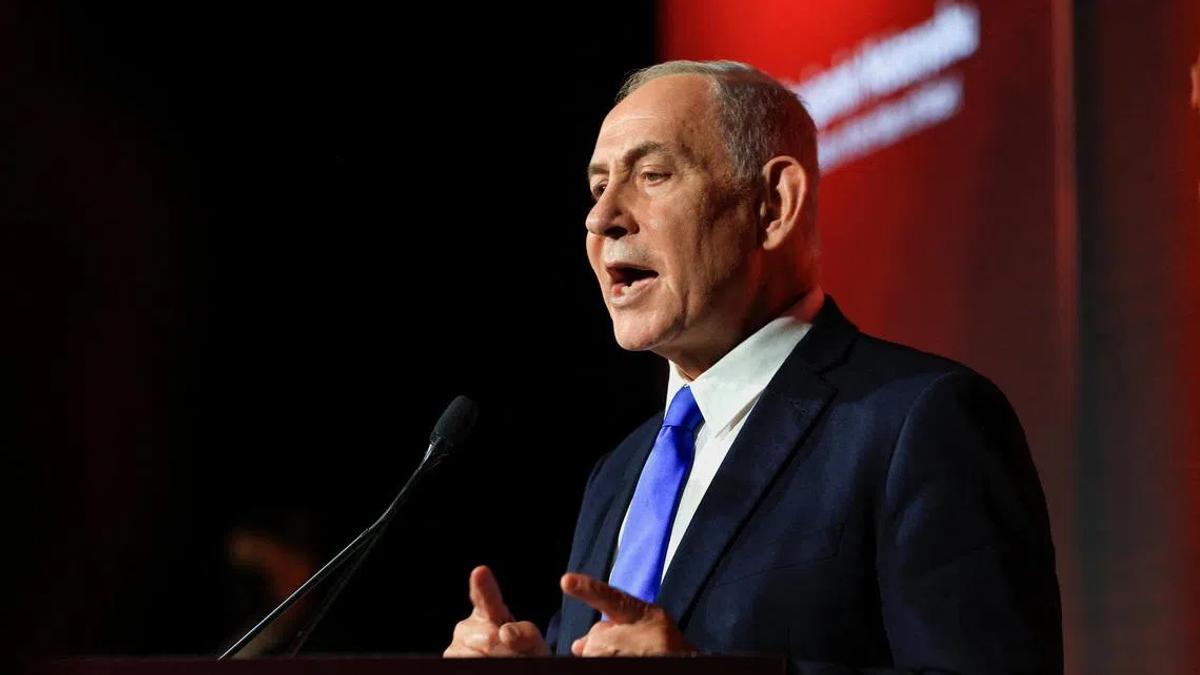
Israel's Prime Minister Benjamin Netanyahu has escalated a long-standing judicial crisis by announcing that his government will fight a Supreme Court order regarding a media regulator. This decision has reignited a contentious debate about the balance of power between the executive and judicial branches of government, with far-reaching implications for Israel's democratic foundations.
The current crisis is a continuation of a long-standing dispute between Netanyahu's government and the Supreme Court. In 2023, Netanyahu's government attempted to curb the powers of the Supreme Court, sparking mass protests across the country. Although the plan was shelved after Hamas' attack in October 2023, Netanyahu's nationalist-religious coalition has revived some parts of the contentious judicial overhaul plan in recent months.
Netanyahu's government has been accused of using the judicial crisis to distract from its security failures, particularly in the aftermath of the October 2023 attack. Critics argue that the government's actions are an assault on democracy, aimed at steering public attention away from the security failures and the toll exacted on Israelis by more than two years of war in Gaza, Lebanon, and Iran.
The escalation of the judicial crisis has significant regional implications. Israel's neighbors, particularly Palestine, have long been critical of Netanyahu's government for its perceived disregard for human rights and democratic values. The current crisis may further exacerbate tensions in the region, potentially leading to increased instability and conflict.
The consequences of Netanyahu's government challenging the Supreme Court order are far-reaching. If the government succeeds in undermining the rule of law and the democratic foundations of the state, it may lead to a constitutional crisis, plunging Israel into chaos. The international community, including the United States, the European Union, and other key allies, may also take a more critical stance towards Israel's government, potentially leading to diplomatic fallout.
The current crisis is a critical test of Israel's democratic foundations. Netanyahu's government has a history of using its executive powers to challenge the judiciary, and this latest move may be a harbinger of further erosion of democratic norms. The international community must closely monitor the situation and take a firm stance against any attempts to undermine the rule of law and democratic values in Israel.
The escalation of the judicial crisis in Israel is a significant development with far-reaching implications for the country's democratic foundations and regional stability. Netanyahu's government must be held accountable for its actions, and the international community must take a firm stance against any attempts to undermine the rule of law and democratic values in Israel.
Source referenced: STRAITSTIMES
This brief was synthesized by our Editorial Engine and reviewed by The Ground Narrative team.


