TRENDING

Monday, 26 October 2026
----------------------
15 Jumada Al-Awwal 1448 AH
NATO's top military officer is exploring alternative defense plans for Europe as the US reduces its military presence in the region, sparking concerns about the continent's vulnerability to Russian aggression.
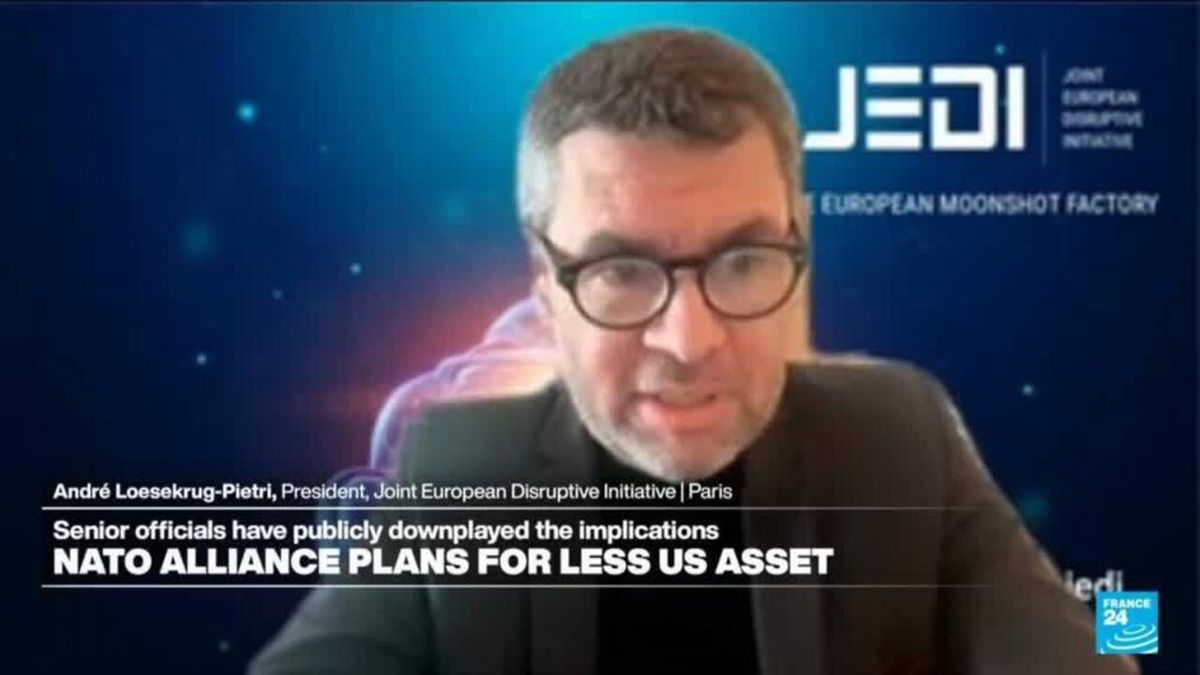
The recent announcement by the United States to scale back its military presence in Europe has sent shockwaves through the North Atlantic Treaty Organization (NATO). As the US reassesses its global priorities, NATO's top military officer, Admiral Rob Bauer, is weighing alternative plans to defend Europe in the event of a Russian attack.
The US has been a cornerstone of European security since the end of World War II, providing a deterrent against Soviet expansion and later Russian aggression. However, with the US now focusing on potential conflicts in other regions, such as the Asia-Pacific, NATO is left to reassess its own defense capabilities.
The US decision to reduce its military presence in Europe is likely driven by a desire to rebalance its global priorities and focus on emerging threats in the Asia-Pacific. This shift in focus may be motivated by the growing competition with China, as well as the need to address the rising tensions in the Middle East.
The reduction of US military presence in Europe has significant implications for the continent's security. Russia, which has long been a threat to European stability, may view this development as an opportunity to expand its influence. NATO's ability to defend Europe will be severely tested, and the alliance's credibility may be called into question.
The consequences of NATO's reassessment of its European defense capabilities will be far-reaching. If the alliance is unable to provide an effective deterrent against Russian aggression, the continent may be plunged into a new era of instability. This could have significant implications for global trade, energy security, and economic stability.
The US decision to reduce its military presence in Europe is a strategic shift with significant implications for the continent's security. NATO's ability to adapt to this new reality will be crucial in maintaining European stability. The alliance must now weigh its options and develop alternative defense plans to ensure the continent's security in the face of a potentially more aggressive Russia.
Editor's Note: The full implications of the US decision to reduce its military presence in Europe are still unclear, and NATO's ability to adapt to this new reality will be crucial in maintaining European stability.
Source referenced: FRANCE24
This brief was synthesized by our Editorial Engine and reviewed by The Ground Narrative team.