TRENDING

Sunday, 4 October 2026
----------------------
23 Rabi' Al-Thani 1448 AH
Mata Hari's legendary story has been adapted for the screen several times, but behind the glamour and intrigue lies a complex web of power, deception, and exploitation. This analysis delves into the historical context and power mechanics that led to her execution, highlighting the human cost and the untold story of a woman caught in the midst of World War I. As we revisit Mata Hari's life, we must ask: what are the powerful actors downplaying, and who bears the human cost of their actions?
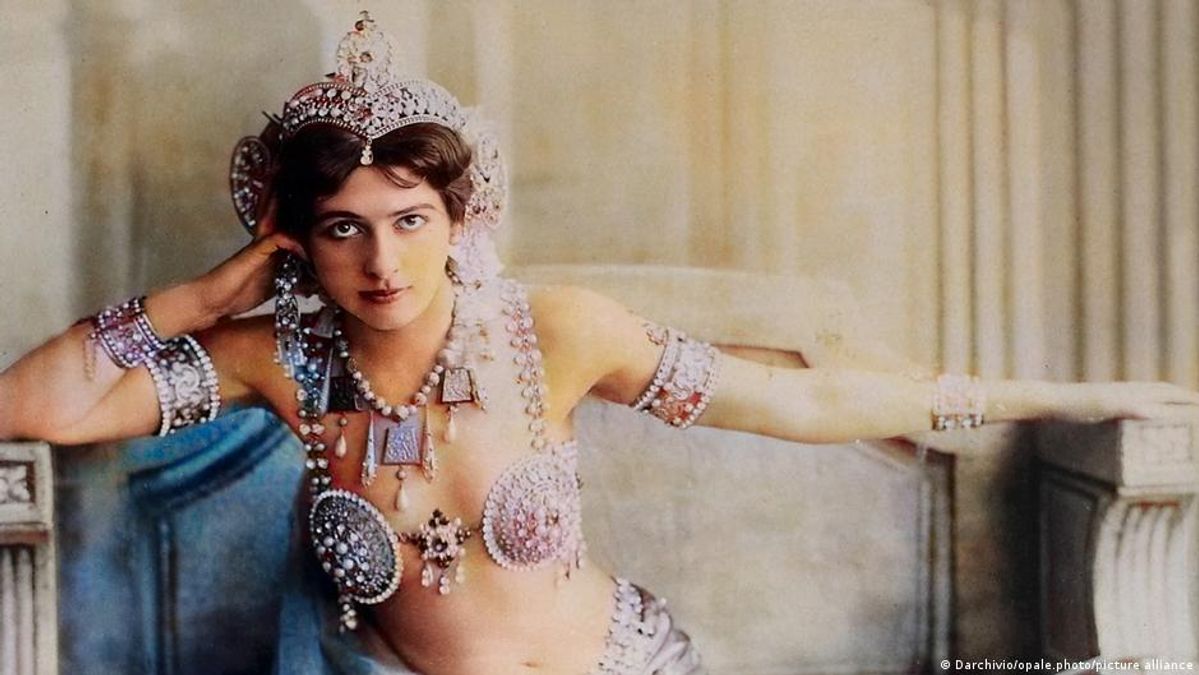
Mata Hari, a Dutch courtesan and exotic dancer, was executed for high treason in 1917. Her life story, marked by financial desperation, exploitation, and a series of calculated decisions, ultimately led to her downfall. Born Margaretha Geertruida Zelle, Mata Hari created a stage persona that captivated high society in Paris, forming relationships with diplomats and high-ranking military officers who paid generously for her company.
Mata Hari's rise to fame was fueled by the Belle Epoque era's fascination with exotic cultures. She exploited this demand by pretending to be Indian, fabricating a backstory, and creating a sensual dance that was both daring and demure. However, her popularity waned, and she was eventually driven by financial hardship to accept an offer from the German consul in the Netherlands to gather intelligence. This decision led to her becoming a double agent, working for both the Germans and the French. The French intelligence service, however, had enlisted her to catch her spying for the Germans, and the British intelligence service also monitored her activities.
Mata Hari's life was marked by tragedy, including the death of her son and the abandonment by her husband. Her financial desperation and exploitation by those around her ultimately led to her execution. The human cost of her story is not just her own life but also the lives of those who were affected by her actions, including the soldiers and civilians caught in the midst of World War I. As we reflect on Mata Hari's story, we must consider the broader implications of the power dynamics at play and how they impact individuals and communities.
The official narrative surrounding Mata Hari's execution portrays her as a master spy who significantly impacted the course of World War I. However, documents from the British intelligence service suggest that any information she may have shared likely did not affect the war's outcome. It appears that Mata Hari was used as a convenient scapegoat at a time when public enthusiasm for the war had significantly waned. The French military court needed someone to blame, and Mata Hari's execution served as a symbol of the war effort's desperation. Powerful actors downplayed the fact that Mata Hari was likely a pawn in a larger game, and her execution was a result of the complex web of power and deception that surrounded her.
As we revisit Mata Hari's story, we must consider the broader implications of the power dynamics at play and how they impact individuals and communities. We should watch for the ways in which historical narratives are constructed and how they can be used to serve the interests of those in power. We must also be aware of the human cost of these power dynamics and the ways in which individuals, particularly women, are exploited and used as pawns in larger games. By examining the untold story behind Mata Hari's execution, we can gain a deeper understanding of the complex web of power and deception that surrounds us and the importance of critically evaluating the narratives that shape our understanding of the world.
Editor's Note: While the details of Mata Hari's life and execution are well-documented, the extent of her involvement in espionage and the impact of her actions on the course of World War I remain a matter of debate among historians.
Source referenced: DW
This brief was synthesized by our Editorial Engine and reviewed by The Ground Narrative team.