TRENDING

Wednesday, 23 September 2026
----------------------
12 Rabi' Al-Thani 1448 AH
A German court has sentenced a Saudi psychiatrist to life in prison for a deadly car rampage at a Magdeburg Christmas market in 2024, a crime deemed of "particular severity." The verdict underscores Germany's firm stance against extremism and reignites national debates on immigration and security.
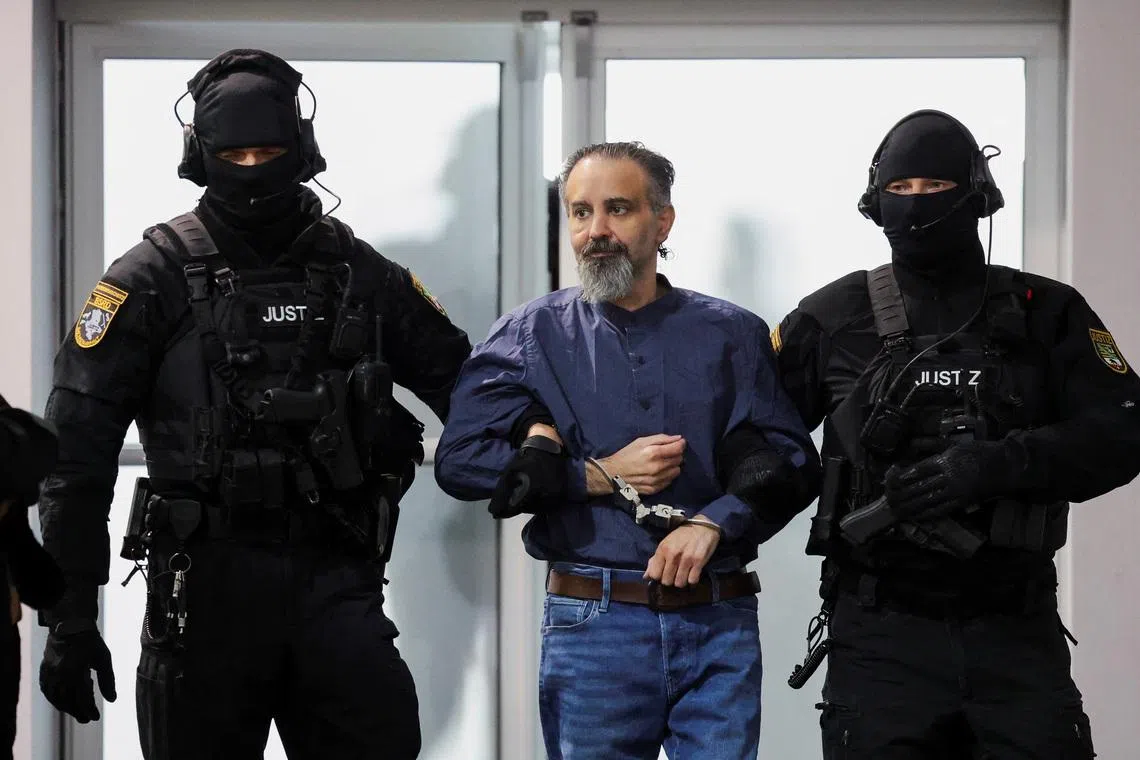
On June 26, 2026, a German court in Magdeburg delivered a life sentence to Taleb Jawad al-Abdulmohsen, a 51-year-old Saudi psychiatrist, for a devastating car rampage through a crowded Christmas market. The court's ruling, which designated the crime as being of "particular severity," significantly diminishes any prospect of future parole for Abdulmohsen. The attack, which occurred on December 20, 2024, saw Abdulmohsen drive a rented BMW X3 compact SUV at speeds up to 48kmh through the historic city center, resulting in the deaths of six individuals—a nine-year-old boy and five women aged 45 to 75—and injuring over 300 others. He was convicted on six counts of murder and 338 counts of attempted murder.
Abdulmohsen admitted to driving the vehicle but denied deliberately targeting individuals, a claim prosecutors dismissed as preposterous. The investigation and subsequent trial revealed a complex and contradictory motivational landscape. While the use of a vehicle in such an attack often evokes comparisons to jihadist tactics, police quickly uncovered a different ideological underpinning. Abdulmohsen, who arrived in Germany in 2006, was identified as an anti-Islam activist with sympathies for far-right politics, including the anti-immigrant Alternative for Germany (AfD) party. His court testimony was frequently incoherent, laced with conspiracy theories and fringe far-right ideas.
Prosecutors argued that Abdulmohsen's primary motive stemmed from a desire for "revenge" following a lost civil suit against a Cologne-based refugee organization and a series of unsuccessful criminal complaints. He also sought to "attract public and media attention." Furthermore, he had previously accused German authorities of failing to adequately protect Saudis fleeing their country for religious or political reasons, indicating a deep-seated grievance against the German state and its institutions. A psychiatric expert diagnosed him with narcissistic personality disorder but affirmed his full criminal responsibility and ongoing dangerousness, noting his complete lack of remorse throughout the proceedings.
The Magdeburg attack, one of several deadly incidents involving foreign nationals in recent years, significantly intensified Germany's already charged debate over immigration, particularly amidst a national election campaign. Despite Abdulmohsen's anti-Islam and far-right leanings, his status as a foreign national fueled narratives that often conflate immigration with security threats. In response to the attack, subsequent Christmas markets in Magdeburg have implemented heightened security measures, including concrete blocks and armed police, transforming public spaces into what some visitors describe as fortresses. This reflects a broader trend across Europe to harden soft targets against vehicle-borne attacks, a tactic increasingly employed by various extremist groups.
The case of Taleb al-Abdulmohsen highlights the evolving and multifaceted nature of extremism. It demonstrates that perpetrators of mass violence can come from diverse backgrounds and hold seemingly contradictory ideologies, challenging simplistic categorizations. His journey from a Saudi psychiatrist to an anti-Islam, far-right sympathizer with grievances against the German state and refugee organizations underscores the complex pathways to radicalization, often exacerbated by personal conflicts and adherence to conspiracy theories. The attack also serves as a stark reminder of the persistent threat of low-tech, high-impact violence in public spaces and the ongoing challenge for authorities to identify and mitigate such risks. The German justice system's robust response, culminating in a life sentence with particular severity, reaffirms the state's commitment to upholding public safety and delivering justice for victims of extremist violence, regardless of the perpetrator's specific ideological alignment.
The incident continues to resonate within German society, influencing public discourse on integration, security policies, and the complex interplay between individual grievances, mental health, and extremist ideologies.