TRENDING

Friday, 23 October 2026
----------------------
12 Jumada Al-Awwal 1448 AH
Massive wildfires near Madrid in July 2026 forced thousands of evacuations, underscoring Spain's vulnerability to climate change and the broader geopolitical implications of extreme weather across Europe. The incident highlights the growing strain on national resources and the urgent need for robust climate adaptation strategies.
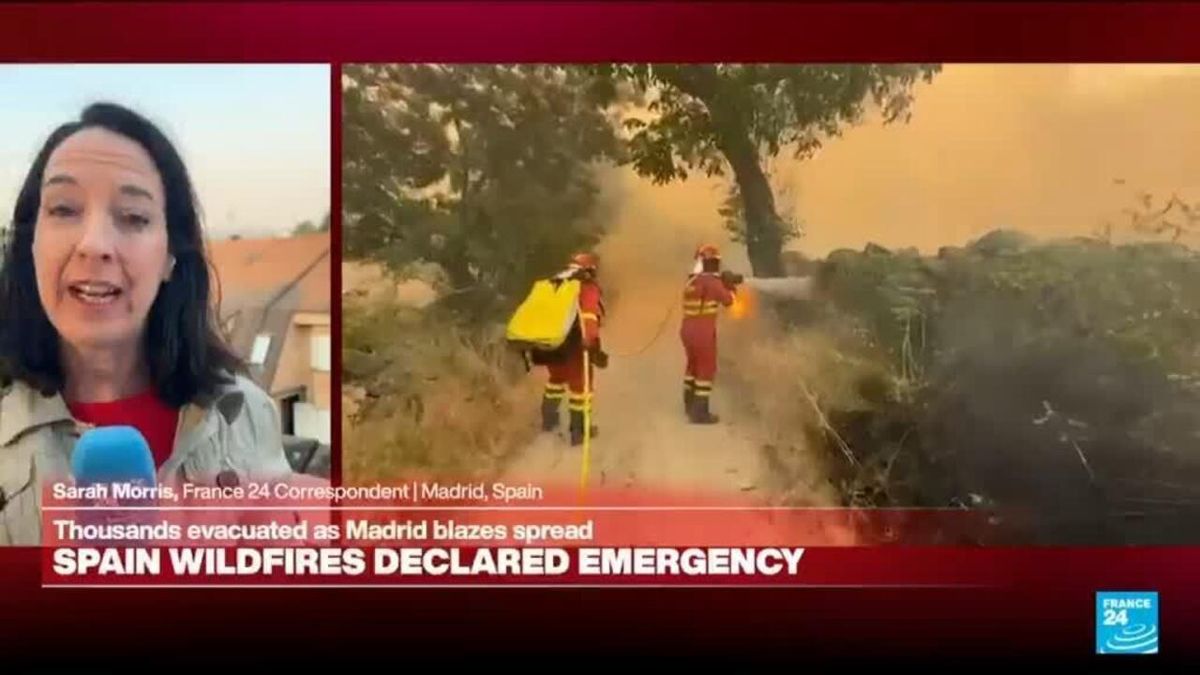
On July 25, 2026, significant wildfires erupted in areas surrounding Madrid, Spain, leading to the evacuation of thousands of residents. The blazes, described by local correspondents as 'historic,' were exacerbated by an intense heatwave gripping the region, a phenomenon increasingly linked to climate change. Firefighting efforts were immediately launched to contain the rapidly spreading infernos, which posed a direct threat to communities and infrastructure near the Spanish capital.
The immediate crisis involved thousands of residents who were forced to flee their homes as wildfires raged across multiple fronts near Madrid. The events unfolded on July 25, 2026, with reports indicating the fires were fueled by a severe heatwave that created exceptionally dry conditions and high temperatures. This combination allowed the blazes to spread rapidly and intensely, overwhelming local resources and necessitating large-scale evacuations. The response involved a concerted effort by Spanish firefighters and emergency services, working to protect lives and property amidst challenging environmental conditions.
The wildfires near Madrid, while a localized disaster, carry significant geopolitical and economic implications that extend beyond Spain's borders. Economically, the direct costs of combating such large-scale fires are substantial, encompassing emergency response, property damage, and potential long-term impacts on agriculture, forestry, and tourism. Spain's economy, particularly its vital tourism sector, is highly susceptible to environmental disruptions. Repeated incidents of this magnitude can strain national budgets, divert resources from other critical sectors, and potentially deter foreign investment or tourism, impacting the nation's economic stability.
From a geopolitical perspective, these events underscore the escalating threat of climate change as a security multiplier in Europe. Extreme weather phenomena, including heatwaves and wildfires, are becoming more frequent and intense across the continent. This trend poses challenges to national resilience, infrastructure, and public health. For Spain, a key member of the European Union, such disasters highlight the collective vulnerability of the bloc to climate impacts and the imperative for coordinated climate action and adaptation strategies. The EU's Civil Protection Mechanism often plays a crucial role in coordinating assistance during such crises, demonstrating the interconnectedness of European security and disaster response.
The underlying cause of these intensified wildfires—a prolonged heatwave linked to climate change—reinforces the strategic importance of global climate policy. For European nations, the increasing frequency of extreme weather events necessitates a re-evaluation of national security doctrines to include climate resilience as a core component. This involves not only investing in firefighting capabilities and early warning systems but also implementing long-term strategies for land management, urban planning, and water resource management to mitigate future risks.
Furthermore, the incident near Madrid serves as a stark reminder of the urgency behind the European Green Deal and the global push for decarbonization. The economic and social costs of inaction on climate change are becoming increasingly evident, compelling governments to accelerate the transition to renewable energy sources and implement stricter environmental regulations. Failure to do so risks exacerbating humanitarian crises, increasing internal displacement, and potentially creating new vectors for regional instability.
The events in Madrid highlight the critical need for both national adaptation strategies and enhanced international cooperation. Spain, like many Mediterranean countries, is on the front lines of climate change and must continue to invest in robust climate resilience measures. This includes developing advanced forecasting models, improving forest management practices, and educating the public on fire prevention. At the European level, continued collaboration on research, resource sharing, and policy harmonization will be essential to build collective resilience against a changing climate.
Ultimately, the wildfires near Madrid are more than just a local emergency; they are a potent symbol of a global challenge with profound geopolitical implications. They underscore the interconnectedness of environmental stability, economic prosperity, and national security, urging a proactive and unified response from both national governments and the international community.
Source referenced: FRANCE24
This brief was synthesized by our Editorial Engine and reviewed by The Ground Narrative team.


