TRENDING

Wednesday, 21 October 2026
----------------------
10 Jumada Al-Awwal 1448 AH
The rapid dismissal of former Politburo member Ma Xingrui on extensive corruption charges reveals a significant vulnerability within the Chinese Communist Party's cadre selection and oversight mechanisms. This high-profile case suggests that President Xi Jinping's intense focus on political loyalty may inadvertently create blind spots, enabling deep-seated corruption even among highly trusted officials.
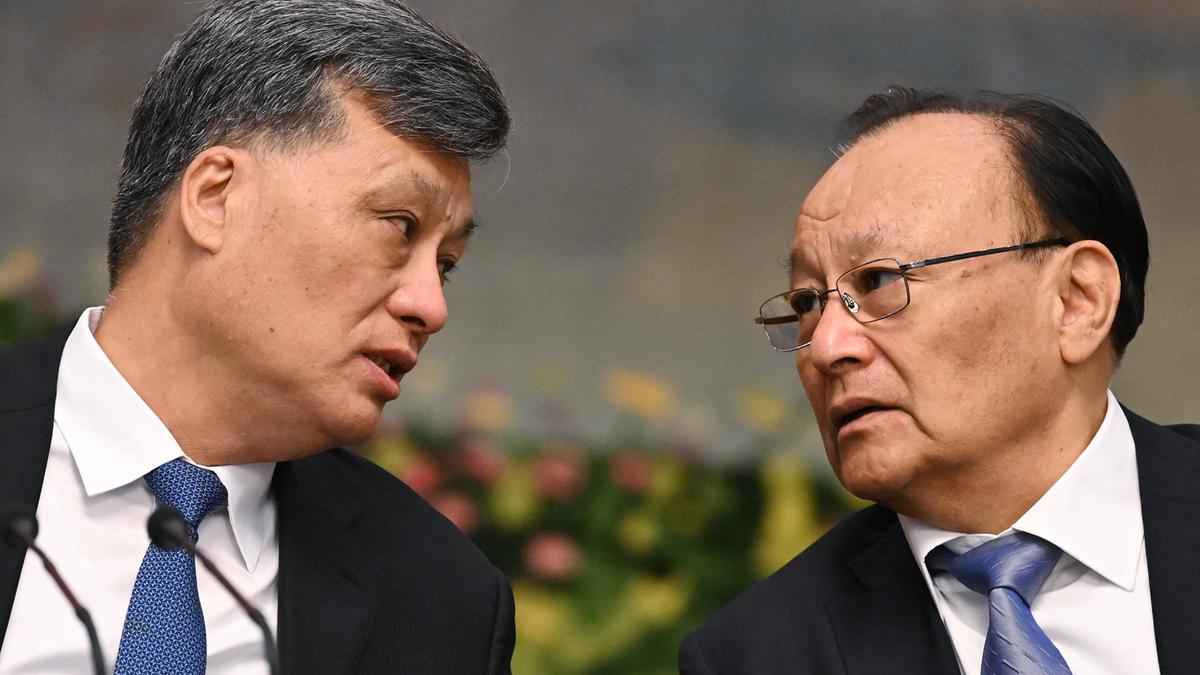
The recent and swift downfall of Ma Xingrui, a former Politburo member and Party Secretary of Xinjiang, on charges of extensive family-based corruption, has sent ripples through China's political landscape. His case, unfolding over approximately six months from his disappearance in November 2025 to his formal dismissal in July 2026, transcends mere individual misconduct, pointing instead to deeper systemic challenges within the Chinese Communist Party (CCP) under President Xi Jinping's leadership.
Ma Xingrui's career trajectory was notable, spanning 38 years through China's defense and aerospace establishment, key economic hubs like Guangdong (where he served as Party Secretary of Shenzhen and Governor), and ultimately the politically sensitive region of Xinjiang. His elevation to the Politburo underscored his perceived political reliability and professional competence, having passed through the CCP's most rigorous vetting processes. However, his dismissal notice, issued in July 2026 following an investigation announced on April 3, 2026, laid bare a sophisticated network of corruption.
Crucially, the charges against Ma explicitly state he "conspired with" relatives and close associates to accept enormous sums, indicating direct participation rather than passive enablement of family profiteering. Furthermore, the mention of "members of his personal staff" suggests the corruption extended beyond his immediate family, involving aides who leveraged his political power for private gain through business deals, construction projects, and official promotions. This was not an isolated incident but a deeply entrenched mechanism operating around his office.
Significantly, the accusations avoided phrases typically associated with political disloyalty, such as "forming cliques" or harboring "inflated political ambitions." This suggests that, at least publicly, Ma's downfall is framed as a case of systemic corruption rather than a direct challenge to President Xi Jinping's authority or a factional struggle. His alleged "loss of political position" is understood as a consequence of severe corruption by a Politburo member, rather than an act of political defiance.
The central question arising from Ma's case is how an official, deemed politically reliable enough to lead Xinjiang—a region demanding absolute loyalty and administrative acumen—could operate such an extensive corruption network for so long. The answer, as suggested by analysts, lies in the evolving dynamics of the CCP's cadre selection and oversight system under Xi Jinping.
Under Xi, political loyalty has become the paramount criterion for the selection and promotion of senior officials. This loyalty is primarily judged through public declarations, unwavering policy execution, obedience to the central leadership, and political posture. An official's ability to uphold the party's "core" and align with Beijing's directives has become the principal measure of their reliability. While seemingly a mechanism for strengthening party unity, this intense focus on loyalty can inadvertently create a blind spot.
Officials adept at demonstrating public loyalty and executing policies without hesitation may gain the trust of the top leadership, potentially leading to weakened oversight. Subordinates, fearing repercussions, may hesitate to report on a leadership favorite, and the party's internal disciplinary authorities, while extensive, must ultimately defer to the central leadership's judgment, especially that of Xi himself, regarding a particular official. This personalized system of cadre selection means that the more an official is trusted by the paramount leader, the more likely they are to become immune to routine scrutiny.
The CCP boasts one of the world's most elaborate cadre evaluation systems, involving extensive reviews, assessments, interviews, and audits. Yet, as Ma's case illustrates, this system, while capable of documenting career histories and political declarations, struggles to identify how power is actually exercised in practice. The vetting process remains entirely internal, lacking independent checks such as a free press, public disclosure of assets, or institutional forces genuinely capable of constraining senior officials.
Ma's alleged misconduct continued even after the 18th National Congress in 2012, when Xi Jinping launched his aggressive anti-corruption campaign. This highlights a critical limitation: the campaign, while powerful in punishing wrongdoing once a political decision is made to investigate, is less effective as a routine, preventative oversight mechanism. It functions more as a tool for post-facto accountability and, by extension, political consolidation, rather than a system that proactively uncovers corruption before it becomes deeply entrenched.
For China, the implications are significant. Such high-level corruption, even if framed as an isolated incident, can erode public trust in the party's governance and its commitment to clean administration. Geopolitically, it underscores the internal challenges faced by the CCP in maintaining integrity and efficiency within its highly centralized political structure. The ongoing tension between demanding absolute loyalty and ensuring genuine accountability remains a critical test for the stability and legitimacy of China's political system.
Source referenced: FOREIGNPOLICY
This brief was synthesized by our Editorial Engine and reviewed by The Ground Narrative team.


