TRENDING

Wednesday, 21 October 2026
----------------------
10 Jumada Al-Awwal 1448 AH
French streets have filled with a baffling chant that mixes Arabic prayer and French gloom. The phrase has become a flashpoint for debates on police tactics, youth marginalisation and rising Islamophobia.
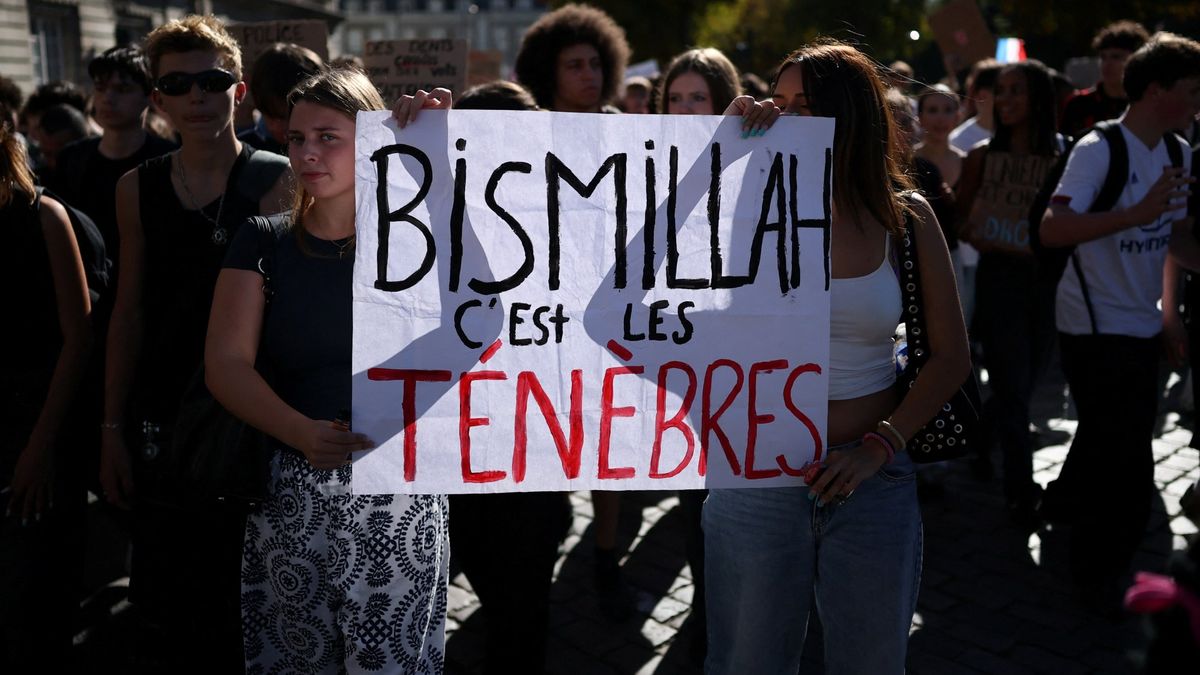
Hundreds of thousands of demonstrators flooded French cities in late October, the biggest wave since the education‑reform protests of early 2026. Among the sea of placards, a phrase repeatedly shouted – "Bismillah, c’est les ténèbres" – caught the eye of media worldwide. The chant, a hybrid of Arabic and French slang, translates loosely to “In the name of God, it’s darkness,” and quickly morphed into a meme mocking what protesters say is a clumsy police attempt to infiltrate their online groups. A screenshot of a Snapchat chat, allegedly posted by an undercover officer named Mamadou, showed the phrase paired with Algerian‑flag emojis, prompting students to adopt it as a badge of resistance.
- State security calculus – French authorities have long relied on digital surveillance to pre‑empt unrest, a practice sharpened after the 2023 pension strikes. Deploying undercover agents into protest chats is a low‑cost way to gather intelligence, but it also risks exposing the state’s perception of youth movements as security threats rather than political actors.
- Political survival – The current government, facing a fragmented parliament, needs a visible response to the cost‑of‑living crisis that has eroded its popular base. By framing the protests as a law‑and‑order issue, it can rally centre‑right voters while deflecting criticism of its education budget cuts.
- Economic trade‑offs – Public spending on education has been squeezed by rising energy prices and a sluggish post‑pandemic recovery. Teachers’ strikes and classroom overcrowding have become bargaining chips for unions, but the broader public sees the same budget constraints reflected in higher taxes and stagnant wages.
- Alliance math – Within the European Union, France seeks to project stability to protect its influence over the Eurozone. A prolonged domestic crisis could weaken its negotiating position on issues like defense spending and climate policy, prompting Brussels to pressure Paris for a swift resolution.
Teachers in urban districts report class sizes exceeding 40 pupils, with many schools lacking basic resources. The strain translates into lower educational outcomes for children from low‑income families, perpetuating a cycle of inequality.
Young people of North‑African and sub‑Saharan descent, who already face higher unemployment rates, are disproportionately represented among the protesters. Police confrontations have led to injuries, arrests, and a spike in reported Islamophobic incidents, echoing the 72 % rise recorded in early 2025.
Rising energy bills and stagnant wages have forced many families to cut back on essentials, fueling the broader anger that fuels the streets. The cost of repeated police deployments and emergency services also drains municipal budgets, limiting funds for social programs.
- Police narrative suppression – French officials have not publicly confirmed the Snapchat infiltration claim, leaving a vacuum that fuels speculation. By staying silent, the state avoids admitting to a tactic that could be framed as cultural profiling.
- Media framing gaps – Mainstream outlets have focused on the chant’s novelty rather than its deeper symbolism, sidelining discussions about systemic discrimination in policing and education.
- Corporate interests – Private security firms benefit from increased state contracts for crowd control equipment and surveillance tech. Their lobbying efforts are rarely disclosed, yet they shape the security architecture that underpins the crackdown.
- International echo – The chant has crossed borders to Italy and Belgium, where similar cost‑of‑living protests are underway. Yet foreign governments rarely comment, preferring to treat the phenomenon as a domestic French issue, thereby avoiding scrutiny of shared European austerity policies.
- Legal challenges – Expect lawsuits from civil‑rights groups demanding transparency on undercover operations and compensation for those injured during clashes.
- Policy shifts – The education ministry may announce emergency funding to appease teachers, but the depth of the budgetary gap suggests only short‑term fixes.
- Digital surveillance debate – Parliament is likely to debate new legislation on online infiltration, a topic that could reshape privacy rights across the EU.
- Cross‑border protest diffusion – Monitor how the chant and its underlying grievances spread to other Western European capitals, potentially linking disparate movements into a broader critique of neoliberal austerity.
- Public opinion trends – Polls on Islamophobia and police legitimacy will reveal whether the chant’s symbolic power translates into lasting political change or fades as a viral moment.
The phrase mixes Arabic prayer words with French slang, roughly translating to “In the name of God, it’s darkness.” Protesters use it to mock a suspected police infiltration attempt and to highlight feelings of hopelessness.
Officials have not publicly confirmed the infiltration claim, opting for silence that avoids acknowledging potential cultural profiling. Legal challenges and parliamentary debates on digital surveillance are expected to follow.
Source referenced: ALJAZEERA
This brief was synthesized by our Editorial Engine and reviewed by The Ground Narrative team.


