TRENDING

Tuesday, 20 October 2026
----------------------
9 Jumada Al-Awwal 1448 AH
The Lebanese government's return to 'pilot zone' villages in southern Lebanon marks a significant development in the country's efforts to assert state authority and stability in the face of Israeli occupation.
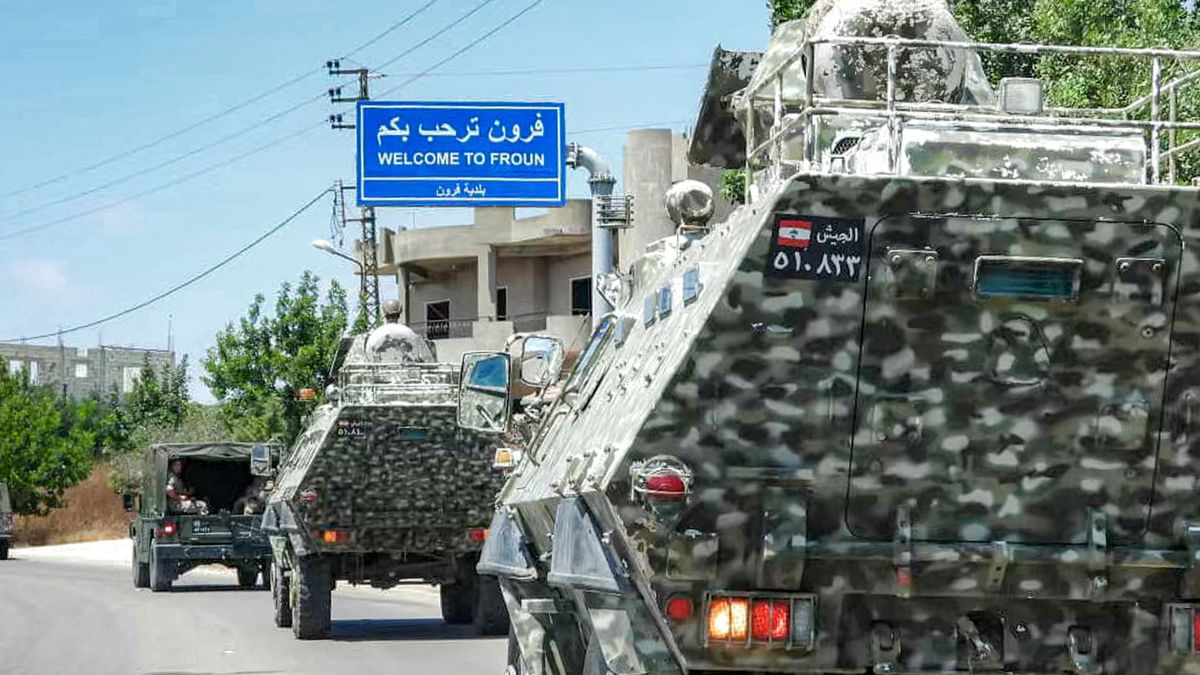
The Lebanese government's announcement of the 'pilot zone' project, a framework agreement between Lebanon and Israel, marks a significant development in the country's efforts to assert state authority and stability in the face of Israeli occupation. The project, which aims to see Israel withdraw from a small number of areas in southern Lebanon, has sparked controversy among locals who claim that their villages were never occupied by Israeli forces.
The Israeli-Lebanese conflict has its roots in the 1978 Israeli invasion of Lebanon, which led to the establishment of a UN peacekeeping force (UNIFIL) in the country. The conflict escalated in 2006, when Israel launched a military operation against Hezbollah, a Lebanese Shia militia group. The operation resulted in significant destruction and displacement of civilians, particularly in southern Lebanon.
Hezbollah, which has been a key player in the Israeli-Lebanese conflict, has insisted that its weapons are necessary to confront Israel if the Lebanese army is not willing to do so. The group's stance has been supported by Iran, which has provided significant financial and military aid to Hezbollah. The 'pilot zone' project has raised concerns among Hezbollah supporters that the Lebanese government is compromising on the group's demands for a full Israeli withdrawal.
The US has been a key player in the Israeli-Lebanese conflict, providing significant military aid to Israel and supporting the country's efforts to assert its sovereignty over the region. The 'pilot zone' project has been seen as a test of the US's commitment to regional stability and its ability to broker a peaceful resolution to the conflict.
The 'pilot zone' project has significant implications for regional stability, particularly in the context of the ongoing conflict between Israel and Hezbollah. The project's success or failure will depend on the ability of the Lebanese government to assert its authority over the region and to negotiate a peaceful resolution to the conflict. The project's impact on regional stability will also depend on the role of external actors, including the US and Iran.
The 'pilot zone' project marks a significant development in the Israeli-Lebanese conflict, with significant implications for regional stability. The project's success or failure will depend on the ability of the Lebanese government to assert its authority over the region and to negotiate a peaceful resolution to the conflict. The project's impact on regional stability will also depend on the role of external actors, including the US and Iran.
Editor's Note: The analysis is based on publicly available information and may not reflect the full complexity of the situation.
Source referenced: ALJAZEERA
This brief was synthesized by our Editorial Engine and reviewed by The Ground Narrative team.


