TRENDING

Tuesday, 20 October 2026
----------------------
9 Jumada Al-Awwal 1448 AH
A Delhi court extended the custody of two young activists from the Cockroach Janta Party, sparking fresh street protests. The arrests spotlight a broader clash over voter‑list revisions and the space for dissent in India.
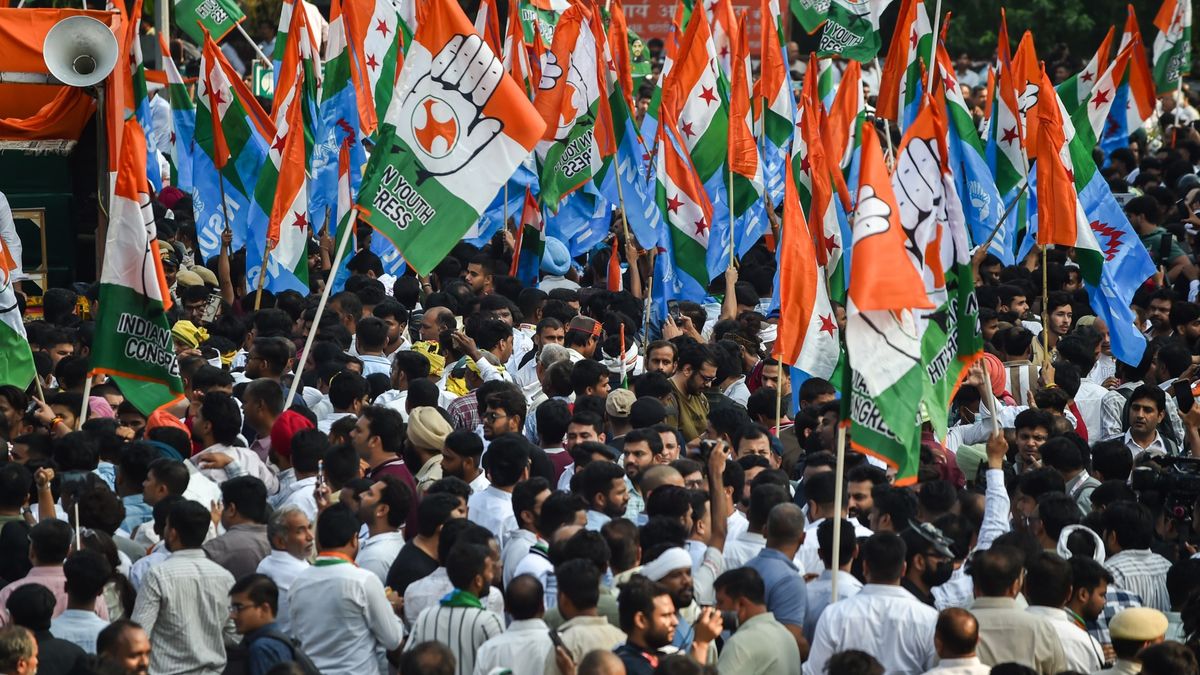
Two youth leaders of the Cockroach Janta Party (CJP), Ashutosh Ranka and Saurav Das, were placed back in jail after a Delhi court granted a police request for extra questioning. Their detention follows a daring breach of a newly imposed ban at the historic Jantar Mantar protest site, where they and 12 others scaled barricades to highlight a controversial revision of voter rolls. The move triggered a fresh wave of demonstrations in the capital, with hundreds gathering to demand the resignation of Election Commissioner Gyanesh Kumar and to protest what activists call a systematic purge of millions of voters.
The timing of the crackdown aligns with a critical pre‑election period for Narendra Modi's Bharatiya Janata Party (BJP). The Election Commission’s revision removed roughly 130 million names, a figure the ruling party claims includes deceased or relocated citizens, but opposition and civil‑society groups argue the deletions disproportionately affect regions where the BJP’s vote share is weaker. By framing the issue as a technical correction, the government sidesteps accusations of deliberate disenfranchisement while preserving its electoral calculus.
Indian courts have increasingly become venues for political maneuvering. Granting police extensions for interrogation without a clear timeline signals a willingness to use the judiciary to delay protest momentum. The legal head of the CJP, Ratna Singh, labeled the order a “mockery of the judicial system,” underscoring how the judiciary can be weaponized to legitimize state repression while maintaining a veneer of procedural fairness.
Delhi police, tasked with maintaining public order, have adopted a zero‑tolerance stance toward unsanctioned gatherings at high‑visibility sites. By detaining leaders before they can organize further actions, the force aims to fragment the movement’s command structure, deter future incursions, and signal to other activist groups that defiance will meet swift legal consequences.
The CJP is a youth‑driven organization; its rank‑and‑file are largely university students and recent graduates. Detentions disrupt their education, limit future employment prospects, and expose them to criminal records that can be weaponized in future political contests. Families bear the financial strain of legal fees and lost income while coping with the emotional toll of seeing loved ones behind bars.
If the revised rolls remain in place, millions could be denied the right to vote, effectively silencing entire communities—particularly in rural and marginalized urban districts. The loss of a vote translates into reduced access to government services, diminished political representation, and a heightened sense of alienation from the democratic process.
Many protest participants are informal sector workers who rely on daily wages. Arrests and subsequent court appearances force them to miss work, eroding already fragile household incomes. The broader climate of repression also discourages collective bargaining, as fear of police action spreads to labor unions and student bodies.
Official statements emphasize the need to protect public safety and uphold the rule of law. What receives less attention is the selective enforcement of bans: similar gatherings at other historic sites have proceeded with minimal police interference, suggesting a targeted approach aimed at movements that threaten the ruling party’s electoral narrative.
India’s booming tech and manufacturing sectors depend on predictable policy environments. A stable electorate—one that reliably supports the incumbent government—offers investors confidence. By curbing mass mobilizations that could pressure the Election Commission, the state indirectly safeguards foreign direct investment flows and domestic market stability, a benefit rarely highlighted in public discourse.
State‑aligned media outlets have largely portrayed the CJP’s actions as unlawful trespassing, while independent journalists face increasing pressure to self‑censor. This asymmetry limits public understanding of why 130 million names were removed and obscures the broader debate about electoral fairness, leaving citizens with a fragmented picture of the stakes involved.
The next few weeks will reveal whether the courts will uphold the extended detention or release the activists under pressure from opposition parties and civil‑society coalitions. Watch for any legal petitions filed in the Supreme Court, as they could set precedents for protest rights ahead of the national elections. Additionally, monitor the Election Commission’s response to the voter‑list controversy—whether it will issue a revised roll, open a transparent audit, or double down on its current stance. Finally, keep an eye on how the BJP leverages the situation in its campaign messaging; any shift toward hard‑line rhetoric could signal a broader clampdown on dissent across the country.
The Election Commission said the revision removed 130 million names to delete deceased voters, those who moved, and untraceable entries. Critics argue the process disproportionately affected opposition‑leaning areas, raising concerns about intentional disenfranchisement.
The party can appeal to higher courts, including the Supreme Court, challenging the detention as unlawful and arguing that the protest ban violates constitutional rights to free assembly and expression.
Editor's Note: Analysis based on publicly available reports and historical patterns of protest repression in India.
Source referenced: ALJAZEERA
This brief was synthesized by our Editorial Engine and reviewed by The Ground Narrative team.


