TRENDING

Monday, 19 October 2026
----------------------
8 Jumada Al-Awwal 1448 AH
Three years after the Oct. 7 war, a new U.S. push seeks to revive a stalled peace framework. The analysis breaks down the power calculus, the hidden costs, and the next flashpoints.
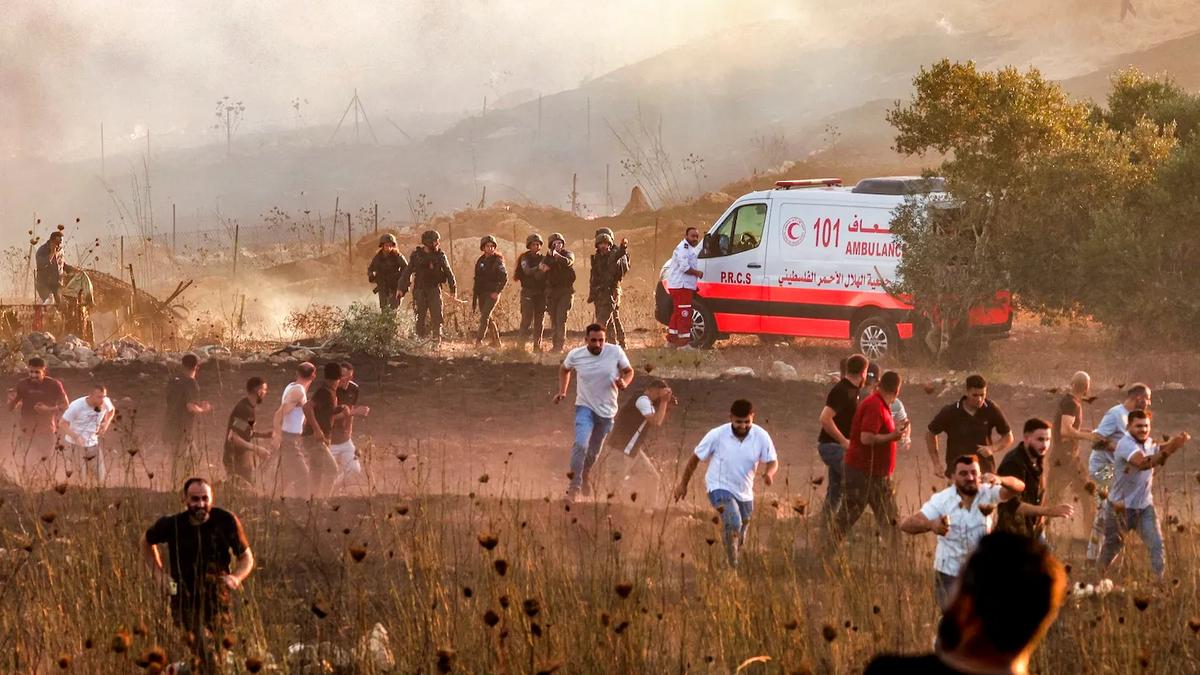
Three years after the Oct. 7, 2023 attack, the United States under Donald Trump has revived its 20‑point peace blueprint, aiming to turn a fragile cease‑fire in Gaza into a longer‑term political settlement. The plan hinges on a phased Hamas de‑militarisation, the creation of a technocratic governing body – the National Committee for the Administration of Gaza (NCAG) – and a series of reconstruction steps tied to Israeli withdrawal. Recent diplomatic talks, led by the Board of Peace and backed by Egypt, Qatar and Turkey, produced a 15‑point road map that Hamas has formally accepted, but the Israeli government, emboldened by the October 2026 election, has stalled implementation.
The renewed push rests on three intersecting incentive structures. First, U.S. domestic politics: Trump’s 2026 campaign narrative frames the conflict as a test of American resolve, promising a decisive peace that would outshine rival parties. By tying the plan to his electoral brand, the administration can marshal congressional goodwill and private donors eager for a high‑profile foreign‑policy win. Second, the Israeli election has produced a coalition that leans heavily on security hard‑liners. Prime Minister Benjamin Netanyahu’s base views any concession as a betrayal, so the administration must pressure him through diplomatic levers – aid packages, security cooperation, and the threat of a U.S.‑led multilateral review of Israel’s annexation‑related policies. Third, the Arab Quint – Egypt, Jordan, Saudi Arabia, the United Arab Emirates and Qatar – holds the purse strings that could fund Gaza’s reconstruction and the NCAG’s operations. Their willingness to invest hinges on securing economic concessions from Israel, such as a softened Paris Protocol and limited commercial ties, in exchange for backing Palestinian reforms.
The plan’s architecture also reflects a classic “carrot‑and‑stick” calculus. Hamas is asked to de‑commission weapons in exchange for reconstruction funds and a pathway to political legitimacy. Israel is asked to withdraw troops and ease settlement pressure in return for a demilitarised Gaza that no longer threatens its borders. The United States positions itself as the guarantor, promising to monitor compliance through an International Stabilisation Force (ISF) that will be deployed only after the NCAG and Palestinian police take up residence in Gaza. This sequencing gives the U.S. leverage: without its green light, the ISF cannot move, and without the ISF, Israel can claim security concerns to delay withdrawal.
The most immediate victims are the Gaza civilians who have endured three years of intermittent electricity, contaminated water, and a crippled health system. Even with a cease‑fire, the blockade limits the flow of construction materials, leaving families in makeshift shelters as winter approaches. The promise of portable, pre‑fab housing remains largely on paper; delays in funding mean that many children will spend the cold months in overcrowded schools turned into shelters.
In the West Bank, the expansion of Israeli settlements continues unabated, tightening land scarcity for Palestinian farmers and increasing friction points for Israeli settlers. The lack of a credible Palestinian security apparatus means that Israeli forces frequently conduct raids, leading to arrests, injuries, and a climate of fear that stifles economic activity. The political vacuum also fuels internal Palestinian rivalries, pushing some youths toward radical groups.
On the Israeli side, Israeli families who lost loved ones on Oct. 7 live under a constant threat narrative that fuels support for hard‑line policies. The trauma is compounded by the perception that the peace plan offers little immediate security, reinforcing a cycle where public pressure pushes the government to prioritize military options over diplomatic compromise.
Official statements often portray the U.S. as a neutral broker, but the U.S. leverage is far from neutral. By conditioning reconstruction aid on Hamas’s de‑commissioning, Washington effectively forces the militant group into a strategic dilemma: appear cooperative and risk internal backlash, or reject the plan and forfeit any international funding. This pressure is rarely highlighted in public diplomacy, which instead emphasizes “mutual benefit.”
The Arab state financing of Gaza’s reconstruction is presented as humanitarian generosity, yet it is tightly linked to geopolitical bargaining chips. Saudi Arabia, for instance, is prepared to open limited commercial channels with Israeli firms only if Israel curtails settlement expansion and revises the Paris Protocol. These quid‑pro‑quo arrangements are seldom disclosed, allowing Arab leaders to claim moral leadership while pursuing national economic interests.
Israeli media often frames the plan as a “gift” from the United States, downplaying the domestic political cost to Netanyahu’s coalition. By portraying any hesitation as a betrayal of Israeli security, the media creates a narrative that makes it politically costly for the government to engage earnestly with the roadmap, even when security assessments might support a phased withdrawal.
The next six months will reveal whether the NCAG deployment can materialise before the winter heating season, a test of both U.S. diplomatic stamina and Arab financial commitment. A concrete step – such as the first tranche of pre‑fab housing arriving in Gaza – would signal that the road map is moving beyond rhetoric. Conversely, any resurgence of large‑scale Israeli raids in the West Bank or a hardening of Hamas’s public stance on weapon de‑commissioning would likely stall the process. Finally, watch for a potential Saudi‑Israel economic pact that could unlock new funding streams; its negotiation will expose how far Arab states are willing to trade economic concessions for political leverage in the peace process.
The plan pairs Hamas de‑militarisation with phased Israeli withdrawal, creates a technocratic governing body (NCAG) for Gaza, and ties reconstruction funding to compliance, all overseen by an International Stabilisation Force.
Arab states control the financial resources needed for Gaza’s rebuilding and can leverage economic incentives—such as limited Israeli‑Arab trade—to push both sides toward compromise.
Potential derailments include Israeli political opposition after the October election, Hamas’s reluctance to disarm, delays in NCAG deployment, and a lack of coordinated Arab funding.
Source referenced: FOREIGNPOLICY
This brief was synthesized by our Editorial Engine and reviewed by The Ground Narrative team.


