TRENDING

Monday, 19 October 2026
----------------------
8 Jumada Al-Awwal 1448 AH
During the critical olive harvest season, Israeli settlers attacked Palestinian farmers across the occupied West Bank, injuring 19 people and two journalists. These incidents highlight the ongoing struggle for land and livelihood under occupation.
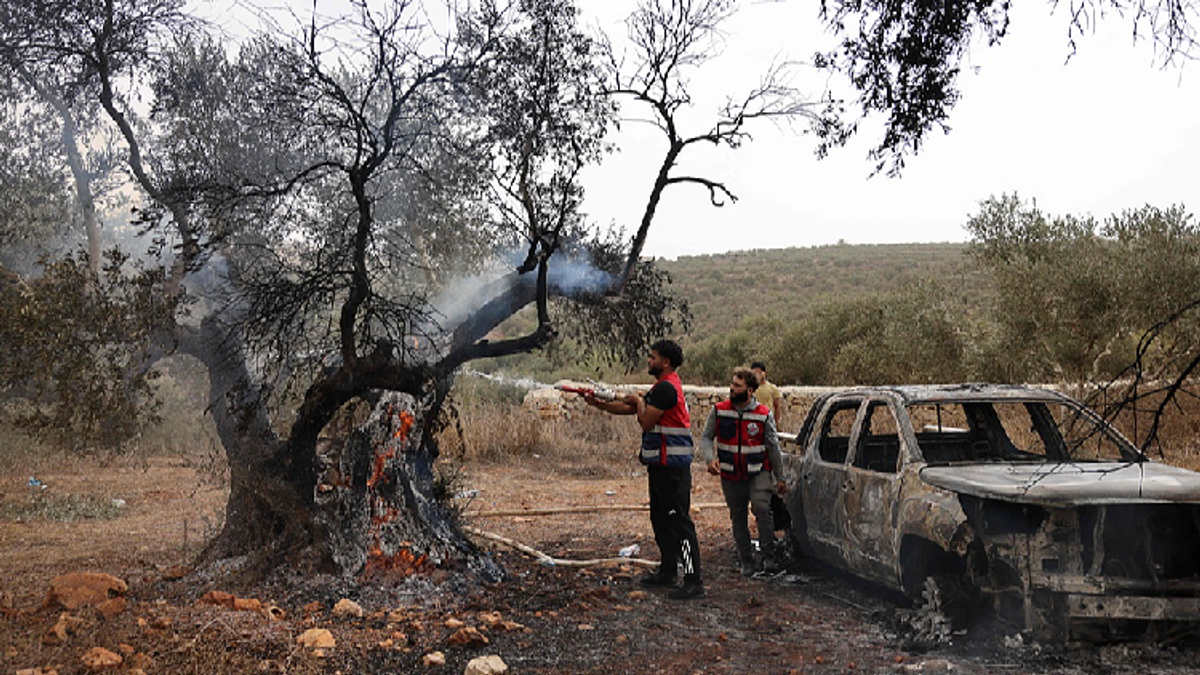
On October 16, 2026, a wave of attacks by Israeli settlers swept across the occupied West Bank, resulting in injuries to at least 19 Palestinians, including two children aged eight and twelve. The violence, which spanned areas such as Ramallah, Nablus, Jenin, Tulkarm, and Hebron, also left two foreign journalists wounded, with American photojournalist Heidi Levine requiring hospitalization after being beaten by masked assailants while covering the olive harvest. The Palestinian Wall and Settlement Resistance Commission documented 34 separate incidents targeting farmers, their land, and vital crops, often involving settlers acting under the direct protection of Israeli forces. In addition to physical assaults, the attacks caused significant property damage, including the burning of five Palestinian vehicles—one a civil defense rescue vehicle—and numerous ancient olive trees, a critical source of income and cultural heritage for local communities.
The incidents in the West Bank are not isolated acts of aggression but are deeply embedded in a complex web of power dynamics designed to assert control over land and resources. At its core, this is about the systematic expansion of Israeli settlements and the corresponding dispossession of Palestinians.
The presence of Israeli forces protecting settlers during these attacks is a critical detail. It signifies more than mere inaction; it points to a de facto, and often de jure, endorsement of settler activity by the Israeli state. While Israel officially states that settlements are a security necessity, the reality on the ground often involves the military acting as an enforcement arm for settler expansion. This provides a shield for settlers to engage in actions that would otherwise be illegal, effectively creating a parallel legal and security system that favors settlers over Palestinians.
Many Israeli settlers are driven by a potent mix of religious and nationalist ideologies, believing they have a divine or historical right to the entire land. Their presence and expansion are not merely about establishing homes but about creating irreversible facts on the ground, making the prospect of a viable Palestinian state increasingly remote. By seizing control of strategic hilltops, water sources, and agricultural land, settlers fragment Palestinian communities, disrupt their economic life, and solidify Israeli territorial claims, effectively undermining any future two-state solution.
The timing of these attacks during the olive harvest season is no coincidence. The olive tree is not just a crop; it is a symbol of Palestinian steadfastness and a cornerstone of their agricultural economy. Disrupting the harvest, burning trees, and preventing farmers from accessing their land directly impacts Palestinian livelihoods, leading to substantial economic losses. This economic pressure serves as a potent tool of displacement, making it increasingly difficult for Palestinians to sustain themselves on their ancestral lands, thereby encouraging their departure and facilitating further settlement expansion.
The international community, through the United Nations, consistently affirms that Israeli settlements in the occupied Palestinian territory are illegal under international law and undermine the prospects for peace. However, Israel disputes this, viewing the West Bank as disputed territory rather than occupied, and continues its settlement expansion. This fundamental disagreement highlights a profound power imbalance where international norms and legal frameworks are often overridden by the unilateral actions of a powerful state, backed by its military and, at times, tacit international tolerance.
The violence in the West Bank during the olive harvest season exacts a profound and multifaceted human cost, far beyond the immediate physical injuries reported.
For Palestinian farmers, the olive harvest is more than just an annual agricultural activity; it is a deeply ingrained cultural tradition passed down through generations, a primary source of income, and a tangible connection to their land. The attacks mean lost income, destroyed crops, and the psychological trauma of facing violence and intimidation on their own property. The injury of children, women, and elderly people underscores the indiscriminate nature of the violence, instilling fear and insecurity within entire communities. This constant threat forces families to choose between risking their safety and abandoning their livelihood, pushing many towards economic destitution and potential displacement.
Beyond individual suffering, the attacks chip away at the fabric of Palestinian society. When farmers cannot safely access their land, communal bonds weaken, and traditional ways of life are threatened. The destruction of olive trees, some centuries old, represents an irreplaceable loss of heritage and a deliberate act of cultural erasure. The inability of civil defense and emergency responders to operate without being targeted further erodes trust in any semblance of order and leaves communities feeling utterly vulnerable and unprotected.
The targeting of foreign journalists, particularly the severe beating of Heidi Levine, carries a chilling message. Journalists are crucial for documenting human rights abuses and bringing international attention to the realities on the ground. Attacks on them are an attempt to silence dissenting voices, obscure the truth, and prevent the world from witnessing the daily struggles of Palestinians. This not only endangers individuals but also undermines the public's right to information and the potential for accountability.
While official statements and mainstream narratives often frame these incidents as isolated clashes or security concerns, a deeper analysis reveals a more complex and often deliberately obscured reality.
Israeli authorities often state that incidents of settler violence are
Source referenced: CGTN
This brief was synthesized by our Editorial Engine and reviewed by The Ground Narrative team.