TRENDING

Sunday, 4 October 2026
----------------------
23 Rabi' Al-Thani 1448 AH
An Israeli strike in southern Lebanon shattered a two-month lull, killing seven civilians and exposing the fragile nature of undeclared ceasefires. This escalation reveals the enduring power struggle between regional actors, with ordinary people caught in the crossfire.
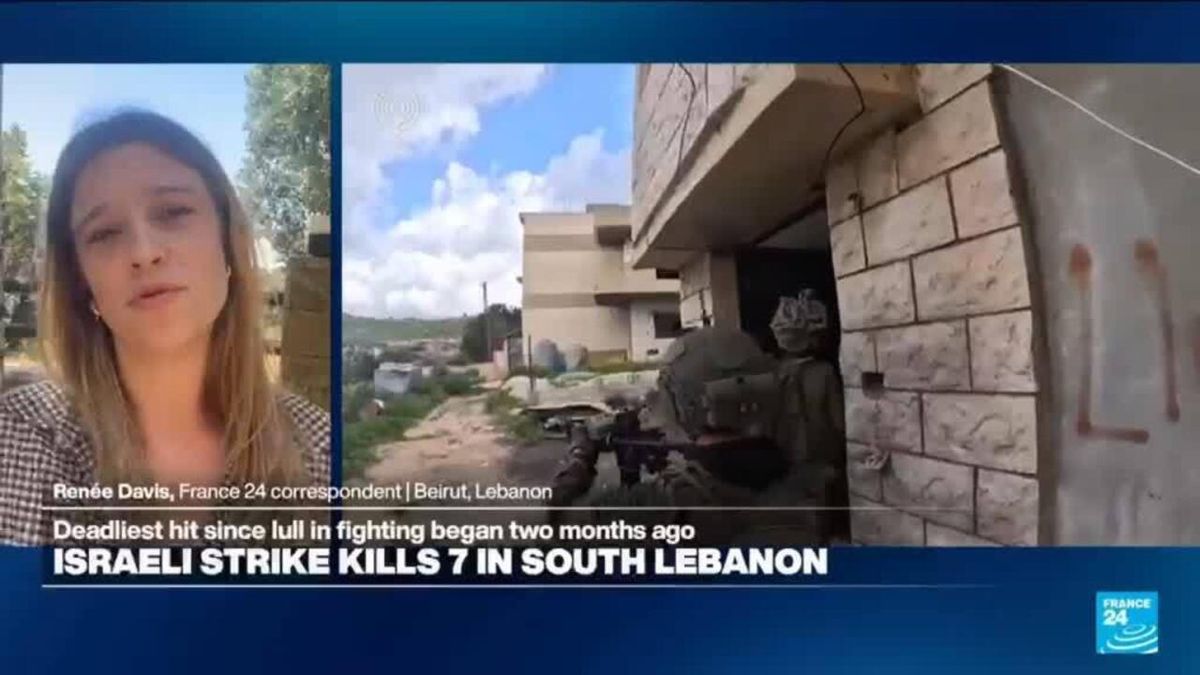
Overnight, Israeli airstrikes targeted a village in southern Lebanon, resulting in the deaths of at least seven people. This incident marks the deadliest escalation in the region since a two-month period of reduced hostilities, often referred to as a "truce," began. The strikes reignite fears of a broader conflict along the volatile border, challenging the fragile calm that had momentarily settled.
The recent Israeli strikes, despite a supposed lull, underscore a persistent strategic calculus rather than a simple breakdown of a ceasefire. For Israel, maintaining a credible deterrent against Hezbollah in southern Lebanon is a core national security objective. The "lull" itself was likely a period of tactical repositioning and intelligence gathering, not a cessation of intent. Hezbollah, supported by Iran, views its presence and capabilities in southern Lebanon as crucial for its political legitimacy within Lebanon and its strategic role in the "Axis of Resistance." When one side perceives a vulnerability or an opportunity to re-establish dominance, or to retaliate for perceived provocations (even unstated ones), the threshold for kinetic action remains low. The timing of such strikes often aligns with internal political pressures in Israel, where leaders like Netanyahu frequently leverage security operations to consolidate support or project strength. The absence of a formal, internationally brokered ceasefire means that any "truce" is merely a de-escalation by mutual, unstated consent, easily disrupted by either party's strategic imperatives or domestic political needs.
While generals and politicians debate strategic depth and deterrence, it is the residents of southern Lebanese villages who bear the immediate and devastating human cost. Seven lives lost in a single night are not merely statistics; they are families shattered, communities terrorized, and livelihoods destroyed. For generations, these border communities have lived under the shadow of conflict, their homes and fields often becoming battlegrounds. Children grow up with the constant threat of displacement, trauma, and the disruption of education. The economic impact is profound: agriculture, a primary source of income, is repeatedly interrupted, infrastructure is damaged, and investment is deterred. The "lull" offered a brief, deceptive respite, allowing some to return or rebuild, only for it to be violently snatched away. These are the people whose voices are rarely heard in the halls of power, yet they are the first to pay the ultimate price for decisions made far from their doorsteps.
What official statements and media reports often downplay is the *deliberate ambiguity* surrounding the "truce" itself. There was no formal agreement, no signed document, no international monitoring mechanism. This allows both Israel and Hezbollah to claim adherence to a de-escalation while simultaneously reserving the right to respond to perceived threats or provocations without breaking a "formal" commitment. This strategic ambiguity serves the powerful: it provides deniability and flexibility, but it leaves ordinary citizens in a perpetual state of uncertainty, never truly knowing if the calm will last. Furthermore, the role of internal Lebanese political dynamics, often overshadowed by the Israel-Hezbollah binary, is frequently omitted. The Lebanese state's inability to fully control its southern border or disarm Hezbollah means it is a passive observer in its own territory, unable to protect its citizens effectively. The international community, while urging de-escalation, often fails to press for robust, verifiable mechanisms that would genuinely safeguard civilian lives, instead settling for temporary, unwritten understandings that are inherently unstable.
The immediate aftermath will reveal the extent of Hezbollah's retaliation, if any, and Israel's subsequent response, which could quickly spiral into a wider confrontation. Observe the rhetoric from both sides: will they seek to contain the incident or use it as justification for further action? Pay attention to diplomatic efforts, particularly from the United States and France, to broker a more formal or at least more robust understanding of de-escalation. Crucially, watch for any internal political shifts within Lebanon, as the renewed violence could exacerbate existing tensions between political factions regarding Hezbollah's role. Finally, monitor the movement of populations in southern Lebanon; any significant displacement would signal a deeper fear among residents that this "truce" is irrevocably broken, and that a more sustained period of conflict may be looming.
Source referenced: FRANCE24
This brief was synthesized by our Editorial Engine and reviewed by The Ground Narrative team.


