TRENDING

Tuesday, 20 October 2026
----------------------
9 Jumada Al-Awwal 1448 AH
Lebanese President Joseph Aoun's high-stakes visit to Washington has sparked cautious optimism among diplomats and analysts. But what does this pivotal moment in Lebanese diplomacy mean for the region's fragile balance of power?
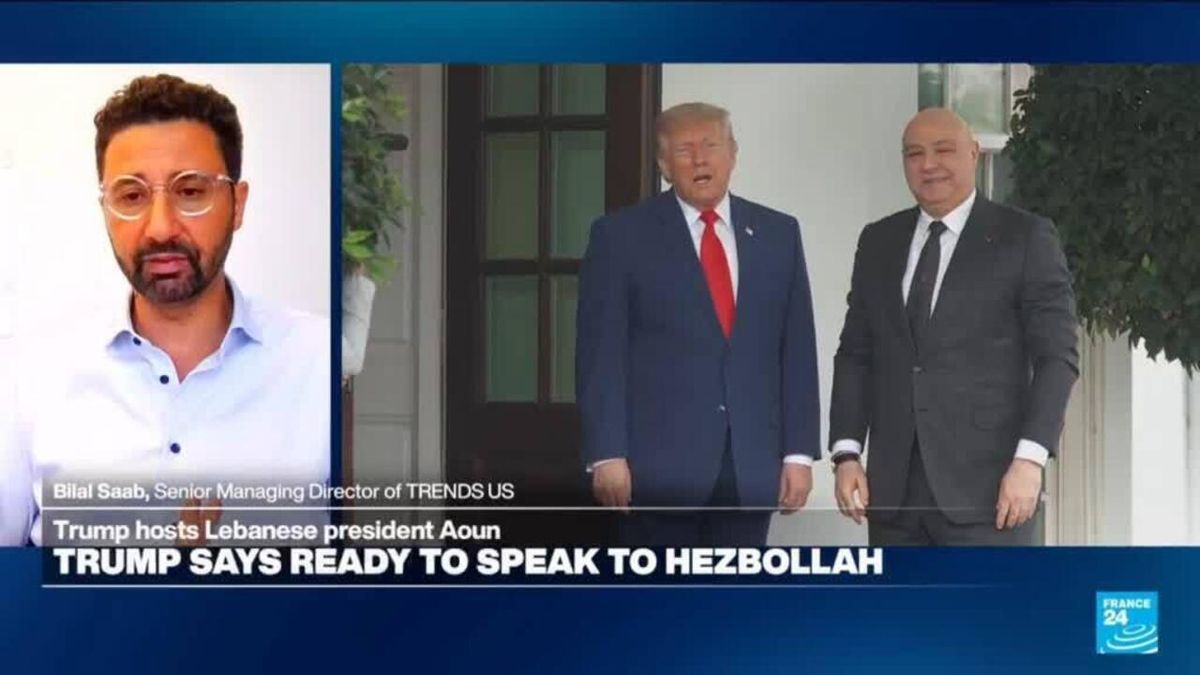
Lebanese President Joseph Aoun's visit to Washington has been hailed as a crucial opportunity to consolidate international backing for Lebanon's sovereignty and state institutions. Bilal Saab, Senior Managing Director of the Trends Research Group, has described the meeting as 'a pivotal moment in Lebanese diplomacy' that could not have gone better. But what exactly does this mean for the region's complex web of alliances and rivalries?
Lebanon's fragile state-building experiment is, in many ways, a microcosm of the broader challenges facing American regional diplomacy. The country's history of sectarian conflict, regional tensions, and the presence of Hezbollah have created a perfect storm of structural challenges that threaten to undermine any attempts at state consolidation. As Saab noted, success will not come from military coercion, but rather a focus on gradual strengthening of the Lebanese state.
Lebanon's experiment in state-building is, in many ways, a reflection of the broader challenges facing the region. The country's history of sectarian conflict, regional tensions, and the presence of Hezbollah have created a perfect storm of structural challenges that threaten to undermine any attempts at state consolidation. As Saab noted, success will not come from military coercion, but rather a focus on gradual strengthening of the Lebanese state.
Hezbollah's presence in Lebanon is a major wildcard in the region's complex web of alliances and rivalries. The group's influence extends far beyond Lebanon's borders, with significant ties to Iran and Syria. As Saab noted, Hezbollah's structural challenges pose a formidable obstacle to any attempts at state consolidation. However, the group's presence also presents an opportunity for the United States to engage in a more nuanced and effective approach to regional diplomacy.
The consequences of President Aoun's visit to Washington will be far-reaching and complex. On one hand, the visit represents a crucial opportunity to consolidate international backing for Lebanon's sovereignty and state institutions. On the other hand, the visit also risks being seen as a symbolic gesture, rather than a meaningful commitment to Lebanon's state-building experiment. As Saab noted, success will not come from military coercion, but rather a focus on gradual strengthening of the Lebanese state.
President Aoun's visit to Washington represents a pivotal moment in Lebanese diplomacy. The visit has sparked cautious optimism among diplomats and analysts, but the future consequences of this high-stakes gambit remain uncertain. As the region continues to grapple with the complex web of alliances and rivalries, one thing is clear: the success of Lebanon's state-building experiment will depend on sustained political support and not symbolic declarations.
Editor's Note: While the visit represents a crucial opportunity to consolidate international backing for Lebanon's sovereignty and state institutions, the future consequences of this high-stakes gambit remain uncertain.
Source referenced: FRANCE24
This brief was synthesized by our Editorial Engine and reviewed by The Ground Narrative team.