TRENDING

Tuesday, 20 October 2026
----------------------
9 Jumada Al-Awwal 1448 AH
For decades, France has been a land of persistent, often violent, street protests. This cycle reveals a deep tension between a centralized state and a populace that sees the street as its primary avenue for change.
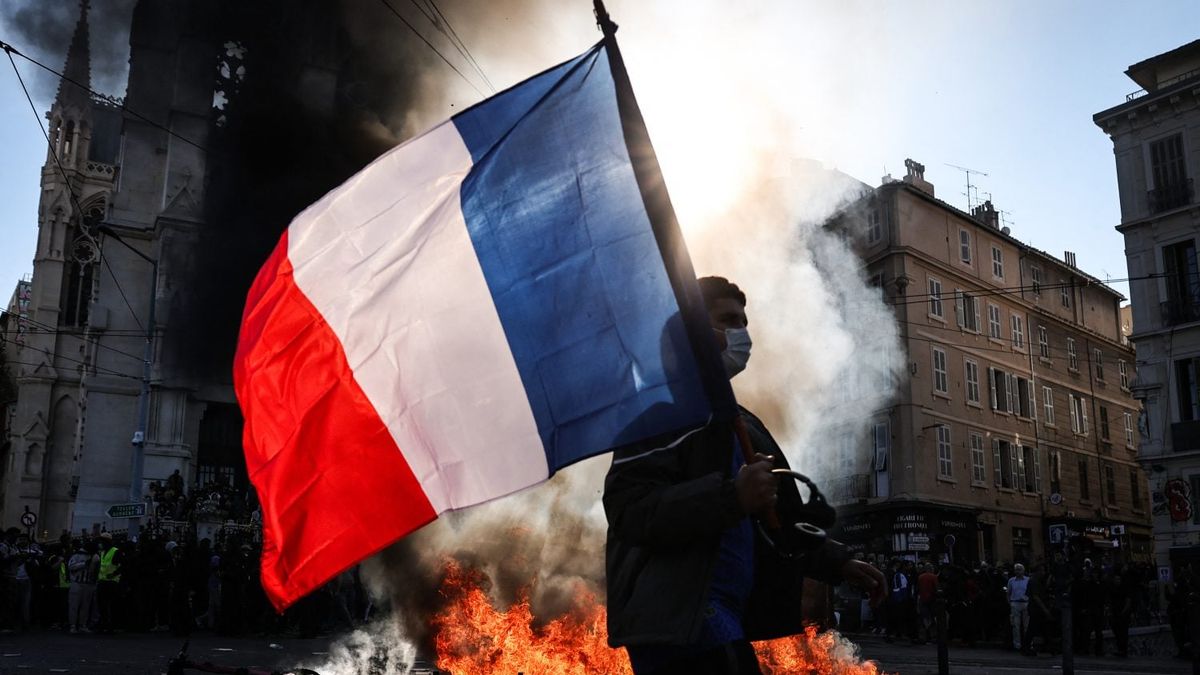
France is once again gripped by widespread street protests and urban unrest, a familiar cycle that has escalated from student-led demonstrations into a nationwide expression of exasperation. These events, marked by public property destruction, looting, and clashes with heavily armed riot police, echo the convulsions of urban violence seen two decades ago, notably in 2005. The current wave of discontent highlights deep-seated grievances ranging from perceived police violence and systemic racism to social inequality and the erosion of the nation's social contract. The state's response has been swift and often forceful, deploying tear gas and smoke grenades against demonstrators, further entrenching a pattern of confrontation that has defined French public life for generations.
The persistent cycle of protest in France is not merely a series of isolated incidents but a symptom of profound structural power dynamics. At its core lies the tension between a highly centralized, top-heavy state and a populace that often finds its traditional avenues for political expression constrained. The French Fifth Republic, established in 1958, was designed with a strong presidency and a relatively subservient parliament, concentrating power at the top and limiting the influence of intermediary bodies like political parties and trade unions. Unlike many other European nations, France has historically low rates of union membership, and its political parties often struggle to channel broad public discontent effectively. This institutional weakness means that for many French citizens, the street becomes one of the few potent platforms to make their voices heard beyond the ballot box.
This dynamic is amplified by France's unique historical relationship with protest and insurrection. From the French Revolution of 1789 onward, the idea that opposition to injustice must be politicized, and can legitimately take the form of street action, is deeply ingrained in the national consciousness. Protest is not just a right; it is often seen as a duty, a direct lineage to a revolutionary past where citizens fundamentally reshaped their society. This cultural acceptance of protest spans the political spectrum, from left-wing activists demonstrating against social inequality to right-wing movements challenging reforms to education or social policy. The street, therefore, functions as a powerful, albeit often volatile, check on state authority, capable of forcing governments to reconsider or even reverse policies.
The state's response to these protests further entrenches the cycle. French authorities have historically adopted a confrontational approach, often resorting to violent repression that critics describe as operating on 19th-century ideas of managing an
France's frequent protests stem from a highly centralized state with weak intermediary institutions, forcing citizens to use street action as a primary voice. This is compounded by a deep historical legacy of revolutionary protest and the state's often confrontational response to dissent.
The French state's top-heavy, technocratic structure limits avenues for public input, while its historical use of heavy-handed policing tactics often inflames tensions. This approach, rooted in 19th-century ideas of crowd control, can harden protesters' resolve and perpetuate the cycle of confrontation.
France has historically been a significant exporter of radical political thought and protest imagery. Its protest models and ideas, ranging from far-left iconography to far-right theories like the 'Great Replacement,' continue to inspire and shape political movements globally.
Source referenced: FOREIGNPOLICY
This brief was synthesized by our Editorial Engine and reviewed by The Ground Narrative team.