TRENDING

Sunday, 4 October 2026
----------------------
23 Rabi' Al-Thani 1448 AH
Lebanon has become the first country in the Middle East to abolish the death penalty, a move that redefines the state's ultimate power in a region where executions remain common. This shift raises questions about human rights, political motives, and the stark contrast with global trends in capital punishment.
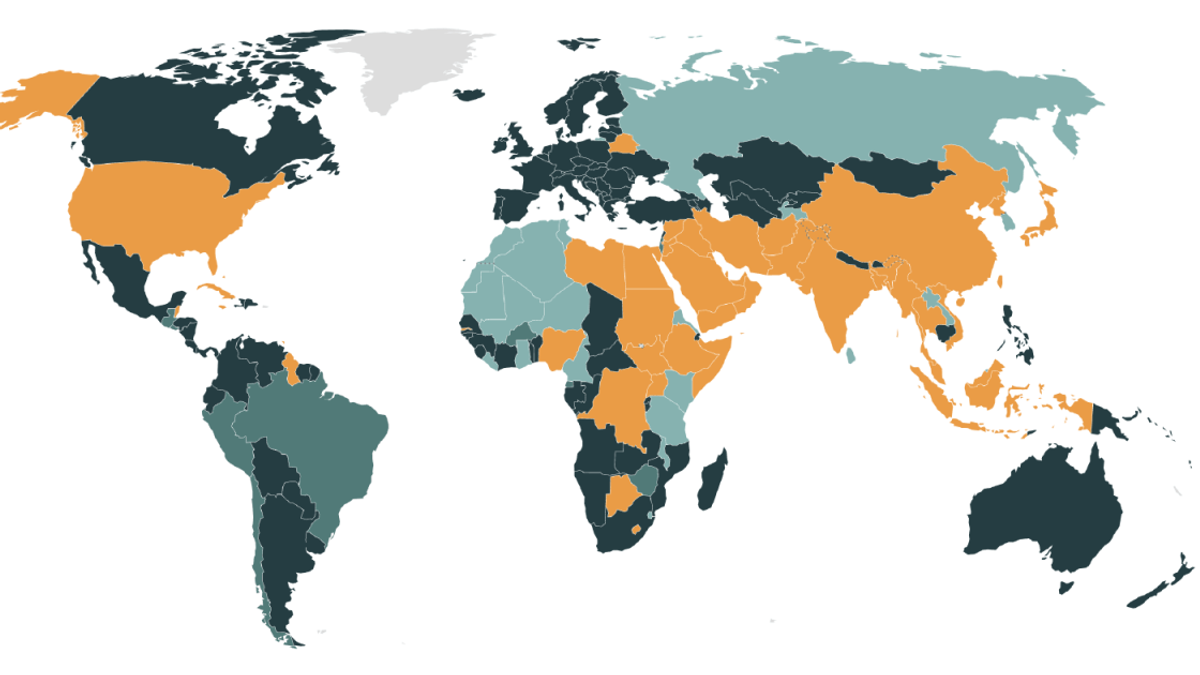
Lebanon's parliament has voted to abolish the death penalty, replacing it with life imprisonment with aggravated hard labor. This landmark decision, passed by a majority of the 128-member body, makes Lebanon the first nation in the Middle East to formally end capital punishment. The move comes after an unofficial moratorium on executions had been in place since January 2004, even as courts continued to issue death sentences, leaving 85 individuals on death row at the close of 2025.
This decision by Beirut is not merely a legal reform; it's a significant re-evaluation of state power in a region often characterized by its robust application. For Lebanon, a nation grappling with profound economic collapse, political instability, and sectarian divisions, the abolition of the death penalty can be understood through multiple lenses. Internally, it may represent an attempt by the political establishment to project an image of reform and adherence to international human rights standards, potentially to unlock crucial international aid or garner diplomatic goodwill. The inclusion of "aggravated hard labor" in the replacement sentence suggests a compromise, aiming to satisfy those within the political spectrum who still demand severe punitive measures, balancing external pressure for reform with internal demands for retribution. Globally, Lebanon's move stands in stark contrast to the broader trends observed in other retentionist states, particularly in the Middle East and Asia, where the state's power to execute remains firmly asserted, often with increasing frequency. This highlights a divergence in how states perceive and utilize their ultimate authority over life and death.
The most immediate human impact of this decision falls on the 85 individuals who were facing execution. Their sentences will now be commuted, offering a reprieve from the ultimate state sanction. Beyond those directly affected, the abolition sends a signal to Lebanese society about the state's evolving relationship with its citizens and the definition of justice. However, the human cost extends far beyond Lebanon's borders. Amnesty International's data reveals a staggering 78 percent increase in global executions in 2025, primarily driven by countries like Iran, which saw executions more than double to over 2,159. China, which executes thousands annually, remains opaque about its figures. These numbers represent countless individuals, often from marginalized communities, political dissidents, or those convicted of drug-related offenses, whose lives are extinguished by state power. While Lebanon steps back, the human toll in other nations continues to mount, highlighting a global disparity in the value placed on human life by different governing powers.
What remains largely unstated in the official narrative of Lebanon's abolition is the precise calculus behind its timing. While framed as a human rights victory, the decision could also be a strategic maneuver by a government desperate for international legitimacy and financial assistance. In a country where the rule of law has often been compromised by political interference and corruption, the effectiveness and humanity of the proposed "life imprisonment with aggravated hard labor" will be critical. What are the conditions of these prisons? Will this new sentence truly be a humane alternative, or simply a different form of prolonged suffering? Furthermore, the broader regional context of escalating executions, particularly in Iran, is often downplayed by international bodies seeking to celebrate individual victories. The focus on one country's progress can inadvertently overshadow the deteriorating situation in others, allowing powerful states to continue their practices with less scrutiny.
Readers should closely watch the implementation of Lebanon's new law. The conditions of its prisons, the fairness of its judicial system, and the practical application of "aggravated hard labor" will determine if this is a genuine step towards a more humane justice system or merely a symbolic gesture. Regionally, the key question is whether Lebanon's example will inspire any other Middle Eastern states to reconsider their stance on capital punishment, or if it will remain an isolated outlier. Globally, the trajectory of executions in countries like Iran and China will continue to be a critical indicator of the balance between state power and human rights. The pressure from international human rights organizations and diplomatic bodies will be crucial in pushing for greater transparency and accountability from retentionist states, while the world observes if Lebanon's bold move can truly spark a broader regional shift.
Source referenced: ALJAZEERA
This brief was synthesized by our Editorial Engine and reviewed by The Ground Narrative team.