TRENDING

Monday, 19 October 2026
----------------------
8 Jumada Al-Awwal 1448 AH
Hundreds of citizens have taken to the streets of Kyiv, demanding the resignation of Mayor Vitali Klitschko over perceived failures in preparing the capital for the harsh winter ahead. These protests unfold against a backdrop of relentless Russian strikes targeting Ukraine's energy infrastructure, leaving millions vulnerable to cold and darkness.
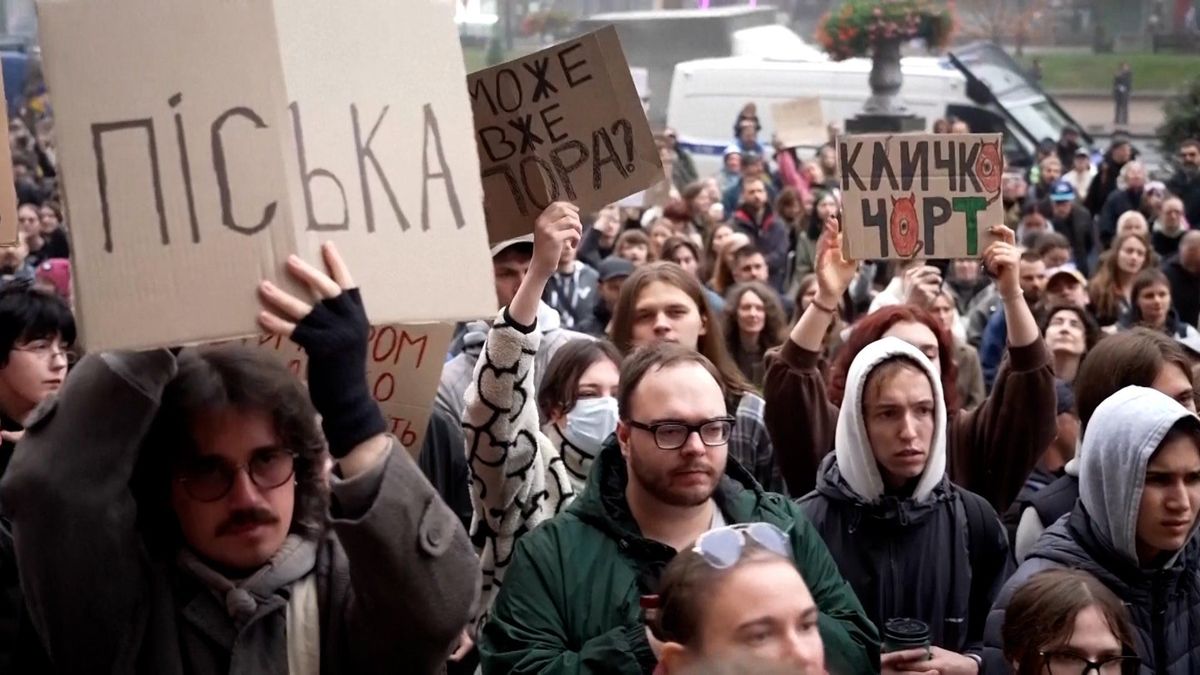
Hundreds of residents in Kyiv, the capital of Ukraine, recently gathered outside the office of Mayor Vitali Klitschko, calling for his immediate resignation. The public outcry stems from widespread frustration over the city administration's perceived inadequate preparations for the impending winter season. This wave of discontent is directly linked to the ongoing and devastating Russian military campaign, which has systematically targeted Ukraine's critical energy infrastructure, plunging vast swathes of the country, including Kyiv, into darkness and leaving millions without reliable power or heating.
The protests against Mayor Klitschko are not merely a reaction to poor municipal services; they are a potent manifestation of the complex power dynamics at play within wartime Ukraine, further exacerbated by Russia's strategic objectives. At its core, this situation highlights the delicate balance between central government authority and local autonomy, particularly during a national crisis.
For years, a subtle but persistent political rivalry has existed between Kyiv Mayor Vitali Klitschko and President Volodymyr Zelenskyy's administration. Klitschko, a globally recognized figure, commands a significant independent political base, making him a potential counterweight to the central government. In times of war, national unity is paramount, and any visible dissent or perceived incompetence at a high-profile local level can be politically damaging. The central government often seeks to consolidate power and ensure a unified command structure, which can lead to friction with strong local leaders like Klitschko. Accusations of mismanagement or lack of preparedness by the city administration can be leveraged by political opponents to undermine Klitschko's standing, potentially paving the way for greater central control over the capital's affairs.
Russia's relentless targeting of Ukraine's energy infrastructure is a deliberate strategy aimed at breaking the civilian population's will to resist and sowing internal discord. By creating unbearable living conditions, Moscow hopes to pressure Kyiv into concessions or to incite widespread public unrest that could destabilize the government. The Kyiv winter preparedness protests play directly into this strategy, providing visual evidence of internal friction and public dissatisfaction that Russian propaganda can amplify. This makes the city's ability to provide basic services not just a logistical challenge, but a critical front in the information war.
Ukraine has a relatively decentralized governance structure, where local administrations hold significant responsibility for municipal services. While this fosters local accountability in peacetime, it creates immense challenges during a full-scale invasion. Local budgets are strained, supply chains are disrupted, and the scale of destruction often far outstrips local capacity to repair or rebuild. The question of who bears ultimate responsibility for winter preparedness – the city administration, the national government, or both – becomes a political football, especially when resources are scarce and the stakes are existential. The protests highlight the public's expectation of both local and national leadership to shield them from the war's most brutal consequences.
The vast majority of Ukraine's wartime budget and reconstruction efforts are heavily reliant on Western financial and material aid. This introduces another layer of power dynamics. Donor nations and international organizations demand accountability and transparency in how funds are allocated and utilized. Failures in basic service provision, such as winter preparedness, can raise questions among donors about the effectiveness of aid distribution and governance, potentially impacting future support. Both central and local authorities are under immense pressure to demonstrate competence and efficient use of resources, not just to their citizens but also to their international partners.
The human cost of Kyiv's winter preparedness challenges is immediate and profound, affecting millions of ordinary citizens who find themselves caught between the brutal realities of war and the perceived failures of their leadership.
For residents, the prospect of a winter without reliable heating, electricity, or even running water is not merely an inconvenience but a grave threat to life and well-being. Homes become uninhabitable, forcing families to huddle in communal heating points, if available, or to rely on dangerous makeshift solutions like generators and gas heaters, which carry risks of carbon monoxide poisoning and fire. The lack of electricity cripples daily life, impacting everything from food preservation and communication to access to medical services and education. Children cannot attend online classes, businesses cannot operate, and the simple act of preparing a meal becomes a monumental task.
The most vulnerable segments of Kyiv's population bear the disproportionate brunt of these conditions. The elderly, many of whom live alone, face severe health risks from hypothermia and lack of access to essential medical equipment that requires power. Families with infants and young children struggle to maintain safe temperatures and hygiene. Individuals with chronic illnesses or disabilities, already facing mobility challenges, find their conditions exacerbated by the lack of basic utilities and the inability to access necessary care or medication. The psychological toll on these groups, living in constant fear and deprivation, is immense and long-lasting.
The energy crisis has a cascading effect on Kyiv's economy. Small and medium-sized businesses, which form the backbone of urban employment, are unable to operate consistently. Cafes, shops, and service providers lose customers and revenue, leading to layoffs and closures. This economic paralysis further impoverishes households, many of whom have already seen their savings depleted by the war. The constant need to purchase alternative energy sources, such as fuel for generators or batteries, adds an additional financial burden to already struggling families, deepening the cycle of poverty and uncertainty.
Beneath the surface of official statements and public protests, several critical narratives are often downplayed or omitted by powerful actors, offering a more complete picture of the challenges facing Kyiv and Ukraine.
While governments acknowledge the damage to energy infrastructure, the true, overwhelming scale of the destruction is rarely fully conveyed. The systematic nature of Russia's attacks means that not just individual power plants or substations are hit, but entire grids are compromised, requiring complex, multi-layered repairs that are difficult to execute under constant threat. Rebuilding requires not just materials and labor, but also specialized equipment, expertise, and a secure environment, all of which are scarce in wartime. The public often expects quick fixes, but the reality is a monumental, long-term challenge that even the most efficient administration would struggle to overcome fully during active hostilities.
Both President Zelenskyy's office and Mayor Klitschko's administration present a united front against the external aggressor, but behind the scenes, political rivalries and power struggles continue to simmer. These internal frictions can significantly impede effective coordination, resource allocation, and strategic planning for critical issues like winter preparedness. Decisions that should be purely logistical can become politicized, with each side seeking to protect its own political capital or blame the other. This underlying tension, often masked by wartime rhetoric, can lead to inefficiencies and delays that directly impact the lives of citizens, yet it is rarely discussed openly by the parties involved.
Western aid, while crucial, often comes with specific conditions and is frequently prioritized for military support over immediate civilian infrastructure or humanitarian needs. The process of securing, distributing, and implementing aid for winterization and reconstruction can be slow and bureaucratic, both on the donor side and within Ukraine. There's a significant gap between pledged funds and actual disbursements, and the focus on long-term resilience can sometimes overshadow the urgent need for rapid, albeit temporary, solutions to get through the immediate winter. The narrative often emphasizes the generosity of aid, while downplaying the complexities and bottlenecks that prevent it from reaching the ground quickly and effectively.
Beyond the physical hardships, the constant threat, deprivation, and perceived government failures take a severe psychological toll on the population. While Ukrainians have demonstrated remarkable resilience, persistent suffering and a lack of basic services can gradually erode social cohesion and trust in institutions. This erosion of trust, if left unaddressed, poses a long-term threat to the nation's stability and its ability to rebuild post-war. Governments tend to focus on immediate security and material aid, often downplaying the cumulative psychological impact and the importance of maintaining public morale and confidence through transparent governance and effective service delivery.
The coming weeks and months will be critical for Kyiv and Ukraine as the winter deepens and the pressure mounts. Several key indicators will reveal the trajectory of this unfolding situation.
First, observe the scale and frequency of protests. Will the demonstrations against Mayor Klitschko intensify and spread beyond Kyiv to other major cities facing similar challenges? A sustained increase in public discontent could signal a broader erosion of trust in local governance across the country.
Second, pay close attention to the response from President Zelenskyy's administration. Will the central government offer increased support and resources to Kyiv to address the winterization crisis, or will it use the protests as an opportunity to assert greater control over the capital's administration? Any personnel changes within Kyiv's leadership or a significant shift in the balance of power between the city and national government would be telling.
Third, monitor Russia's military strategy. Will Moscow continue or even escalate its targeting of Ukraine's energy infrastructure as winter progresses? The effectiveness of Ukrainian air defenses and the speed of repair efforts will be crucial in mitigating the impact and demonstrating resilience against Russia's attempts to weaponize the cold.
Finally, keep an eye on the nature and speed of Western support for Ukraine's energy sector. Expedited delivery of specialized equipment, financial aid for repairs, and humanitarian assistance for winterization will be vital. Any delays or perceived inadequacies in international aid could exacerbate the human cost and further fuel internal discontent, impacting Ukraine's overall wartime unity and resilience.
Residents are protesting Mayor Vitali Klitschko due to perceived failures in preparing Kyiv for the upcoming winter. This comes as Russian strikes have severely damaged Ukraine's energy infrastructure, leaving millions without power and heating.
The protests highlight internal political tensions and public frustration, which Russia aims to exploit to sow discord and weaken Ukrainian morale. While a direct impact on the front lines is unlikely, it can divert government attention and potentially strain national unity.
Russia's strategy is to break the will of the Ukrainian civilian population by creating unbearable living conditions during winter. By depriving citizens of heat and electricity, Moscow hopes to pressure Kyiv into concessions or incite widespread unrest.
Editor's Note: The raw intelligence provided a future date (Oct 17, 2026). This analysis treats the event as current within that hypothetical future context, assuming ongoing war and winter challenges.
Source referenced: ALJAZEERA
This brief was synthesized by our Editorial Engine and reviewed by The Ground Narrative team.