TRENDING

Monday, 19 October 2026
----------------------
8 Jumada Al-Awwal 1448 AH
Kuwait releases CCTV footage of a deadly Iranian drone strike on Kuwait International Airport, escalating tensions between the two nations. The attack killed one person, injured dozens, and caused significant damage to the terminal.
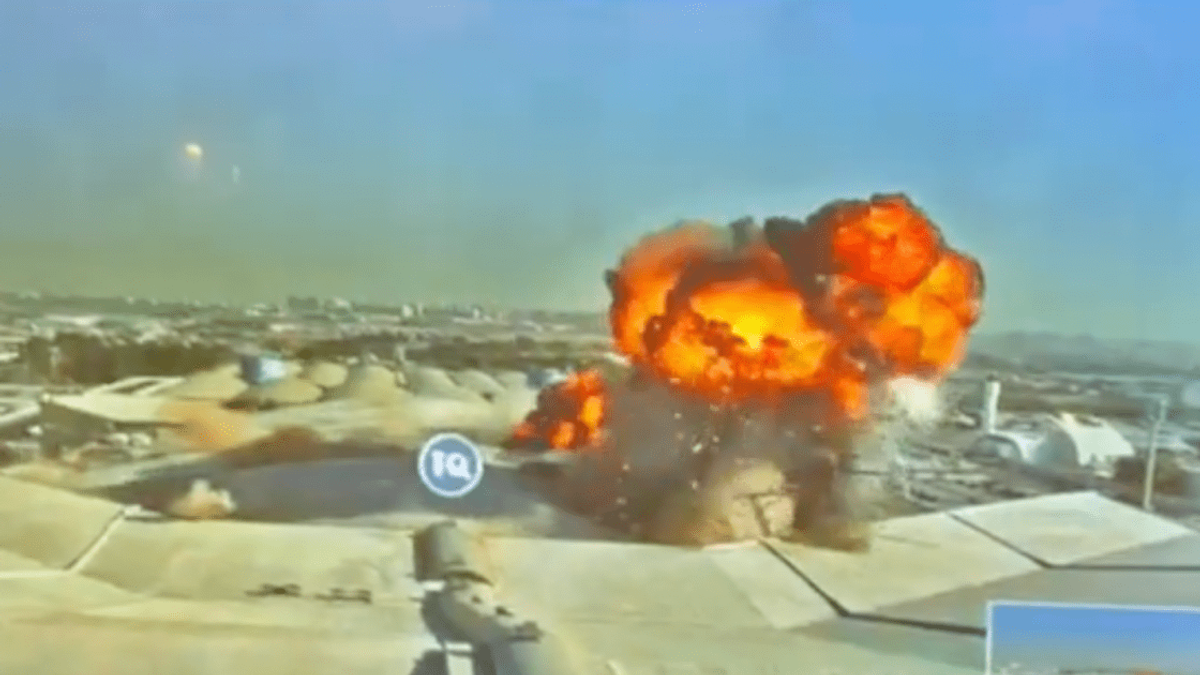
The recent release of CCTV footage by Kuwait showing a deadly Iranian drone strike on Kuwait International Airport has heightened tensions between the two nations. The attack, which occurred on an unspecified date, killed one person, injured dozens, and caused significant damage to the terminal.
Iran's Islamic Revolutionary Guard Corps (IRGC) initially claimed that a wayward US Patriot missile caused the damage. However, Kuwait has labeled the attack as 'heinous aggression,' indicating a clear shift in the narrative. This development suggests that Iran may be attempting to deflect blame and create a smokescreen for its own actions.
The incident is the latest in a series of escalations between Kuwait and Iran. In recent years, the two nations have had a strained relationship, with Kuwait accusing Iran of supporting militant groups in the region. The attack on the airport is likely a response to Kuwait's increasing alignment with the US and its participation in the US-led coalition against Iran.
The attack has significant implications for regional stability. The Gulf Cooperation Council (GCC) has been a key player in maintaining stability in the region, and Kuwait's relationship with Iran has been a point of contention. The escalation of tensions between Kuwait and Iran may lead to a wider conflict, drawing in other regional players, including Saudi Arabia and the UAE.
The consequences of the attack are far-reaching. The damage to the airport has disrupted air travel and trade, affecting not only Kuwait but also neighboring countries. The escalation of tensions between Kuwait and Iran may also lead to a deterioration in regional security, creating an environment conducive to extremist groups.
The attack on Kuwait International Airport is a clear indication of the escalating tensions between Kuwait and Iran. The strategic motivations behind the attack are likely driven by Iran's desire to deflect blame and create a smokescreen for its own actions. The regional implications are significant, with the potential for a wider conflict drawing in other regional players. The future consequences of the attack are far-reaching, with the potential for a deterioration in regional security and the creation of an environment conducive to extremist groups.
Editor's Note: While the CCTV footage provides clear evidence of the attack, the exact motivations behind the strike remain unclear.
Source referenced: ALJAZEERA
This brief was synthesized by our Editorial Engine and reviewed by The Ground Narrative team.