TRENDING

Monday, 5 October 2026
----------------------
24 Rabi' Al-Thani 1448 AH
North Korea condemns upcoming US-South Korea military exercises as a 'rehearsal for war,' threatening a new level of deterrence. This annual cycle of drills and threats locks the Korean Peninsula into a dangerous, perpetual state of readiness.
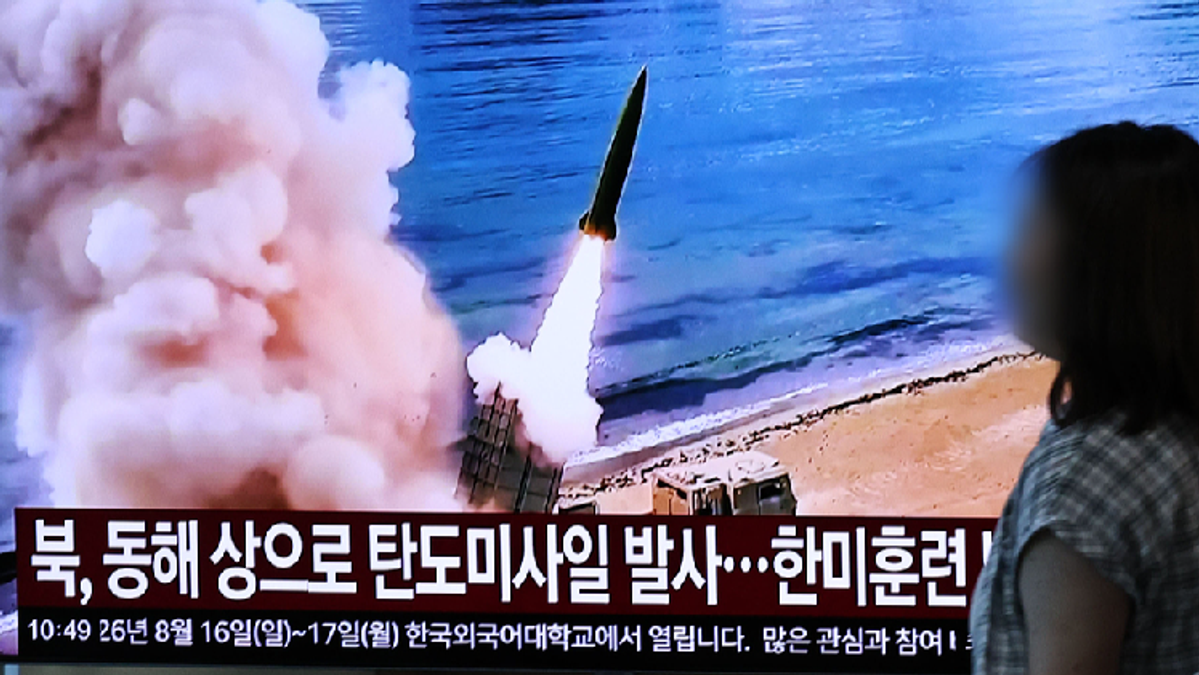
The Democratic People's Republic of Korea (DPRK) has officially condemned the upcoming joint military exercises between the United States and the Republic of Korea (ROK), known as Ulji Freedom Shield, labeling them a "rehearsal for an aggressive war." Citing a statement from its Foreign Ministry, Pyongyang warned that these drills, described by the US as significantly different from previous years and aimed at mastering "new aspects of modern warfare," pose a "grave threat" to regional security. The DPRK vowed to meet this perceived threat with a "new level of deterrent."
This annual exchange of military drills and condemnations is a core mechanism of power projection and deterrence on the Korean Peninsula. For the US and ROK, the Ulji Freedom Shield exercises serve multiple critical functions: they reinforce the long-standing alliance, enhance interoperability between their forces, and demonstrate their collective readiness to defend against potential aggression from the DPRK. The emphasis on "new aspects of modern warfare" signals an adaptation to North Korea's evolving missile and nuclear capabilities, as well as a broader strategic posture in a rapidly shifting Indo-Pacific. These drills are a clear message of resolve, intended to deter Pyongyang from any military adventurism.
From Pyongyang's perspective, these exercises are consistently framed as direct provocations and preparations for invasion. This narrative is crucial for the DPRK's internal cohesion, justifying its "military-first" policy and the continuous development of its own nuclear and ballistic missile programs. The threat of a "new level of deterrent" is a familiar tactic, designed to create leverage, extract concessions, or simply demonstrate its own capacity for escalation. It's a calculated move to remind regional powers of its destructive potential, ensuring its survival and maintaining its strategic relevance. Both sides are locked in a self-reinforcing cycle where each action, framed as defensive by one, is perceived as offensive by the other, perpetually fueling military buildup and heightened tension.
While generals and diplomats debate strategic deterrence, the human cost of this perpetual state of near-conflict falls squarely on the populations of the Korean Peninsula. For millions in South Korea, particularly those living near the heavily fortified Demilitarized Zone (DMZ) or in the densely populated capital of Seoul, every drill and every North Korean counter-threat carries a tangible undercurrent of anxiety. Businesses face uncertainty, foreign investment can be sensitive to perceived instability, and the psychological toll of living under the shadow of potential conflict is immense. Resources that could be directed towards social welfare, infrastructure, or environmental initiatives are instead channeled into maintaining a massive military apparatus.
In North Korea, the human cost is even more severe. The regime's "military-first" ideology prioritizes the development of its weapons programs and the maintenance of its armed forces above all else. This diverts critical resources – food, fuel, raw materials, and skilled labor – away from the civilian economy, exacerbating chronic shortages and humanitarian crises. The constant drumbeat of external threats, amplified by state propaganda, reinforces a siege mentality that justifies the regime's control and the hardships endured by its citizens, effectively holding an entire population hostage to geopolitical maneuvering.
What powerful actors often downplay or omit in their public statements is the intricate, often escalatory, calculus inherent in these actions. The US and ROK frame their drills as purely defensive, essential for maintaining peace and stability. However, they rarely acknowledge how these large-scale exercises are inevitably perceived by Pyongyang as direct threats, thereby feeding the DPRK's narrative and providing a pretext for its own military advancements. The "modern warfare" aspect, while intended to signal readiness, also implies a willingness to engage in a high-intensity conflict, a message that can be interpreted as provocative rather than purely deterrent.
Conversely, the DPRK's condemnations and threats consistently omit its own role in initiating this cycle of tension. Its relentless pursuit of nuclear weapons and ballistic missiles, in violation of international resolutions, is the primary driver for the US-ROK alliance's robust defensive posture. Pyongyang's rhetoric conveniently sidesteps the immense human suffering caused by its own resource allocation choices, preferring to externalize blame for its internal struggles. The broader regional implications, including how these drills are observed by China and Russia as part of the larger strategic competition with the US, are also rarely explicitly addressed by any party, yet they undeniably influence the dynamics on the peninsula.
The immediate future will likely see a predictable, yet dangerous, pattern unfold. All eyes will be on Pyongyang to see how it delivers on its promise of a "new level of deterrent." This could manifest as another ballistic missile launch, potentially an intercontinental ballistic missile (ICBM) or a submarine-launched ballistic missile (SLBM), or even a seventh nuclear test. Any such action would trigger a swift response from the US and ROK, likely in the form of further sanctions, increased military readiness, or additional joint exercises.
The key questions for observers will be the nature and scale of Pyongyang's next provocation, and critically, whether any diplomatic off-ramps emerge amidst the escalating rhetoric. The current trajectory suggests a hardening of positions, with little appetite for de-escalation from any side. The involvement of regional powers like China, whose influence over North Korea remains significant, will also be crucial to watch. Beijing's reaction to both the drills and any subsequent DPRK actions could either temper or exacerbate the tensions, making the Korean Peninsula a persistent flashpoint in the broader geopolitical landscape.
Source referenced: CGTN
This brief was synthesized by our Editorial Engine and reviewed by The Ground Narrative team.


