TRENDING

Monday, 5 October 2026
----------------------
24 Rabi' Al-Thani 1448 AH
The Kennedy Center board's decision to add Trump's name to the building's facade has sparked controversy, highlighting the ongoing struggle for control over America's cultural institutions. As the center prepares for a two-year renovation, the move raises questions about the role of politics in shaping the nation's cultural heritage.
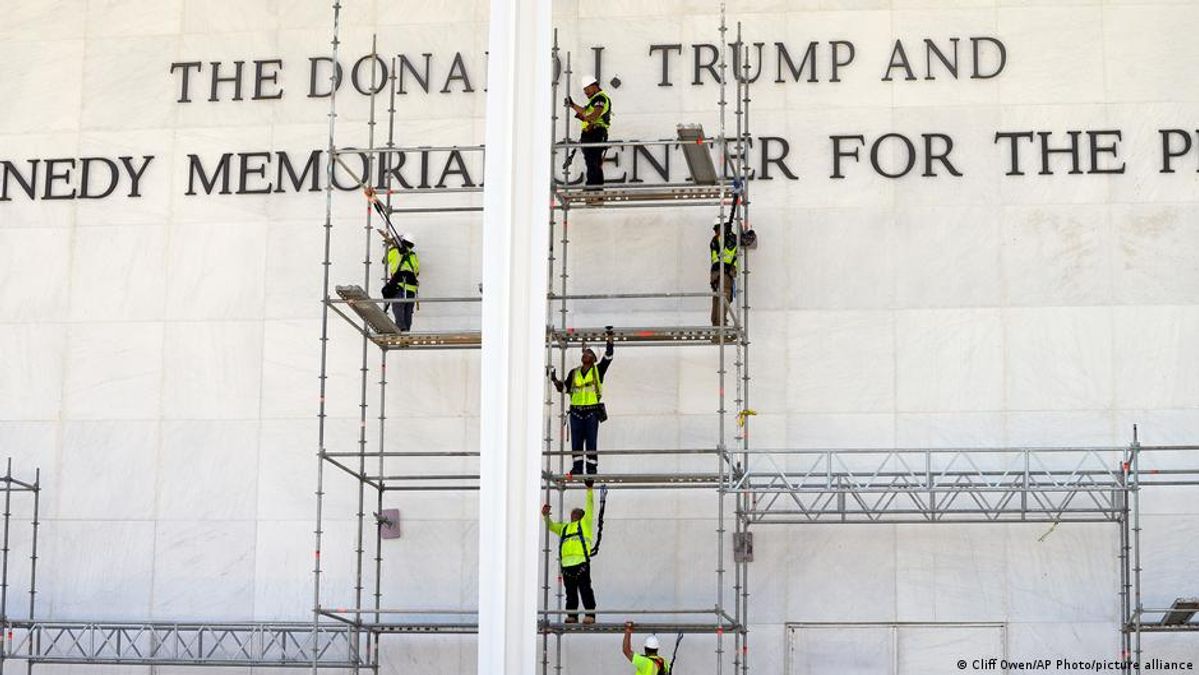
The board of the John F. Kennedy Center for the Performing Arts has voted to add President Donald Trump's name to the building's facade, despite a federal judge's ruling that only Congress can change the institution's name or authorize major alterations. The decision has been met with criticism from Congresswoman Joyce Beatty, who argues that the move is a transparent effort to circumvent the court's ruling.
The Kennedy Center dispute is part of a broader effort by Trump to remake prominent Washington landmarks in his image. By installing a handpicked board and adding his name to the building's facade, Trump is attempting to exert control over America's cultural institutions. This move is not only a reflection of Trump's personal ego but also a strategic attempt to reshape the nation's cultural narrative. The use of executive power to influence cultural institutions is a common tactic employed by authoritarian leaders to consolidate their power and shape public opinion.
The decision to add Trump's name to the Kennedy Center's facade has significant implications for the cultural workers, artists, and communities that rely on the institution. The two-year closure of the performing arts venue will result in job losses and disruption to the local economy. Furthermore, the politicization of the Kennedy Center undermines the institution's mission to promote the arts and culture, potentially alienating audiences and artists who disagree with Trump's ideology. The human cost of this decision will be felt by the thousands of people who work in the arts sector, as well as the broader community that relies on the Kennedy Center as a cultural hub.
What is being downplayed in the official statements is the potential long-term damage to the Kennedy Center's reputation and the cultural landscape of Washington D.C. The addition of Trump's name to the facade may be seen as a form of cultural vandalism, undermining the institution's credibility and integrity. Furthermore, the use of executive power to influence cultural institutions sets a dangerous precedent, potentially paving the way for future administrations to exert similar control over America's cultural heritage. The fact that the board's decision was made despite a federal judge's ruling raises questions about the rule of law and the separation of powers in the United States.
As the Kennedy Center prepares for its two-year renovation, readers should watch for further developments in the ongoing struggle for control over America's cultural institutions. The outcome of this dispute will have significant implications for the role of politics in shaping the nation's cultural narrative. Additionally, readers should be aware of the potential long-term consequences of the politicization of cultural institutions, including the erosion of trust in these institutions and the potential for cultural homogenization. The next turning points in this story will be the reaction of the artistic community, the response of Congress, and the potential legal challenges to the board's decision.
Editor's Note: The analysis is based on publicly available information and may not reflect the full complexity of the situation.
Source referenced: DW
This brief was synthesized by our Editorial Engine and reviewed by The Ground Narrative team.


