TRENDING

Sunday, 18 October 2026
----------------------
7 Jumada Al-Awwal 1448 AH
A ritual offering by Japan's Prime Minister to the Yasukuni Shrine has once again ignited fierce protests from China and South Korea, highlighting persistent historical grievances and complex power dynamics in East Asia.
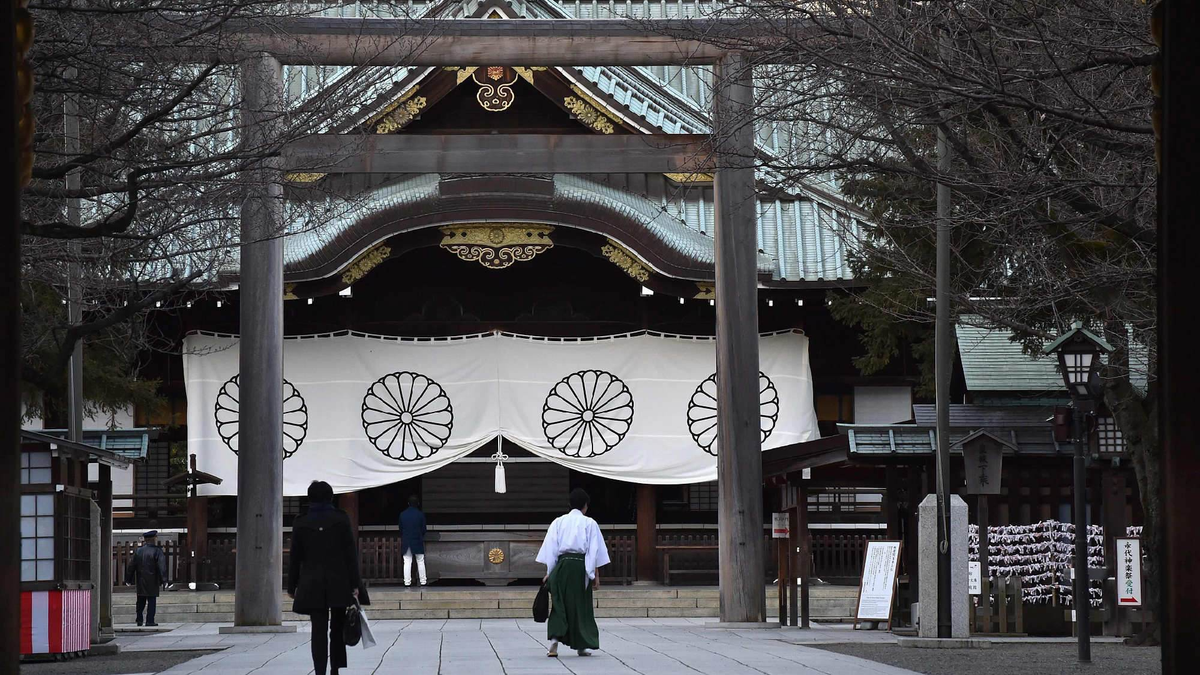
Japanese Prime Minister Sanae Takaichi recently sent a ritual offering, a potted plant, to the Yasukuni Shrine in central Tokyo during its autumn festival. This shrine is a highly controversial site, as it honors 14 convicted Class-A war criminals from World War II, alongside millions of other Japanese war dead. The gesture immediately drew strong condemnation and official protests from both China and South Korea, who view such actions as a deliberate glorification of Japan's wartime aggression and a distortion of historical facts.
The recurring controversy surrounding Yasukuni Shrine is less about a simple religious observance and more about a complex interplay of domestic politics, regional power struggles, and competing historical narratives. For Prime Minister Takaichi, identified by some as a staunch right-wing advocate for a more assertive Japan, the offering serves as a clear signal to her conservative political base. It appeals to nationalist sentiments within Japan that seek a reinterpretation of the nation's wartime past, often framing it as a defensive war or a mission to liberate Asia, rather than one of imperial aggression. This domestic political calculus prioritizes the support of a specific segment of the electorate, even at the cost of diplomatic friction.
From the perspective of China and South Korea, the visits and offerings are not mere historical disagreements; they are perceived as direct challenges to the postwar international order and an affront to the immense suffering inflicted during World War II. For these nations, the enshrinement of individuals convicted by the International Military Tribunal for the Far East is a symbolic rejection of accountability. Their protests are thus rooted in a desire to uphold historical justice, but also in a contemporary geopolitical context. As Japan considers expanding its military capabilities and revising its pacifist constitution, these historical gestures are seen as indicators of a broader shift towards a more militarized and less apologetic Japan. The protests from Beijing and Seoul are therefore not just about history; they are about signaling red lines in the current regional power balance and influencing international perceptions of Japan's future role.
The shrine itself functions as a powerful symbol in this dynamic. Its Yushukan museum, which presents a sanitized version of Japan's wartime actions, directly counters the historical narratives held by neighboring countries. This institutionalized revisionism fuels the cycle of outrage and protest, making genuine reconciliation difficult. The ongoing dispute highlights how historical memory is weaponized in contemporary diplomacy, serving as a constant reminder of past grievances that can be invoked to exert political pressure or rally domestic support.
The most profound cost of the ongoing Yasukuni Shrine controversy is borne by the millions who suffered directly from Japan's wartime aggression and their descendants. For survivors and families in China, South Korea, and across Southeast Asia, each visit or offering to a shrine honoring convicted war criminals reopens deep, unhealed wounds. The raw intelligence points to over 35 million Chinese military and civilian casualties during the 14-year war against Japanese aggression, including the horrific Nanjing Massacre where some 300,000 people were killed. These are not abstract numbers; they represent generations scarred by violence, forced labor, and widespread devastation.
The persistent denial or downplaying of these atrocities, as seen in the Yushukan museum's narrative, actively obstructs the process of healing and reconciliation. When historical sites frame imperial conquest as
Yasukuni Shrine is controversial because it honors 14 convicted Class-A World War II criminals alongside other Japanese war dead. Neighboring countries like China and South Korea view visits and offerings to the shrine as glorifying Japan's wartime aggression and distorting historical facts, reopening deep wounds from the war.
The visits are driven by Japan's domestic politics, appealing to a conservative base that seeks a reinterpretation of Japan's wartime role. For China and South Korea, protests are about upholding historical justice, asserting regional influence, and signaling concerns about Japan's potential re-militarization in the postwar international order.
The primary human cost is borne by the millions of victims of Japan's wartime aggression and their descendants, who experience re-traumatization from the perceived historical revisionism. The controversy also fuels regional distrust, hindering cooperation on critical issues and creating internal divisions within Japan itself.
Editor's Note: The analysis critically examines the power dynamics and human costs associated with the Yasukuni Shrine controversy, considering the perspectives of all involved actors while adhering to The Ground Narrative's doctrine of neutrality and focus on mechanics, not moralizing.
Source referenced: CGTN
This brief was synthesized by our Editorial Engine and reviewed by The Ground Narrative team.