TRENDING

Sunday, 18 October 2026
----------------------
7 Jumada Al-Awwal 1448 AH
Former President Joseph Kabila has announced a new political‑military coalition in eastern DRC, reviving fears of prolonged war. The move reconfigures power dynamics, endangers millions, and casts doubt on ongoing peace initiatives.
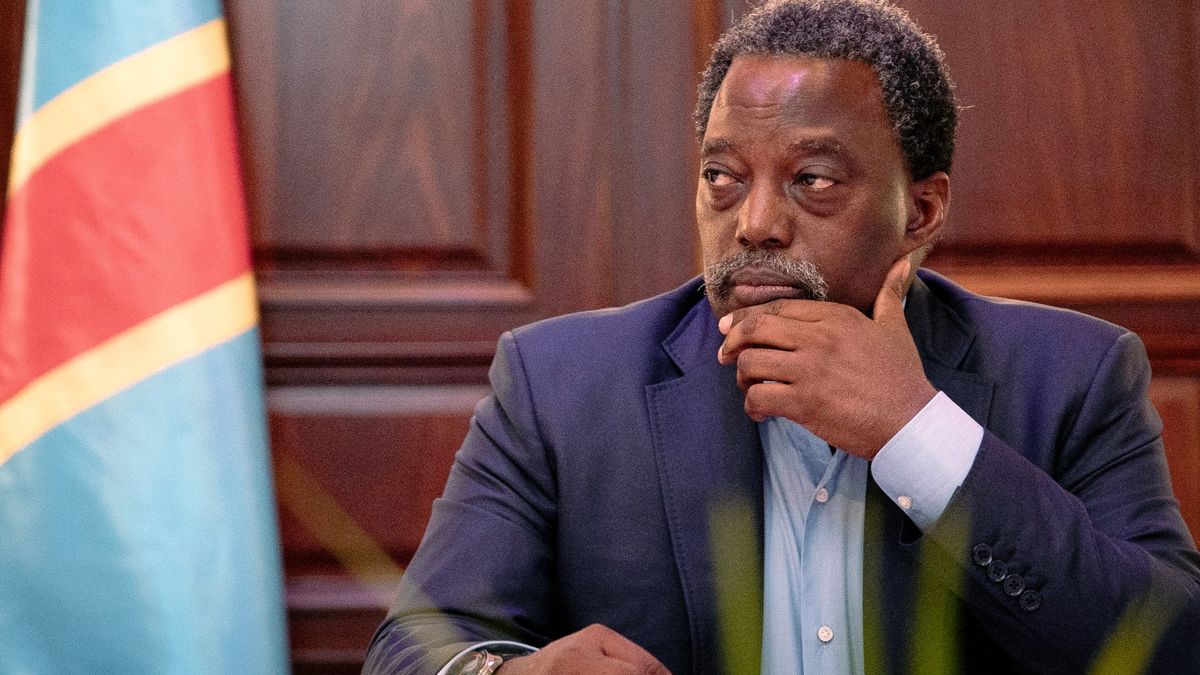
Former President Joseph Kabila announced the creation of the Front pour la Refondation de la Nation (FRN) in Goma on 18 October 2026. The FRN absorbs the Alliance Fleuve Congo (AFC) and the March 23 Movement (M23) under Kabila’s leadership, positioning itself as a political alternative that does not shy away from armed resistance against President Felix Tshisekedi. The announcement follows a year‑long M23‑AFC control of Goma and comes amid a death sentence in absentia for Kabila on treason and war‑crime charges.
Kabila’s entry into the rebellion is a calculated gamble rooted in personal survival, patronage networks, and regional rivalry. After stepping down in 2019, he retained a sprawling patronage system that includes former military officers, provincial elites, and business interests tied to the mineral‑rich eastern provinces. By re‑branding his loyalists as a political front rather than a rogue militia, Kabila seeks legal cover and a bargaining chip in any future political settlement.
The DRC’s fragile state apparatus depends on a delicate balance of power between Kinshasa and the eastern provinces, where armed groups have long acted as de‑facto authorities. Kabila’s move threatens to tip that balance, forcing President Tshisekedi to confront a rival who can claim both political legitimacy and battlefield experience. For the Congolese army, the FRN represents a two‑front challenge: it must contain a well‑armed insurgency while preventing the erosion of civilian support in a region already skeptical of Kinshasa.
Regional actors also stand to gain or lose. Rwanda has been repeatedly accused of backing M23, a claim it denies while citing security concerns about the Democratic Forces for the Liberation of Rwanda (FDLR) operating across the border. A Kabila‑led front could either deepen Kigali’s involvement—if the FRN seeks Rwandan logistical support—or push Kigali to distance itself to avoid international condemnation. Meanwhile, neighboring Uganda and Burundi watch closely, aware that any escalation could spill over into their own border zones, disrupting trade routes that funnel cobalt, coltan, and gold to global markets.
Economically, the eastern mineral belt remains the DRC’s most valuable export sector. Control of mining sites translates into revenue for armed groups, who levy taxes on artisanal miners and smuggle ore through informal networks. By uniting AFC and M23 under the FRN banner, Kabila consolidates control over these revenue streams, strengthening his capacity to fund a protracted conflict. This financial incentive dovetails with his legal battle at home; a death sentence without enforcement is a political weapon, but sustained revenue from mineral taxes can finance legal defense, patronage, and, if needed, a negotiated exit from exile.
Internationally, the United States and Qatar have been mediating cease‑fire talks in Doha and Washington, focusing on the neutralisation of the FDLR and the withdrawal of foreign troops. Kabila’s claim that the FRN will honour existing Doha commitments is a strategic signal aimed at keeping diplomatic channels open while preserving his leverage on the ground. By presenting the FRN as a legitimate political actor, he hopes to be invited to future negotiations, where he could extract concessions—perhaps immunity or a role in a power‑sharing arrangement—without surrendering his armed base.
The FRN’s emergence has reignited panic among the already displaced population of North Kivu. Over the past two years, more than 5 million Congolese have been forced to flee their homes due to fighting between M23‑AFC forces and the national army. New recruitment drives by the FRN threaten to swell those numbers, as young men and women are drawn into combat with promises of pay and protection.
Artisanal miners, who make up the bulk of the workforce in cobalt and coltan extraction, now face double extortion: taxes from the national army and additional levies imposed by the FRN. This squeezes already marginal incomes, pushing families deeper into poverty and forcing children into hazardous work to meet household needs.
Health clinics in Goma and surrounding towns have been operating at 30 % capacity since the M23 takeover, and the FRN’s arrival threatens to further erode service delivery. Schools are intermittently closed due to security alerts, denying a generation the chance to acquire basic literacy and numeracy skills. The cumulative effect is a widening human development gap that will take decades to close.
Women and girls bear a disproportionate share of the conflict’s brutality. Reports from local NGOs indicate a surge in sexual violence linked to the presence of multiple armed factions. The FRN’s rhetoric of “resistance by all means” provides a tacit justification for such abuses, leaving survivors with limited avenues for justice.
Both the United States and Qatar have framed the Doha talks as a breakthrough, emphasizing the FRN’s pledge to respect prior agreements. What is omitted is the lack of any verification mechanism to ensure compliance, and the fact that the FRN’s leadership includes individuals directly implicated in war crimes. By presenting the FRN as a partner rather than a rogue element, external actors risk legitimising a group that may continue to perpetrate atrocities.
Major tech firms that source cobalt from the eastern DRC have issued statements about “responsible sourcing,” yet they rarely acknowledge how the FRN’s control of mining sites could re‑introduce conflict‑linked minerals into global supply chains. The corporate narrative downplays the risk that renewed fighting will push miners deeper into informal channels, making traceability virtually impossible.
International coverage has largely centred on Kabila’s personal drama—his death sentence, his exile, his return—while glossing over the structural drivers of the conflict: weak state institutions, porous borders, and the global demand for rare earth minerals. This framing diverts public attention from the systemic reforms needed to break the cycle of violence.
Rwanda and Uganda publicly deny direct involvement with the FRN, yet both maintain strategic interests in a destabilised eastern DRC. By keeping their support covert, they can influence outcomes without attracting sanctions. The official discourse therefore masks a shadow competition for influence over mineral routes and border security.
The next few months will reveal whether the FRN can translate its political rhetoric into tangible battlefield gains. Key indicators include: (1) any shift in control of major mining concessions, which would signal a funding boost for the rebels; (2) the response of the Congolese army—whether it escalates offensives or seeks a negotiated cease‑fire; (3) the stance of Rwanda and Uganda, observable through troop movements or changes in cross‑border trade patterns; and (4) the durability of the Doha agreements, particularly any monitoring mechanisms that might be introduced. Observers should also track humanitarian access corridors, as their closure would foreshadow a humanitarian crisis of unprecedented scale in the region.
For ordinary Congolese, the question remains whether the FRN’s promise of “resistance by all means” will bring a new political bargain or simply prolong a war that has already cost millions of lives. The answer will hinge on the willingness of powerful actors—both domestic and foreign—to place accountability above short‑term strategic gains.
Kabila faces a death sentence in absentia and sees the FRN as a way to retain political relevance, protect his patronage networks, and leverage negotiations for immunity or power sharing.
If the FRN takes control of key mining sites, it could re‑introduce conflict‑linked cobalt and coltan into global markets, undermining corporate claims of responsible sourcing.
Countries like Rwanda and Uganda deny direct support but maintain strategic interests in the east, influencing the conflict through covert assistance and border security dynamics.
Editor's Note: Analysis based on publicly available reports and expert assessments; on‑the‑ground dynamics may evolve rapidly.
Source referenced: ALJAZEERA
This brief was synthesized by our Editorial Engine and reviewed by The Ground Narrative team.