TRENDING

Sunday, 18 October 2026
----------------------
7 Jumada Al-Awwal 1448 AH
Albanian police deployed rubber bullets against student-led anti-government protests demanding Prime Minister Edi Rama's resignation amid allegations of corruption and a lack of economic opportunity. The unrest, fueled by youth discontent over education and unemployment, has spread beyond the capital, Tirana.
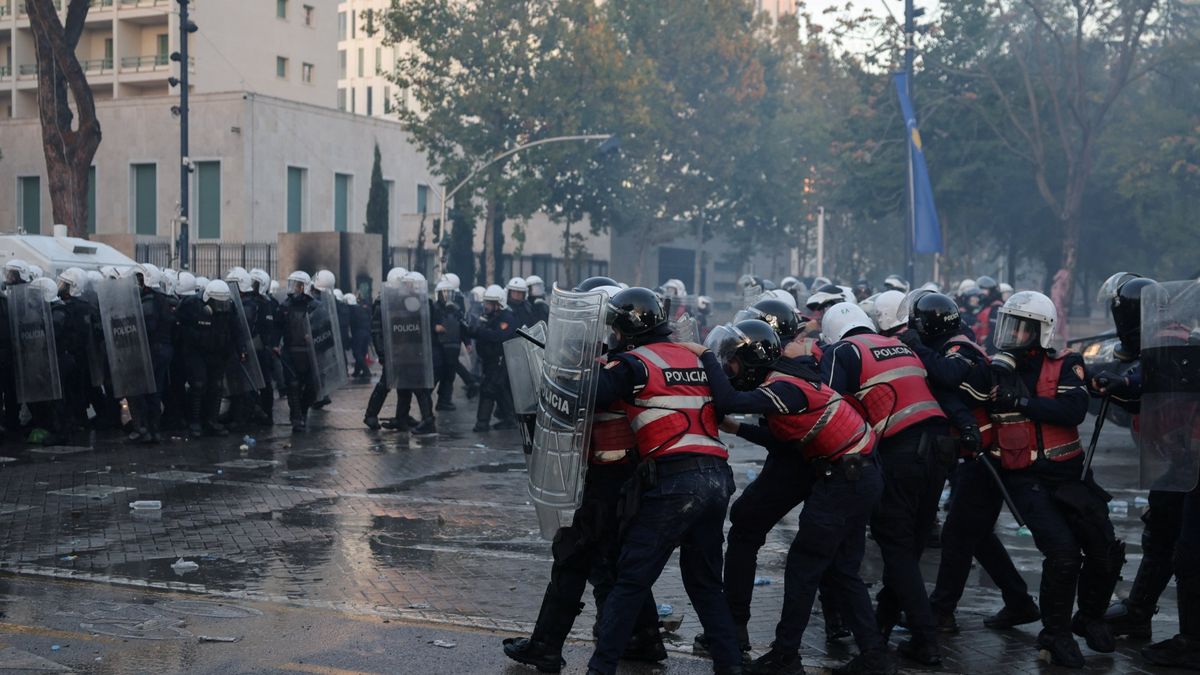
For five consecutive days, Albania's capital, Tirana, has been gripped by escalating anti-government protests, primarily led by high school and university students. What began as specific grievances over education costs and opportunities has broadened into a wider movement demanding the resignation of Prime Minister Edi Rama, whose centre-left Socialist Party has governed since 2013. The demonstrations have seen protesters throwing stones, petrol bombs, and fireworks at police, setting cars and rubbish bins alight to form burning barricades. Security forces have responded with tear gas, water cannon, baton charges, and, for the first time in these protests, rubber bullets. The clashes have resulted in injuries to nine protesters and four police officers requiring medical treatment, alongside 167 arrests and 132 police officers injured. The unrest has now spread beyond Tirana to coastal cities like Durres, signaling a deepening national discontent.
Prime Minister Edi Rama's political survival hinges on his ability to navigate this escalating crisis, a challenge amplified by his long tenure and the Socialist Party's entrenched power. Serving his fourth term, Rama's administration has overseen a period of relative stability but also faced persistent allegations of corruption and a perceived disconnect from the economic struggles of ordinary citizens. The protests represent a direct challenge to this established order, particularly from a demographic – the youth – that often feels marginalized but possesses significant collective power.
Rama's strategy has been multi-pronged: first, a public show of concern, visiting damaged businesses and pledging to
Students are protesting over high university fees, poor educational facilities, and limited employment opportunities, alongside broader allegations of government corruption against Prime Minister Edi Rama's administration.
Prime Minister Rama has refused to resign, promising to listen to students while blaming conservative political opponents and "foreign hands" for encouraging violence and attempting to delegitimize the protest movement.
The luxury tourism development linked to Jared Kushner has become a focal point for anti-corruption protests, symbolizing concerns about opaque deals, elite capture, and the influence of powerful foreign investors in Albania's national development.
Editor's Note: Analysis is based on the provided intelligence and general geopolitical knowledge of the region, focusing on TGN's editorial doctrine.
Source referenced: ALJAZEERA
This brief was synthesized by our Editorial Engine and reviewed by The Ground Narrative team.