TRENDING

Monday, 5 October 2026
----------------------
24 Rabi' Al-Thani 1448 AH
Japan's recent missile tests signal a profound shift in its post-war defense posture, drawing sharp condemnation from China. This move reconfigures regional power dynamics and raises questions about an escalating arms race in East Asia.
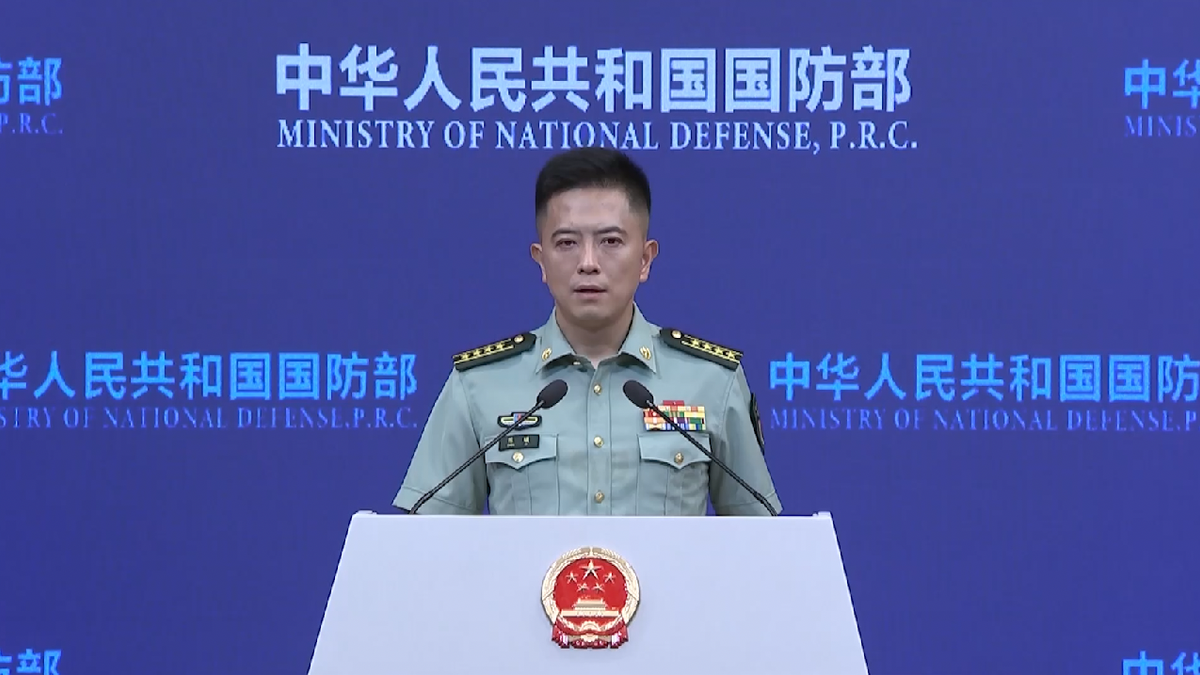
Japan's Self-Defense Forces recently conducted significant military exercises, including a live-fire test of a Tomahawk cruise missile by the Japan Maritime Self-Defense Force and a captive-carry test of a new missile by the Japan Air Self-Defense Force. These developments mark a clear acceleration in Japan's acquisition of offensive weaponry. In response, China's Defense Ministry expressed grave concern, accusing Japan of using a 'neighboring security threat' as a pretext to abandon its pacifist constitution and expand its military capabilities.
Japan's push for enhanced offensive capabilities is a direct response to a perceived deterioration in its regional security environment. Decades of a largely pacifist stance, enshrined in Article 9 of its constitution, are now being reinterpreted and bypassed in practice. The primary drivers are China's rapid military modernization and increasingly assertive posture in the East China Sea and Taiwan Strait, coupled with North Korea's persistent missile and nuclear provocations. Tokyo's leadership sees these new missiles, particularly the Tomahawk, as a necessary 'counter-strike capability' – a deterrent designed to hit enemy launch sites before they can threaten Japan. This move also aligns with a broader strategic shift to reduce Japan's absolute reliance on the United States for its defense, seeking greater autonomy within the US-Japan alliance structure. For China, Japan's rearmament evokes deep historical grievances, particularly memories of World War II. Beijing views these developments not as defensive measures but as an aggressive expansion of military power, potentially aimed at containing China and disrupting its regional dominance. This clash of narratives underscores a fundamental power struggle: Japan's desire for self-reliance and deterrence versus China's historical anxieties and ambition for regional hegemony.
While policymakers in Tokyo and Beijing debate missile ranges and strategic doctrines, the human cost of this escalating arms race falls squarely on ordinary citizens across the region. Increased military spending in Japan means fewer resources for social welfare, education, or infrastructure projects. More critically, the heightened tensions fuel a climate of anxiety and distrust, making miscalculation more probable. For communities living near disputed territories or potential flashpoints, the risk of accidental escalation is a constant shadow. The psychological burden of living in an increasingly militarized environment affects millions in Japan, China, South Korea, and Taiwan. Furthermore, the historical trauma of Japanese imperial expansion, particularly in China and Korea, is reawakened, fostering resentment and making genuine reconciliation more distant. The narrative of 'security' often overshadows the very real human desire for stability and peace, which is undermined by an accelerating arms race.
What is often downplayed by both sides, and by observers, is the intricate dance between Japan's rearmament and the broader US strategy in the Indo-Pacific. While Japan frames its missile acquisition as self-defense, these capabilities are deeply integrated into US regional defense planning. Washington quietly encourages and facilitates Japan's military expansion, seeing it as a crucial pillar in its efforts to counterbalance China's growing influence, effectively offloading some of its own security burden onto a key ally. Neither Tokyo nor Washington openly discusses the extent to which Japan is becoming a more potent forward operating base for US regional power projection, rather than solely an independent defensive force. Conversely, China's condemnation, while rooted in historical context, often omits its own aggressive actions – island building, naval expansion, and coercive diplomacy – which have directly fueled Japan's security anxieties and driven its rearmament efforts. The cycle of action and reaction, often presented as unilateral moves, is a complex interplay of power projection and perceived threats, with each side selectively highlighting narratives that serve its own strategic interests.
Readers should closely watch several key developments. Firstly, monitor Japan's upcoming defense budgets and any further legislative efforts to formally amend or reinterpret Article 9 of its constitution. This will signal the depth of its commitment to a more proactive military role. Secondly, observe China's specific responses beyond rhetorical warnings, such as increased naval patrols, air incursions, or new military exercises in areas near Japan. Thirdly, pay attention to how South Korea reacts; a significant Japanese military buildup could prompt Seoul to accelerate its own offensive capabilities, creating a broader regional arms race. Finally, watch for increased US-Japan joint military exercises that integrate these new missile capabilities, which will further solidify the alliance's posture and likely draw stronger reactions from Beijing. The trajectory of these interactions will determine whether the region moves towards a more stable, albeit heavily armed, deterrence or a dangerous path of escalating confrontation.
Editor's Note: Analysis is based on the provided intelligence, treating the 2026 date as a past event for the purpose of geopolitical analysis.
Source referenced: CGTN
This brief was synthesized by our Editorial Engine and reviewed by The Ground Narrative team.


