TRENDING

Thursday, 15 October 2026
----------------------
4 Jumada Al-Awwal 1448 AH
Israel's attacks on Lebanon, despite Trump's announcement of a de-escalation agreement, raise questions about the fragile nature of the deal and the motivations behind Israel's actions.
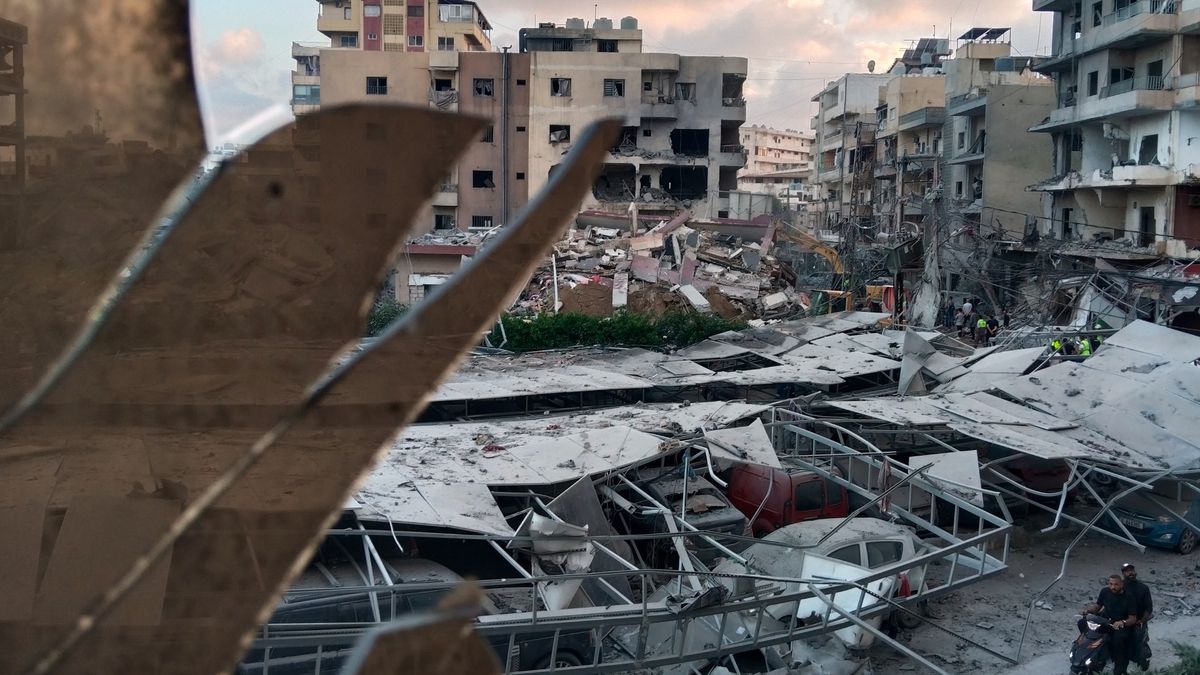
Israel's recent attacks on Lebanon, which resulted in the deaths of at least five people, have raised concerns about the effectiveness of the de-escalation agreement announced by US President Donald Trump. The attacks, which came hours after Trump's announcement, have put the fragile deal to the test and highlighted the complexities of the conflict.
The conflict between Israel and Lebanon has a long history, with both sides accusing each other of violating a ceasefire that began on April 17. The situation has been further complicated by the involvement of Hezbollah, a Iran-aligned armed group, which has been accused of firing rockets at Israel in retaliation for the killing of Iran's supreme leader. The US has been attempting to broker a peace deal between Israel and Lebanon, with the latest round of talks scheduled to take place on Tuesday and Wednesday.
Israel's motivations for the attacks are unclear, but they may be an attempt to assert its dominance in the region and to pressure Hezbollah into accepting the de-escalation agreement. The Israeli military has suffered casualties in recent days, with at least two soldiers killed in the area of Beaufort Castle, a strategic hilltop position. This may have contributed to Israel's decision to launch the attacks.
The attacks have significant regional implications, with the potential to escalate the conflict and draw in other countries. The US has been attempting to broker a peace deal between Israel and Lebanon, but the recent attacks have put this effort at risk. The situation is further complicated by the involvement of Iran, which has insisted that Lebanon be included in any peace deal with Washington.
The future consequences of the attacks are uncertain, but they may lead to further escalation of the conflict. The de-escalation agreement announced by Trump is fragile and may not hold, with both sides accusing each other of violating the ceasefire. The situation is further complicated by the involvement of Hezbollah, which has been accused of firing rockets at Israel in retaliation for the killing of Iran's supreme leader.
Israel's attacks on Lebanon have put the de-escalation agreement announced by Trump to the test and highlighted the complexities of the conflict. The situation is further complicated by the involvement of Hezbollah and the potential for further escalation. The future consequences of the attacks are uncertain, but they may lead to further conflict in the region.
Source referenced: ALJAZEERA
This brief was synthesized by our Editorial Engine and reviewed by The Ground Narrative team.


