TRENDING

Monday, 5 October 2026
----------------------
24 Rabi' Al-Thani 1448 AH
A surge in attacks on Palestinian journalists by Israeli forces and settlers has made it increasingly difficult for them to document human rights abuses in the occupied West Bank. The Palestinian Journalists Syndicate reported 108 attacks in July, ranging from detention and beating to equipment seizure and destruction. As the media comes under fire, the world is left with a blurred vision of the conflict.
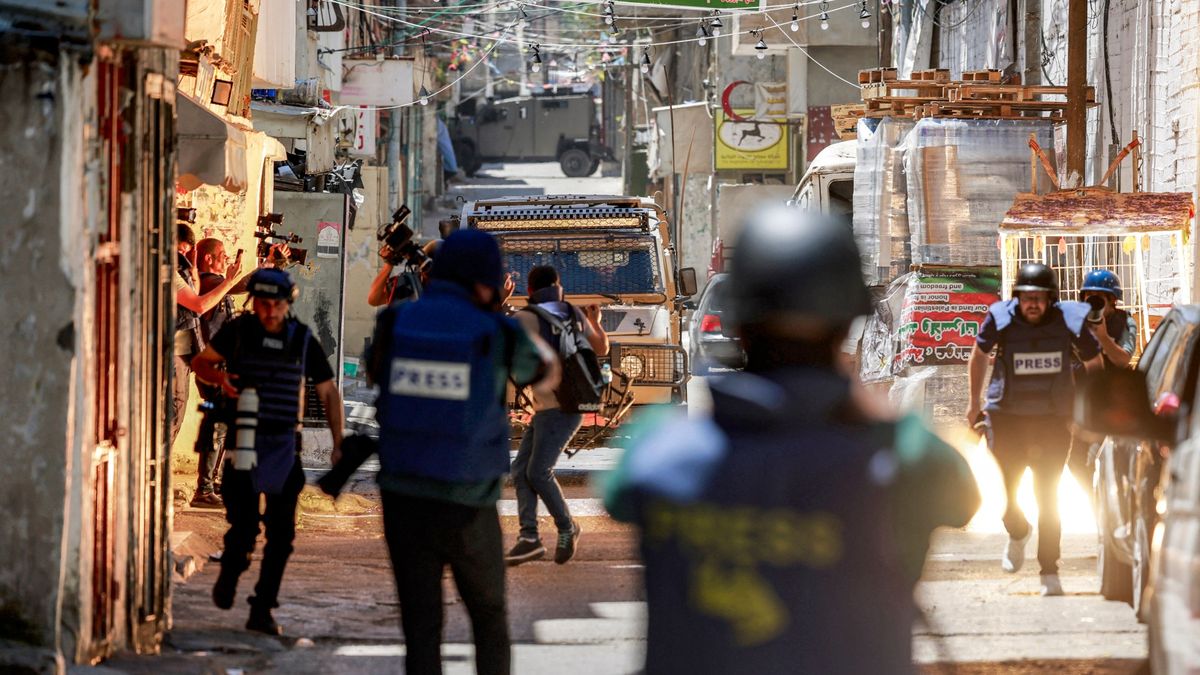
In July, the Palestinian Journalists Syndicate documented 108 attacks on Palestinian journalists and media workers by Israeli forces and settlers in the occupied West Bank. These attacks included detentions, beatings, interrogations, and the seizure or destruction of press equipment, making it challenging for journalists to cover Israeli military raids and settler violence.
The attacks on Palestinian journalists are part of a broader strategy to control the narrative and suppress dissenting voices. By targeting the media, Israeli forces aim to limit the flow of information and create an environment of fear and intimidation. This tactic is not new; it is a continuation of a long-standing policy to silence Palestinian voices and maintain a dominant narrative. The Israeli government's actions are driven by a desire to maintain its grip on power and control over the occupied territories, while downplaying the human cost of its actions.
The people who bear the human cost of these attacks are not just the journalists themselves, but also the Palestinian communities they serve. When journalists are silenced, the stories of those affected by the conflict go untold. The families of victims, the survivors of violence, and the communities living under occupation are all impacted by the lack of accurate and unbiased reporting. The death toll of journalists, with over 270 killed since October 2023, is a stark reminder of the risks faced by those who dare to report on the conflict.
What is being downplayed or omitted from official statements is the systematic nature of these attacks. The Israeli government often portrays these incidents as isolated events or blames the journalists for being in the wrong place at the wrong time. However, the sheer number of attacks and the variety of tactics used suggest a coordinated effort to suppress the media. The international community's response to these attacks has been muted, with few governments or institutions holding Israel accountable for its actions.
As the situation continues to deteriorate, readers should watch for further escalation of violence against journalists and media workers. The upcoming months will be crucial in determining the course of the conflict, with potential flashpoints including the anniversary of the start of Israel's campaign in Gaza and the possibility of renewed negotiations. The international community's response to these developments will be critical in determining the fate of Palestinian journalists and the future of press freedom in the region.
Editor's Note: The numbers of attacks on journalists are based on reports from the Palestinian Journalists Syndicate and may not be comprehensive, but they indicate a clear trend of increased violence against the media.
Source referenced: ALJAZEERA
This brief was synthesized by our Editorial Engine and reviewed by The Ground Narrative team.


