TRENDING

Monday, 19 October 2026
----------------------
8 Jumada Al-Awwal 1448 AH
Israel is set to hold a general election on October 27, 2026, widely viewed as a critical referendum on Prime Minister Benjamin Netanyahu's leadership following the October 7, 2023, Hamas attack and ongoing regional conflicts. The vote will determine the nation's future security posture, democratic trajectory, and its complex relationship with global powers.
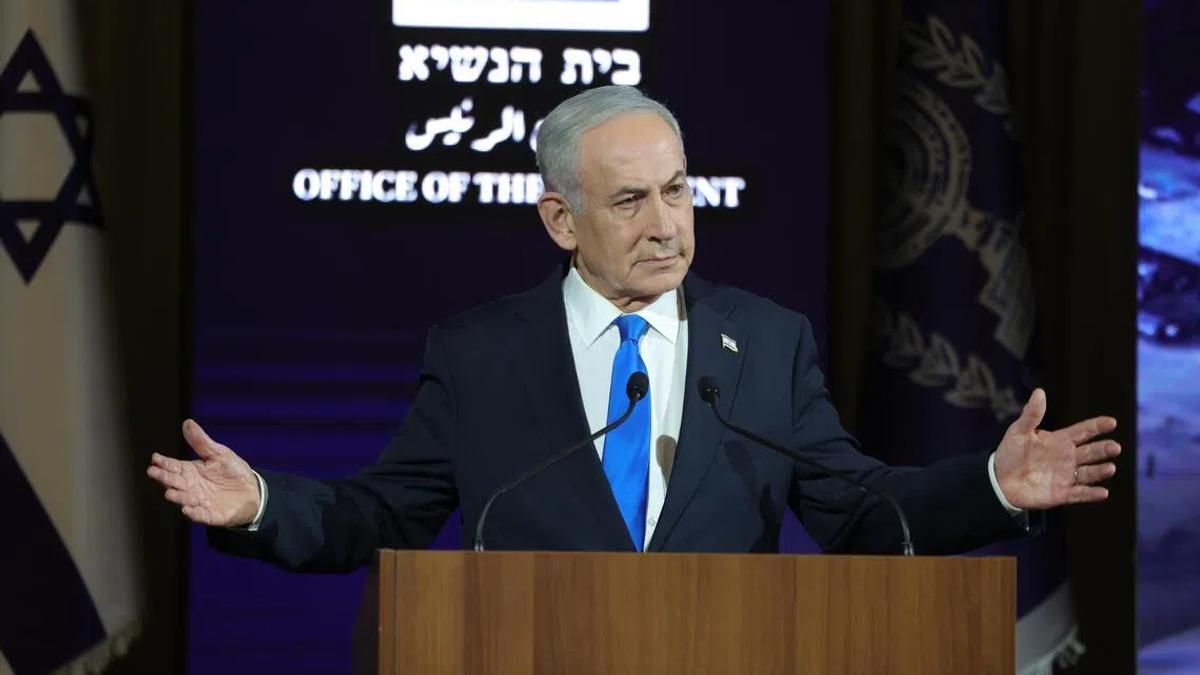
Israel is bracing for a pivotal general election on October 27, 2026, marking the first time in nearly four decades that the nation will hold a scheduled vote after a full parliamentary term. This election transcends typical political contests, emerging as a de facto referendum on the leadership of Prime Minister Benjamin Netanyahu, Israel's longest-serving premier, whose tenure has been defined by both unprecedented longevity and escalating crises.
The upcoming vote is inextricably linked to the aftermath of the October 7, 2023, Hamas assault, the deadliest day in Israel's history. Public discourse is heavily dominated by questions of accountability for the security failures that preceded the attack and the government's subsequent handling of multifront wars against Hamas in Gaza, Hezbollah in Lebanon, and the broader shadow conflict with Iran. Critics argue that Netanyahu's administration has failed to translate military force into long-term stability, despite adopting a highly aggressive, pre-emptive military doctrine rooted in the Talmudic dictum: "If someone comes to kill you, rise up and kill them first." This strategic shift has seen Israel conduct strikes in multiple regional countries and station troops in Lebanon, Syria, and Gaza, yet a decisive "total victory" against its adversaries remains elusive.
Beyond security, Netanyahu's nationalist-religious coalition, formed after the 2022 election, faces significant domestic discontent. Controversial judicial reforms aimed at weakening the courts and centralizing power, alongside the perpetuation of military draft exemptions for ultra-Orthodox men amidst warnings of manpower shortages, have fueled widespread protests and deepened societal divisions. Further legislative actions, such as tightening government control over media and expanding options for gender segregation in academia, underscore a broader ideological clash between those advocating for a liberal democracy and those pushing for a majoritarian state with increased governmental control. Polls indicate a significant decline in popular support for the ruling coalition, which is projected to fall well short of the 61 seats needed for a Knesset majority.
Netanyahu's Likud party, currently holding 32 seats, is in a tight race with former military chief Gadi Eisenkot's Yashar party. Eisenkot, a centrist, has emerged as a leading contender for prime minister, advocating for respect for democratic institutions and a security-focused approach without prioritizing religious or nationalist causes. Other key opposition figures include former Prime Minister Naftali Bennett, who has partnered with centrist Yair Lapid to form Beyachad, with Bennett slated to become premier if they form a government. Bennett, a right-leaning observant Jew, objects to a Palestinian state, highlighting the complex ideological spectrum within the opposition.
However, the main opposition bloc, a diverse mix of centrist, right-, and left-leaning parties, faces its own formidable challenges. While united by an antipathy towards Netanyahu—partly due to his ongoing trial for alleged bribery, fraud, and breach of trust—their ideological differences pose a significant hurdle to forming a stable, coherent governing coalition. Furthermore, the political climate post-October 7 has led to reluctance among opposition parties to include Israeli Arab parties, which hold ten Knesset seats and advocate for an independent Palestinian state, further complicating coalition arithmetic. The real risk remains that if no political leader can secure the support of at least 61 Knesset members, Israel could face yet another cycle of elections, prolonging political instability.
The outcome of this election carries profound geopolitical implications for the Middle East and beyond. Israel's approach to the ongoing conflicts with Iran and its proxies, particularly Hezbollah, will be directly influenced by the new government's composition and strategic priorities. Netanyahu's aggressive stance, while popular among some, has been criticized for its inability to yield diplomatic solutions, leaving regional threats unresolved.
Adding another layer of complexity is the "Trump factor." Netanyahu has historically leveraged his close relationship with former US President Donald Trump, but this has also drawn accusations of Israel becoming a "vassal state." Recent tensions, such as clashes over Israel's war in Lebanon and a US-brokered deal for a limited Israeli withdrawal from southern Lebanon, underscore the delicate balance of US-Israel relations. Concerns also persist regarding Israel's exclusion from negotiations aimed at a permanent resolution to the Iran war, raising fears that any US-Iran peace settlement might not fully neutralize the threat posed by the Islamic Republic, especially its support for anti-Israel militias in the region.
Israel's October 2026 election is more than a domestic political contest; it is a critical juncture that will shape the nation's internal cohesion, its security doctrine, and its standing in a volatile region. The electorate faces a stark choice between maintaining the status quo under Netanyahu, with its associated controversies and unresolved conflicts, or venturing into an uncertain future with a potentially fragmented opposition. The outcome will not only determine who leads Israel but also significantly influence the trajectory of Middle East stability, US foreign policy in the region, and the ongoing debate over Israel's national identity and democratic principles.
Source referenced: STRAITSTIMES
This brief was synthesized by our Editorial Engine and reviewed by The Ground Narrative team.