TRENDING

Sunday, 15 November 2026
----------------------
5 Jumada Al-Thani 1448 AH
Iran inaugurated a second all‑women volunteer camp as fears of renewed US‑Israeli strikes rise. The move signals a shift in Tehran’s domestic mobilization and regional posturing.
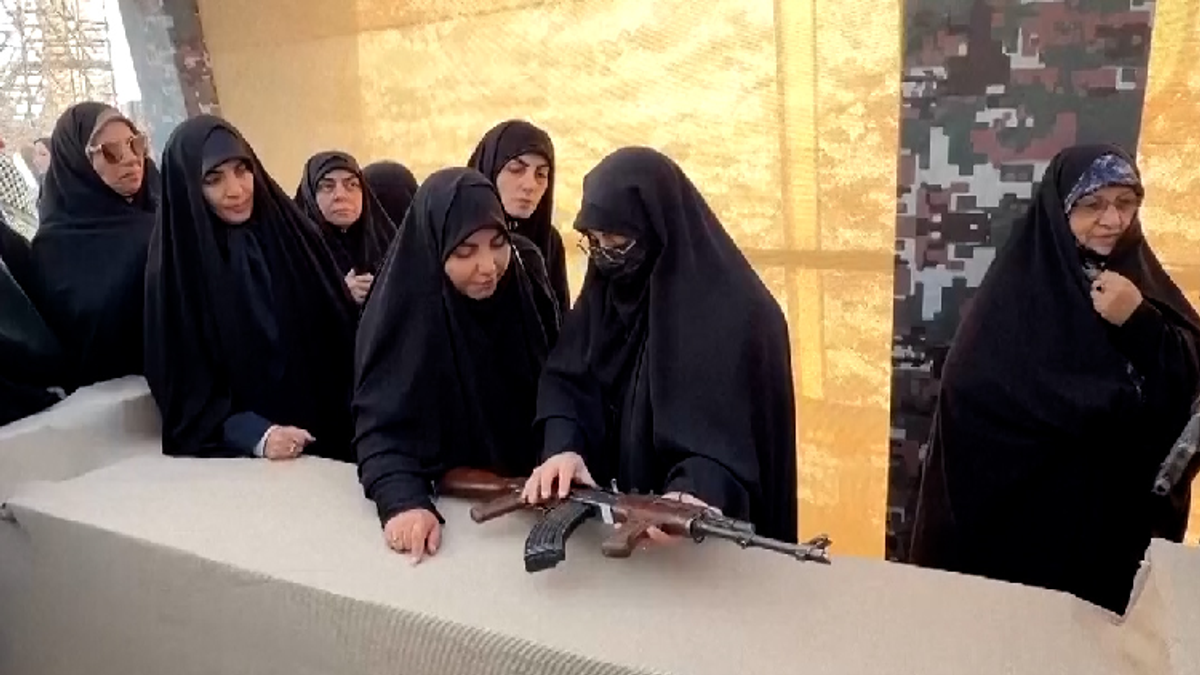
Iran opened its second all‑women military training camp in Tehran on November 10, 2026, showcasing dozens of volunteers—dubbed Janfada—scaling walls, zip‑lining, and handling assault rifles. The camp offers courses in urban defense, air‑defence, and rescue operations, part of a broader campaign to train one million volunteers across gender lines. Officials framed the inauguration as a defensive measure against what they describe as escalating threats from the United States and Israel, while also highlighting a narrative of gender‑inclusive patriotism.
The decision to expand women’s training reflects several intersecting incentives. Domestically, the Regime seeks to reinforce its legitimacy by projecting resilience amid a faltering economy and growing public discontent. Mobilising women serves a dual purpose: it signals a modernising image to international audiences and deepens the pool of human resources for asymmetric warfare. Externally, Tehran perceives a tightening security envelope—U.S. naval deployments in the Persian Gulf and Israeli cyber‑operations have intensified since 2024. By showcasing a ready‑made volunteer force, Iran attempts to raise the perceived cost of any pre‑emptive strike, thereby strengthening its deterrence calculus. The move also dovetails with Iran’s broader “people’s war” doctrine, which blends conventional forces with civilian militias to offset conventional military gaps. Economically, the program taps into state‑sponsored employment schemes, offering stipends and training that can be marketed as career pathways for young women, thereby alleviating some of the unemployment pressure that fuels unrest.
The volunteers themselves face a stark trade‑off. While the camp promises skills and a modest income, participants are thrust into a militarised environment that blurs the line between civilian life and combat readiness. Families, particularly in poorer provinces, bear the emotional toll of sending daughters into a potentially lethal arena, echoing memories of the Iran‑Iraq war’s conscription policies. Moreover, the state’s emphasis on rapid scaling risks compromising training quality, increasing the likelihood of accidents and battlefield casualties. On a broader scale, the diversion of resources to the volunteer program strains an already stretched public budget, limiting funds for healthcare, education, and essential infrastructure. The ripple effect reaches local economies that rely on the informal sector, as young men are simultaneously drawn into parallel militia programs, creating a dual‑gender militarisation of the labour market.
Official narratives spotlight empowerment and national defence, yet they downplay the regime’s deeper anxieties about internal stability. By foregrounding women’s participation, Tehran attempts to mask a widening gender gap in political agency, where genuine civic inclusion remains limited. The propaganda glosses over the fact that many of the volunteers are recruited from economically marginalised communities, where the promise of a stipend is less about patriotism than survival. Additionally, foreign actors—particularly Israel—have been quietly amplifying information campaigns that portray the camps as a sign of Iran’s escalating aggression, thereby justifying their own pre‑emptive posturing. The Iranian leadership also omits the potential backlash from conservative clerics who view women’s combat training as a breach of traditional norms, a tension that could surface in intra‑elite disputes.
Observers should monitor recruitment figures released by the Ministry of Defence for any sudden spikes that might indicate preparation for larger operations. Parallel diplomatic signals—such as U.S. naval movements in the Strait of Hormuz or Israeli statements on “preventive” actions—will help gauge whether the camps are a genuine defensive measure or a prelude to more assertive posturing. Domestic sentiment is another barometer: protests or public debates over women’s roles in the armed forces could reveal cracks in the regime’s narrative. Finally, the rollout of the promised one‑million‑volunteer target will test Iran’s logistical capacity and may expose whether the initiative is a sustainable security strategy or a short‑term political stunt.
Iran aims to broaden its manpower pool, project a modern image, and tap into economic incentives for young women, while also signaling resilience to external threats.
Both countries could increase intelligence monitoring, bolster regional deterrence measures, and use the camps as justification for heightened military readiness or pre‑emptive actions.
Participants face the danger of combat deployment, inadequate training safety, and the social repercussions of being drawn into a militarised role in a volatile geopolitical environment.
Source referenced: CGTN
This brief was synthesized by our Editorial Engine and reviewed by The Ground Narrative team.