TRENDING

Saturday, 17 October 2026
----------------------
6 Jumada Al-Awwal 1448 AH
Iran's foreign minister says no tangible progress in war talks, while Trump remains optimistic about a potential deal. Fresh US and Iranian strikes test a fragile ceasefire, straining regional stability.
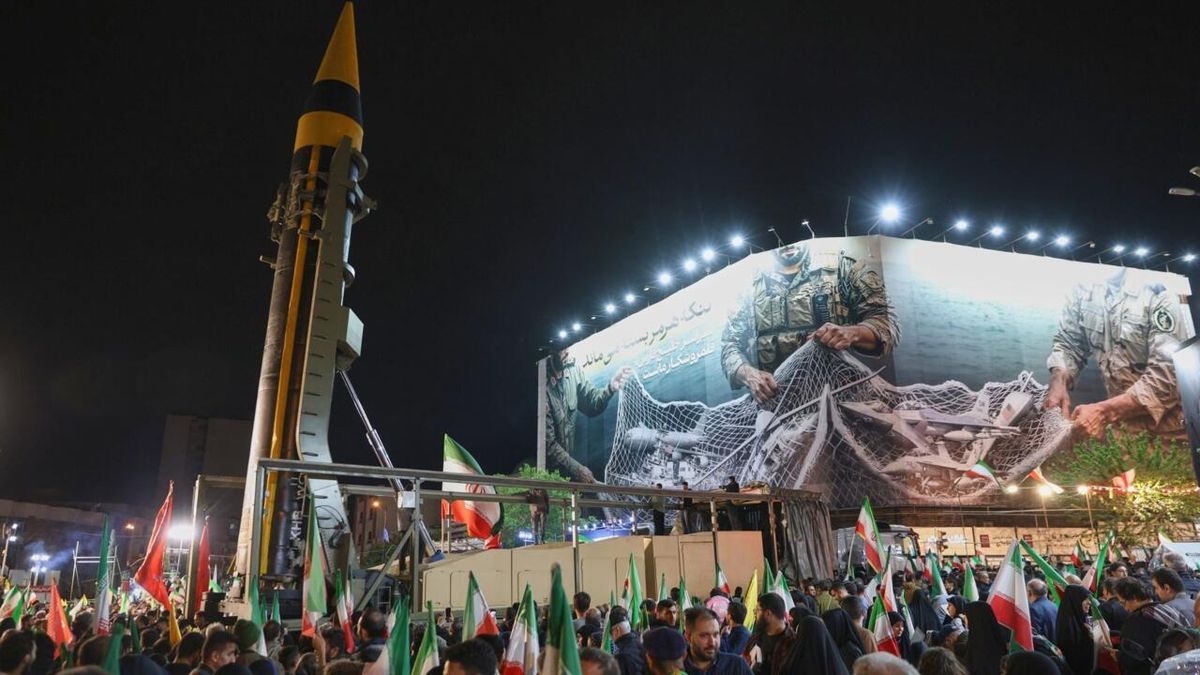
The ongoing conflict between Iran and the US has taken a new turn as Iran's foreign minister, Abbas Araghchi, stated that negotiations to end the war have made 'no tangible progress.' This comes as fresh US and Iranian strikes have strained a fragile ceasefire, testing the limits of regional stability.
The conflict between Iran and the US has been ongoing for several months, with both sides engaging in a series of military strikes and diplomatic efforts to reach a resolution. The war has had significant regional implications, with Lebanon and Israel also being drawn into the conflict.
Iran's foreign minister, Abbas Araghchi, has stated that the country's armed forces are ready to strike Israel if it attacks Beirut, highlighting the high stakes involved in the conflict. The US, on the other hand, has insisted that Tehran must turn over its near-weapons-grade enriched uranium, agree to curb its nuclear activities, and re-open the Strait of Hormuz for any peace agreement to take hold.
The conflict has had significant regional implications, with Lebanon and Israel also being drawn into the conflict. The Lebanese embassy in Washington has stated that a US proposal to stop attacks would at first only cover Israeli strikes on Beirut and Hezbollah attacks on Israeli territory. However, neither side has publicly accepted the deal, and senior Hezbollah official Mahmud Qomati has stated that the group 'will not accept a partial ceasefire.'
The escalation of the conflict has significant implications for regional stability and global security. The US and Iran have been engaged in a series of military strikes, with both sides testing the limits of the fragile ceasefire. The conflict has also had significant humanitarian implications, with civilians caught in the crossfire.
The Iran-US war talks have stalled, and regional tensions have escalated. The conflict has significant implications for regional stability and global security, and it remains to be seen how the situation will unfold. One thing is certain, however: the stakes are high, and the consequences of failure will be severe.
The US has been a key player in the conflict, with President Donald Trump stating that the Iran talks could yield a result 'over the weekend.' However, the US has also been accused of provoking a response from Iran by targeting a tanker and a communications tower on the country's Qeshm Island.
Iran has been accused of launching a drone strike on Kuwait International Airport, killing one person and wounding 63. However, Iran's Revolutionary Guards have denied attacking the airport, stating that it was an error in the American Patriot systems.
Israel has been drawn into the conflict, with Israeli Prime Minister Benjamin Netanyahu accusing Iran of 'playing with fire.' Israel has also been accused of launching strikes on Lebanon, killing at least nine people in the country's south.
Hezbollah has been a key player in the conflict, with senior official Mahmud Qomati stating that the group 'will not accept a partial ceasefire.' Hezbollah has also been accused of launching rocket attacks on Israeli troops in northern Israel.
The Iran-US war talks have stalled, and regional tensions have escalated. The conflict has significant implications for regional stability and global security, and it remains to be seen how the situation will unfold.
Editor's Note: The situation remains fluid, and the outcome of the conflict is uncertain.
Source referenced: FRANCE24
This brief was synthesized by our Editorial Engine and reviewed by The Ground Narrative team.


