TRENDING

Sunday, 4 October 2026
----------------------
23 Rabi' Al-Thani 1448 AH
Iran's closure of the Strait of Hormuz escalates a global energy standoff, demanding an end to sanctions and war compensation from the US. This strategic move, impacting global oil markets, reveals the deep economic and human costs of geopolitical brinkmanship.
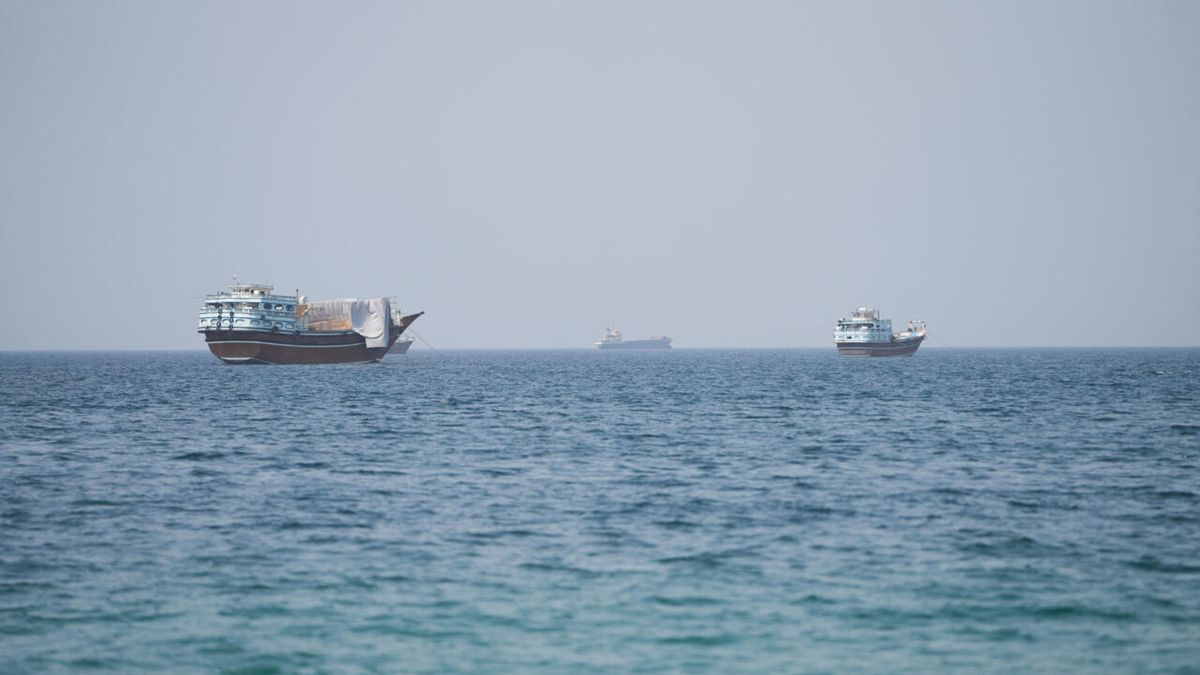
Iran’s Revolutionary Guards have declared the Strait of Hormuz, a critical global shipping lane for oil, closed indefinitely. This move comes with a list of demands for the United States, including an end to sanctions, the unfreezing of Iranian assets, and substantial compensation for unspecified "war damage." The blockade follows a period of escalating attacks on vessels in the waterway and the collapse of a previous ceasefire agreement. Simultaneously, Iran's Houthi allies in Yemen have announced a parallel maritime blockade on Saudi Red Sea ports, further constricting global energy routes. US President Donald Trump has indicated a "low-key" approach, suggesting a strategy of economic patience against Tehran.
Iran’s decision to weaponize the Strait of Hormuz is a direct application of its asymmetric power. By controlling this narrow passage, through which roughly a fifth of the world's oil supply transits, Tehran gains immense leverage over global energy markets and, by extension, the economies of nations reliant on that supply. The simultaneous Houthi blockade of Saudi ports in the Red Sea amplifies this pressure, targeting Saudi Arabia's only alternative maritime export route and demonstrating a coordinated regional strategy. This dual pressure point is designed to force the US to the negotiating table on Iran's terms, particularly regarding sanctions relief and compensation, which are crucial for the Iranian regime's economic and political survival.
The US response, characterized by President Trump as "low-key," signals a strategy of economic attrition. Washington appears to believe that Iran's economy, already reeling from sanctions and "huge inflation," cannot sustain a prolonged standoff without severe internal consequences, eventually forcing Tehran to concede. This approach, however, risks miscalculating the regime's tolerance for hardship and its capacity to mobilize nationalist sentiment.
Regionally, the situation has prompted a significant realignment. The new joint defense agreement between Saudi Arabia, Turkey, and Pakistan, complete with a NATO-style collective defense clause, signals a hardening of positions among Sunni-majority powers. This pact, potentially including Egypt, creates a formidable counter-bloc, ostensibly aimed at collective deterrence. While stated as not targeting any specific country, its formation amidst escalating tensions with Iran and its proxies suggests a clear strategic intent to balance power in a volatile Middle East. This introduces a new layer of complexity, transforming a bilateral US-Iran standoff into a multi-polar regional chess game with potentially far-reaching consequences.
When global chokepoints become instruments of state power, the consequences ripple far beyond the halls of diplomacy and military command centers. The most immediate and widespread human cost is borne by ordinary citizens worldwide through the global economy. The closure of Hormuz, coupled with the Red Sea blockade, drives up oil prices, translating directly into higher fuel costs for transportation, increased prices for goods, and inflationary pressures that erode household incomes. For families already struggling, this means difficult choices between necessities.
Closer to the conflict, the people of Yemen continue to pay an unbearable price. The Houthi attacks on Saudi ports and the subsequent military actions, as seen in the casualties reported in Mokha, exacerbate an already catastrophic humanitarian crisis. Civilians, caught between warring factions, face death, displacement, and starvation, their lives further destabilized by every escalation in the broader regional power struggle.
Within Iran, while the government uses economic hardship as a bargaining chip, it is the Iranian people who endure "huge inflation" and a severe lack of funds due to sanctions. They face dwindling purchasing power, limited access to essential goods, and a shrinking economy, all while their government prioritizes geopolitical leverage over immediate domestic welfare. The promise of a $300 billion reconstruction fund, while a potential future benefit, offers little solace to those facing daily economic precarity.
Finally, the maritime workers and shipping crews who navigate these dangerous waters face immediate and existential threats. Attacks on tankers, whether confirmed or alleged, turn their workplaces into potential war zones, risking lives and livelihoods for the sake of global trade.
The official narratives from all sides often gloss over critical details. The raw intelligence refers to "war damage" and a "war on all fronts" but leaves the specifics of this conflict vague. This ambiguity allows powerful actors to frame the conflict in ways that suit their political agendas, obscuring the true origins, duration, and full human toll of the hostilities that have led to Iran's demands for compensation. The exact nature and justification for the proposed $300 billion reconstruction fund for Iran, while mentioned in a June agreement, are also likely downplayed, leaving the public without a clear understanding of the extent of the damage or the calculations behind such a massive figure.
Furthermore, the language around "applicable international law" regarding navigation in the Strait of Hormuz is often invoked, yet Iran's actions directly challenge the principle of free passage through international waterways. The international community's muted response, or its reliance on mediation rather than enforcement, subtly reveals a shift in power dynamics where traditional norms can be openly defied when a state possesses sufficient leverage. This unspoken reality highlights the limitations of international law when confronted by a determined actor willing to bear the costs of defiance.
What's also often omitted is the long-term impact on global supply chains and trade routes. While immediate oil prices are a concern, the sustained instability and weaponization of critical chokepoints force a re-evaluation of global logistics, potentially leading to higher long-term costs and slower trade, effects that will eventually trickle down to every consumer but are rarely part of the immediate political discourse.
The immediate future hinges on several critical developments. First, observe the global oil markets: sustained high prices or further volatility could force a shift in the US's "low-key" approach, especially as the November midterm elections approach for President Trump. Second, monitor the diplomatic channels, particularly the "exchanging messages" via intermediaries like Oman. Whether these indirect communications evolve into direct negotiations, or if positions harden further, will be crucial.
Third, watch for any escalation in military posturing or direct confrontations in the Gulf. While both sides currently appear to prefer a standoff, miscalculation or an accidental incident could rapidly spiral. Fourth, the evolution of the Saudi-Turkey-Pakistan defense pact will be key. Its expansion, operationalization, and any joint military exercises will signal its true intent and potential to reshape regional alliances, potentially creating a more entrenched bloc system against Iran and its allies. Finally, the humanitarian and military situation in Yemen remains a critical barometer. Any intensification of Houthi attacks or Saudi retaliations will indicate a broader escalation of the proxy conflict, directly linked to the Strait of Hormuz standoff.
Source referenced: FRANCE24
This brief was synthesized by our Editorial Engine and reviewed by The Ground Narrative team.