TRENDING

Friday, 16 October 2026
----------------------
5 Jumada Al-Awwal 1448 AH
A satirical movement born on social media has tapped into India's youth anger and disillusionment, demanding change and accountability from the government.
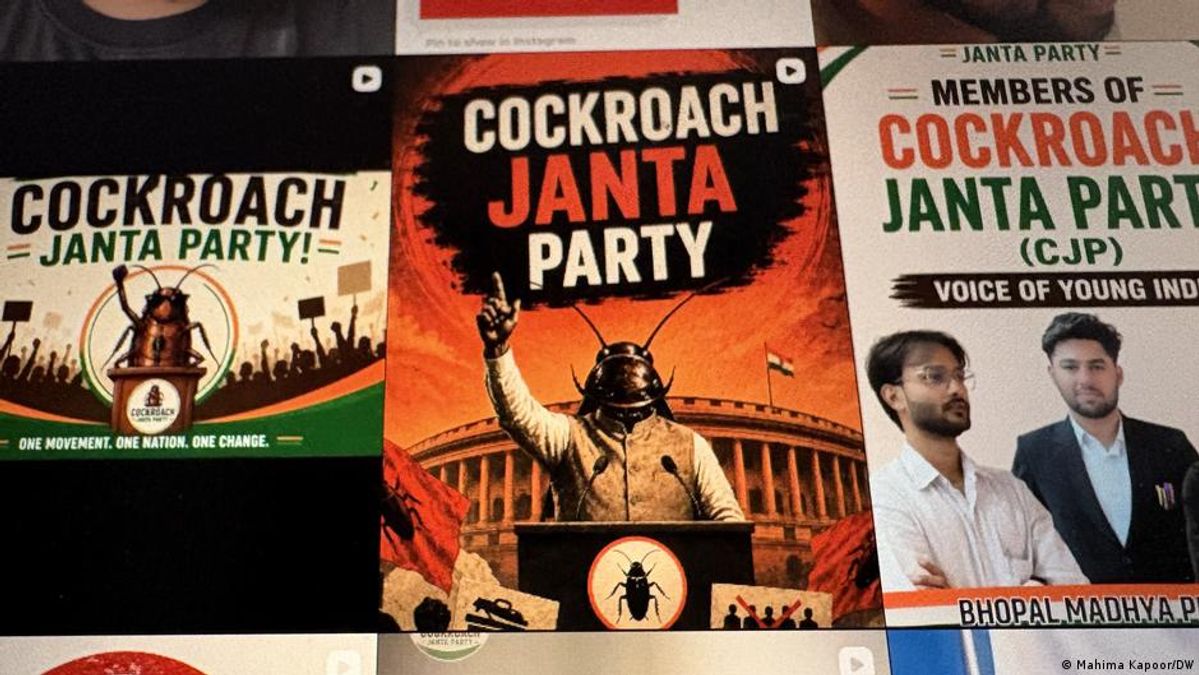
The 'Cockroach Janta Party' (CJP), a satirical movement born on social media, has taken India by storm with its demand for change and accountability from the government. Founded by Abhijeet Dipke, a 30-year-old Boston University graduate, the movement has gained millions of followers on social media platforms, including Instagram, where it has over 22 million followers.
The movement's spark was ignited by a remark attributed to Chief Justice of India Surya Kant, who compared some unemployed young people to "cockroaches" and "parasites." Although Kant later clarified that his comments were taken out of context and that he was referring to those who use fake degrees, the remark touched a raw nerve among many young Indians already struggling with unemployment, recurring examination scandals, and growing economic insecurity.
The CJP was initially launched as a satirical online project, but it quickly took on a life of its own. Dipke's use of humor and satire has resonated with India's youth, who feel that the current political system does not care about their concerns. The movement's meteoric rise reflects broader global trends in articulating political dissent, where digital participation, viral communication, and decentralized organization have become key tools for mobilizing people.
The CJP's success can be attributed to its ability to transform a symbol of humiliation into one of visibility. The term "cockroach" was initially used to belittle unemployed youth, but the movement has successfully appropriated it and turned it into a badge of resistance. This transformation has given a language and a symbol to the issues that had long existed beneath the surface in India's society.
While the CJP has gained significant traction on social media, its transition from an internet phenomenon to a political organization will be challenging. Registering as a political party in India requires organizational structures, financial transparency, and sustained grassroots support. The movement also faces practical challenges, such as election regulations that may prevent it from using its signature cockroach imagery as an official election symbol.
The CJP is a symptom of growing youth anger and disillusionment in India. The movement has tapped into anxieties that were already present, and its use of humor and satire has become a powerful instrument of political critique. The movement's success cannot be explained by social media alone, but rather by its ability to articulate the concerns of India's youth and give them a voice.
The 'Cockroach' movement is a significant development in India's political landscape, reflecting the growing youth anger and disillusionment with the current system. While its transition to a political organization will be challenging, the movement has already left its mark by transforming a joke into a national conversation. As India's youth continue to demand change and accountability, the CJP's success will be closely watched, and its impact on India's politics will be significant.
Editor's Note: The movement's success is uncertain, but its impact on India's politics will be significant.
Source referenced: DW
This brief was synthesized by our Editorial Engine and reviewed by The Ground Narrative team.


